Boureima Amadou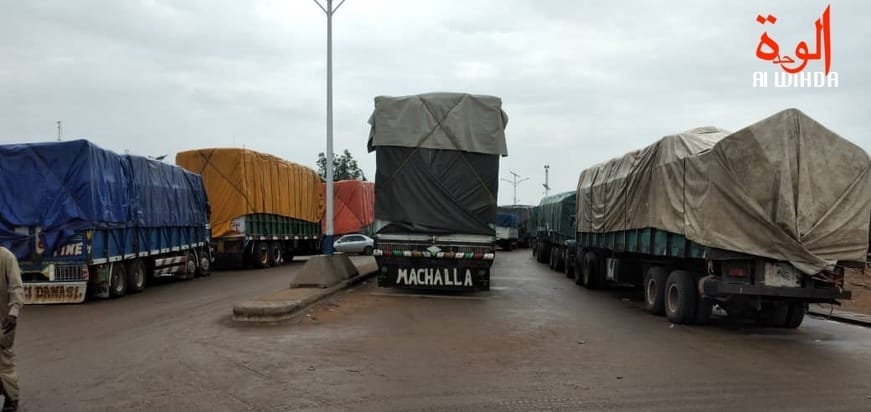
Chad’s global trade: China dominates imports, UAE leads exports
Chad’s international commerce is largely shaped by two major global players, each fulfilling vastly different roles.
China: Chad’s Unrivaled Supplier
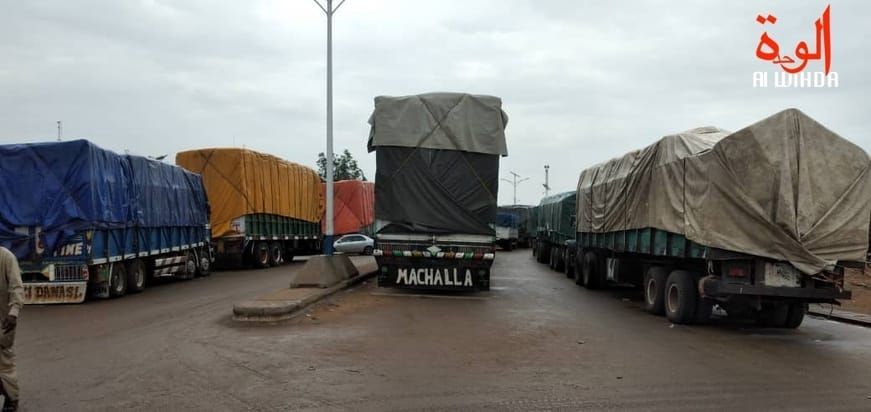
In 2025, China solidified its position as Chad’s primary supplier, delivering goods valued at 306.5 billion FCFA. This impressive figure accounts for 30.7% of the nation’s total imports, establishing a dominance that no other partner comes close to challenging. Cameroon, the second-largest supplier, trails significantly with 108.4 billion FCFA, roughly a third of China’s contribution. Libya follows as the third, supplying 85.8 billion FCFA, or 8.6% of imports.
The composition of Chinese exports to Chad mirrors a typical North-South trade dynamic: a steady flow of manufactured products, essential industrial equipment, and everyday consumer goods. This model, where the African nation absorbs industrial output from the Asian economic powerhouse, often in exchange for raw materials, has been successfully replicated by Beijing across the entire African continent for the past two decades, shaping African current affairs and trade relations.
The United Arab Emirates: A Key Export Hub
Conversely, the landscape for Chad’s exports presents a distinctly different picture. The United Arab Emirates (UAE) stands out as the leading purchaser of Chadian goods, acquiring 333.3 billion FCFA, which represents 26.2% of the total exports. The UAE surpasses Malaysia, which accounts for 297.8 billion FCFA (23.4%), and Germany, at 279.9 billion FCFA (22%).
The UAE’s role here extends beyond that of a mere end-consumer; it functions as a crucial global redistribution platform. Major commercial hubs like Dubai and Abu Dhabi facilitate the transit of Chadian crude oil, where it may undergo processing, blending, or simply be re-routed to other international markets. This intermediary function proves lucrative for the Emirates and is an acceptable arrangement for Chad, despite the fact that N’Djamena often loses visibility on the ultimate destination of its valuable resources.
Key Trade Figures for Chad:
- 30.7% of imports – originate from China, marking a significant regional record.
- 26.2% of exports – are channeled through the United Arab Emirates.
- 79.8% of imports – are concentrated among Chad’s top ten trading partners.
France and the United States: Present but Trailing
Despite its historical ties, France now represents a smaller share of Chad’s imports, accounting for 50.9 billion FCFA (5.1%), placing it sixth. The United States holds the fifth position with 53.0 billion FCFA (5.3%). These figures underscore a gradual rebalancing of Chad’s commercial alliances, shifting towards Asian, Middle Eastern, and emerging economies, and away from traditional Western powers. This trend is a notable aspect of continent news regarding trade shifts.
Further diversifying its import sources, Chad also engages with India (4.3%), Togo (3.6%), Brazil (2.9%), and Turkey (2.3%). While these partnerships broaden the supply base, the nation remains overwhelmingly reliant on China for the sheer volume of its imported goods.
Strategic Imperatives: Reconfiguring Dependencies
The strategic takeaway from this trade analysis is unequivocal: Chad’s export market is highly concentrated, with the top ten buyers collectively representing 98.9% of all exports. While its import sources are somewhat more diverse, they are still heavily dominated by Beijing. This dual concentration exposes the nation to considerable external economic shocks. Implementing a robust policy of commercial diversification, both for exports and imports, would be critical to mitigate these vulnerabilities and bolster Chad’s economic resilience, a key aspect of sound African governance.


 Mariama Hamani