Mariama Hamani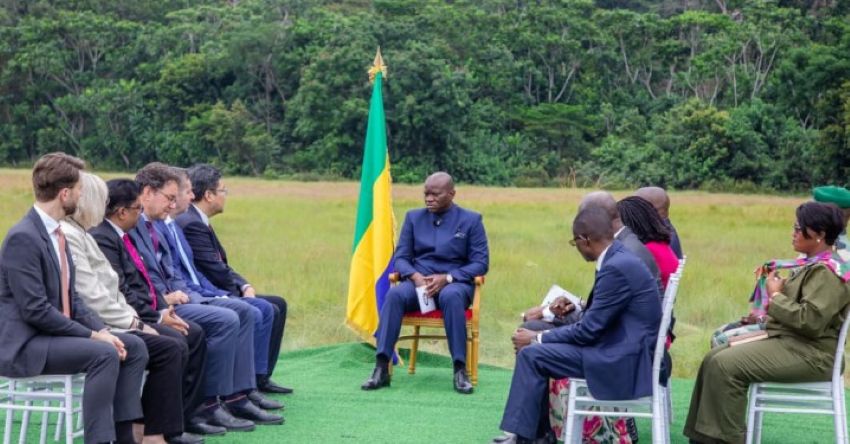
Gabon’s Kobe-Kobe: a bold economic transformation underway
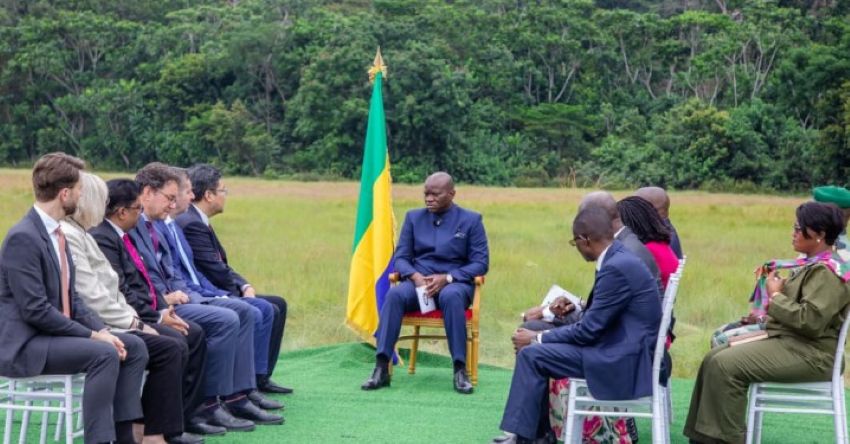
Libreville, Tuesday, June 9, 2026 – Hours after officially inaugurating the deep-water port construction at Kobe-Kobe along Gabon’s Atlantic coast, President Brice Clotaire Oligui Nguema convened a high-level strategic meeting in Nyonie with ambassadors and representatives from key international powers backing the project.
Far from a routine diplomatic engagement, this gathering signaled a decisive shift in national strategy. The ambition is clear: to position Gabon as Central Africa’s premier industrial, logistics, and mining hub.
During this pivotal exchange, the Head of State delivered a powerful message to global partners. Kobe-Kobe is not merely a port project; it represents the foundation of a new economic paradigm designed to navigate the post-oil era, bolster the country’s economic sovereignty, and reposition Gabon within global value chains.
A revolutionary economic doctrine
The Kobe-Kobe initiative rests on one of Africa’s most strategic assets: the Belinga iron ore deposit. Estimated at nearly 7.5 billion tons with an exceptional grade of 65%, this ranks among the world’s largest untapped reserves.
The true breakthrough lies in the project’s integrated approach. For decades, African extractive economies followed a simplistic model: extract raw materials and export them unprocessed. Gabon’s vision seeks to dismantle this outdated framework entirely.
The future industrial complex will comprise four complementary pillars: the Belinga mine, a 500-kilometer electric railway, a deep-water port capable of accommodating mega-vessels, and dedicated energy infrastructure to power the entire operation.
This vertical integration aims to achieve two critical objectives. First, retain greater value within Gabon’s borders by developing domestic processing capabilities. Second, nurture a thriving Gabonese steel industry capable of transforming a portion of its mineral output locally.
Multilateral diplomacy in action
Addressing assembled diplomats at Kobe-Kobe, President Oligui Nguema underscored what has become a cornerstone of his international strategy: diversifying partnerships.
The Gabonese leader emphasized that national development cannot hinge on a single partner or sphere of influence. Instead, it must rely on an open cooperation model uniting multiple economic and industrial powers.
This philosophy is already reflected in the project’s international consortium. China leads development of the rail and mining components. French operators contribute logistics expertise. Meanwhile, Italy, India, the United States, and Australia provide industrial, financial, energy, and commercial know-how.
This multi-faceted collaboration serves a dual purpose. It secures the necessary funding and technology while safeguarding Gabon’s decision-making autonomy.
The ambassadors of France, Fabrice Mauriès, and China, Zhou Ping, publicly endorsed this balanced approach, highlighting its potential to unlock new cooperation opportunities. Their endorsement underscores the growing investor interest in Gabon since the establishment of the Fifth Republic.
A high-stakes industrial gamble for Central Africa
Beyond infrastructure, Kobe-Kobe embodies a sweeping economic wager. Government projections anticipate over 100,000 direct and indirect jobs eventually, the emergence of a robust national subcontracting ecosystem, and a powerful multiplier effect across the entire economy.
Sectors poised for direct benefits include transportation, energy, logistics, metallurgy, services, engineering, vocational training, construction, and industrial maintenance.
The geopolitical implications are equally significant. Once operational, Gabon’s deep-water port could become Central Africa’s primary maritime gateway at a time when regional competition among logistics hubs is intensifying.
By urging diplomats to champion this vision with their governments, financial institutions, and business communities, President Oligui Nguema is actively expanding the project’s investor base.
Kobe-Kobe transcends mere infrastructure. It symbolizes a national strategy that transforms natural resources into engines of industrialization, attracts international capital while strengthening economic sovereignty. Should these objectives materialize, Gabon could transition from a raw material exporter to Central Africa’s industrial powerhouse within the next decade. The post-inauguration engagement with international partners confirms that Libreville’s development battle is now waged on a global stage.

 Boureima Amadou