Boureima Amadou
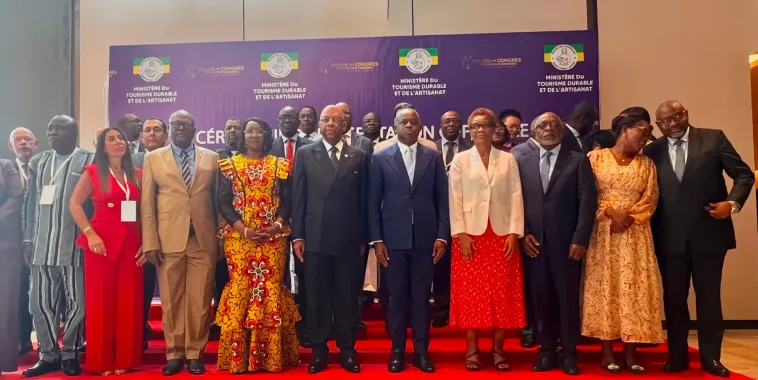
The Gabonese government launched its ambitious new National Strategy for the Promotion of Sustainable Tourism and Handicrafts on June 29, 2026, in Libreville. This initiative underscores a clear objective: to significantly diversify the nation’s economy in preparation for the post-oil era and position Gabon as a premier global destination for ecotourism.
On paper, Gabon possesses all the requisites to emerge as Africa’s leading ecotourism hub. With a staggering 88% of its landmass blanketed by equatorial forest, 800 kilometers of pristine coastline, and an established network of 13 national parks, its natural resources are truly exceptional.
From the abundant wildlife of Loango National Park to the breathtaking landscapes of Ivindo National Park, the potential to captivate an international clientele seeking untouched nature is immense.
Furthermore, Gabon’s esteemed status as an environmental pioneer, solidified by its blue and green obligations, lends it invaluable credibility in attracting crucial international funding.
The reality check: persistent structural impediments
Transforming this natural treasure into a profitable and well-structured industry necessitates overcoming substantial hurdles.
The foremost challenge lies in infrastructure: access to key tourist sites such as Lambaréné, Mayumba, and Lopé often resembles an arduous journey.
The condition of the internal road network remains the primary impediment to the sector’s growth.
The second obstacle is financial. Between the high cost of international airfares, complex internal logistics, and the scarcity of affordable domestic flights, Gabon remains an expensive destination, primarily catering to an ultra-selective niche tourism market.
The third challenge is human capital. High-end tourism demands adherence to international standards in hospitality, accommodation, and the promotion of local handicrafts.
This mandates a substantial and sustained investment in professional training – a long-term endeavor that cannot be decreed overnight.
From strategy to tangible action: the true test
Gabon undeniably possesses the natural assets to fulfill its grand ambitions. However, it urgently needs to construct the logistical and human foundations that will make these assets exploitable.
For this new vision to avoid joining the graveyard of unfulfilled plans, the State must prioritize concrete execution over mere communication.
Success will hinge on fostering attractive public-private partnerships, capable of financing essential infrastructure like roads and accommodations, while simultaneously structuring and enhancing local expertise.
Should action finally align with strategy, ecotourism could indeed become the vital economic engine for Gabon’s post-oil future.