Mariama Hamani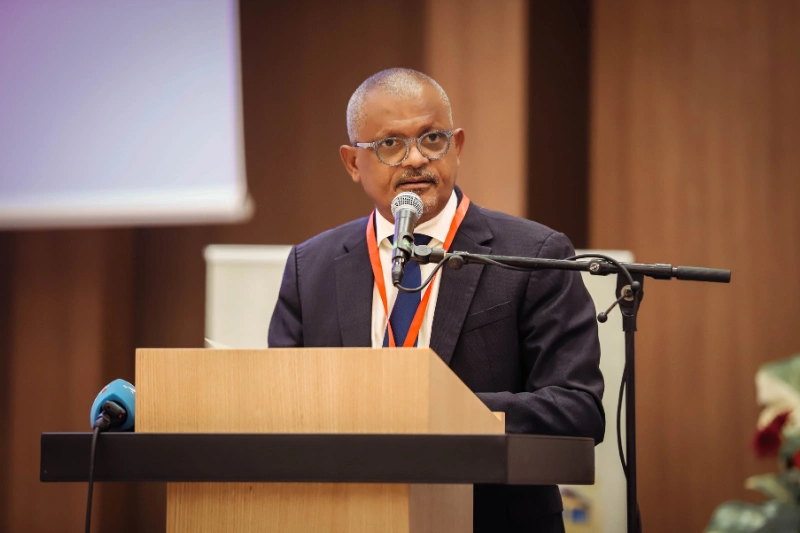
The conclusion of the Gabon Economic Forum (GEF) brought to light one of the most pressing economic challenges facing the nation: the long-standing debt owed by the State to private enterprises. Speaking at the event, Alain‑Claude Kouakoua, President of the Gabonese Business Federation (Fédération des entreprises du Gabon or FEG), highlighted discrepancies in the reported figure of 4,340 billion FCFA, suggesting it may be inflated.
Kouakoua emphasized that many of the claims submitted by private companies lack sufficient documentation or validity. To address this, a joint audit—conducted in collaboration with the dedicated Task Force and the Ministry of Economy—will meticulously scrutinize each claim. The objective is clear: to distinguish between verifiable, mutually agreed debts and those that cannot be substantiated. No repayments will proceed until this critical assessment is complete, a process that will inevitably reduce the final debt figure below current estimates.
Significantly, Kouakoua revealed that around 50% of this debt has already been settled since the National Council for the Transition (Conseil de Transition et de Restauration des Institutions or CTRI) assumed power in August 2023. The lack of transparency from beneficiary companies has contributed to ongoing confusion, he noted. The forthcoming debt clearance mechanism aligns with a key recommendation from the 2026 GEF: prioritizing the settlement of domestic debt, including VAT credits and arrears on public contracts. This will be executed through an accelerated national program featuring titrisation, cross-imputation, and a publicly accessible tracking system overseen by a dedicated National Monitoring Committee—essentially a revival of the Libreville Club.
Restoring trust through transparency
The reliability of public statistics and improvements in the National Health Insurance and Social Security Fund (Caisse Nationale d’Assurance Maladie et de Garantie Sociale or CNAMGS) were also discussed during the forum. However, the State’s debt to private enterprises remained the focal point, underscoring its urgency in the eyes of the business community.
For Gabon’s private sector, this initiative marks a turning point. After years of uncertainty, legal disputes, and prolonged delays, a structured, verifiable, and negotiated resolution is within reach. This move is widely seen as a vital step toward rebuilding mutual trust between the State and private businesses, fostering an environment conducive to economic stability and growth.

 Boureima Amadou