
 Mariama Hamani
Gabon’s economic turning point: the World Bank’s strategic breakthrough
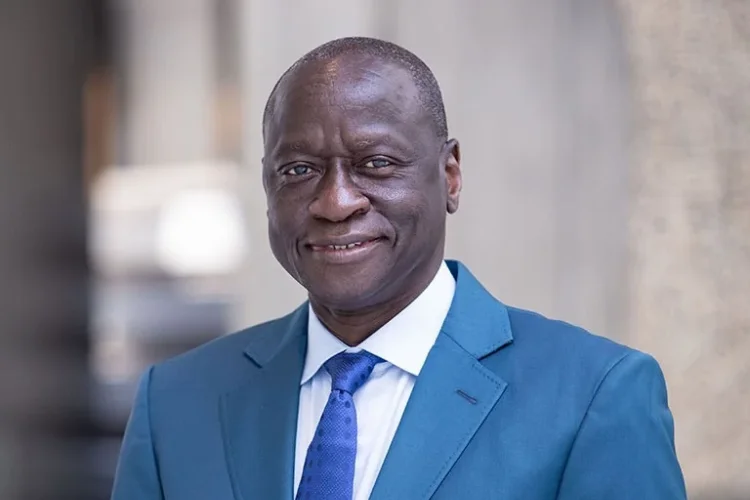
The Gabonese government and the World Bank have just reached a defining moment in their partnership, marking a decisive shift toward tangible economic transformation. During high-level meetings, Ousmane Diagana, Vice President of the World Bank for Western and Central Africa, underscored the urgency of translating ambitious development plans into measurable progress for Gabon’s citizens.
At the core of this new alliance lies a shared vision: creating quality jobs, especially for young people, while diversifying the economy beyond oil dependency. The discussions centered on aligning World Bank support with Gabon’s National Growth and Development Plan (PNCD 2026-2030), ensuring that every investment delivers rapid, visible benefits to communities across the country.
Strengthening Infrastructure: Water, Energy and Urban Development
The World Bank’s commitment to Gabon extends far beyond traditional development aid. With a focus on immediate impact, key projects in water supply, electricity access, urban infrastructure, and digital connectivity have been prioritized to improve daily life for ordinary Gabonese citizens.
- Access to essential services: Accelerated implementation of water and electricity projects aims to ensure reliable provision for households and businesses, particularly in underserved areas.
- Urban renewal beyond Libreville: Secondary cities such as Franceville, Koula-Moutou, Oyem, and Lambaréné are now central to the strategy, receiving targeted infrastructure investments through the Gabon Urban Development Project (PDUG).
- Hydroelectric potential: Gabon’s abundant water resources offer a sustainable path to energy independence and low-carbon power, aligning with the national goal of reducing greenhouse gas emissions.
This infrastructure push is not just about building roads or dams—it’s about fostering territorial equity, reducing rural-urban divides, and empowering local economies to thrive.
From forest conservation to economic opportunity
Gabon stands as a global leader in forest conservation, a status that presents a unique opportunity: sustainable economic diversification rooted in forest resources and ecotourism. Yet, despite decades of conservation efforts, much of this natural wealth remains untapped and inaccessible to local populations.
To unlock this potential, the World Bank is preparing a groundbreaking initiative: “Sustainable Forest Management and Ecotourism in Gabon.” This project will support the government in transforming protected areas into engines of economic growth—creating jobs, attracting tourism investment, and enhancing community livelihoods without compromising environmental integrity.
The initiative aligns directly with Gabon’s PNCD 2026-2030, which identifies sustainable forestry as a key pillar for diversifying the economy and reducing oil dependence.
Digital transformation as a driver of inclusive growth
The future of Gabon’s economy lies in digital innovation. Recognizing this, the World Bank is leveraging technology to create jobs, empower entrepreneurs, and connect citizens to new markets through the Gabon Digital Project (funded at $68.5 million) and the Central African Digital Integration Program (CARDIP).
The approach is clear: “AI for All”. By democratizing access to artificial intelligence, data analytics, and digital infrastructure, the World Bank aims to enable Gabon’s youth, women, and small businesses to innovate, scale up, and compete regionally. The goal is not technology for its own sake—but economic transformation driven by digital inclusion.
Mega-infrastructure as catalysts for private investment
Major projects like the deep-water port of Kobe-Kobe and the Bélinga iron ore mine are seen as pivotal to Gabon’s economic revival. These initiatives are more than infrastructure—they are strategic levers for attracting foreign and domestic investment, unlocking new supply chains, and creating long-term employment opportunities.
The World Bank is positioned to support Gabon in structuring these projects, securing financing, and ensuring transparent governance. Beyond financing, the Bank provides advisory services to maximize social and environmental returns, ensuring that growth is inclusive and sustainable.
A renewed partnership built on shared ambition
At the conclusion of the meetings, a clear consensus emerged: the World Bank and Gabon are not merely partners—they are co-investors in a shared future. The focus is on results, accountability, and rapid execution. With a robust financial commitment, a focus on youth and women, and a commitment to environmental responsibility, this alliance is poised to turn Gabon’s development ambitions into reality.
This is more than a partnership—it’s a turning point. Gabon is not just preparing for the next five years; it’s laying the foundation for a resilient, diversified, and inclusive economy that works for every citizen.






