Boureima Amadou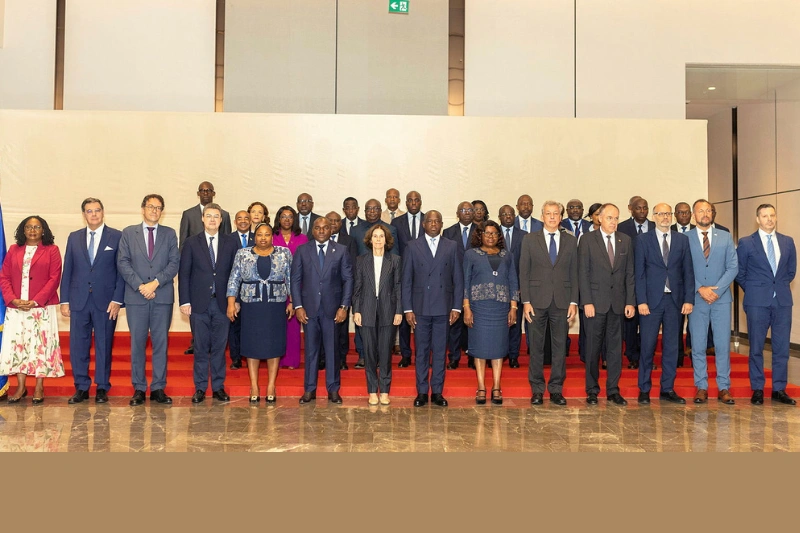
The second session of the Gabon-European Union (EU) strategic partnership dialogue took place yesterday at the Omar Bongo Ondimba Congress Palace in the Cité de la Démocratie. Co-chaired by Gabon’s Vice-President of the Government, Hermann Immongault, and the EU Ambassador to Gabon, Cécile Abadie, the meeting followed the first dialogue held in October 2024.
In his opening remarks, Mr. Immongault highlighted that this dialogue aligns with the Samoa Agreement, the foundational legal framework governing EU relations with African, Caribbean, and Pacific (ACP) countries. He emphasized the need for a “more balanced, operational, and impact-driven partnership,” where public policies and investments yield tangible results.
The discussions centered around four key pillars: political reforms and governance, economic outlook, environmental sustainability, and multilateral cooperation. At the conclusion of the talks, both sides praised the institutional reforms implemented during Gabon’s Transition and exchanged perspectives on human rights and fundamental freedoms. “No topic was off-limits,” Mr. Immongault assured, noting that all ambiguities were clarified during the exchange.
Economic discussions delved into Gabon’s growth prospects, ongoing structural reforms, and efforts to enhance the business climate to attract greater foreign investment. The EU’s Global Gateway initiative was also highlighted as a potential catalyst for collaboration.
Environmental sustainability emerged as a critical focus, with both parties reaffirming their shared commitment to sustainable forest management. They also explored avenues for cooperation in sustainable fisheries, renewable energy, and waste management.
Strengthening multilateralism remained a shared priority, with Gabon and the EU aligning closely on regional and global challenges, including maritime security and regional integration. Moving forward, both partners aim to deepen ties and advance consultations on jointly identified priorities, fostering an environment of openness and mutual trust.


 Mariama Hamani