
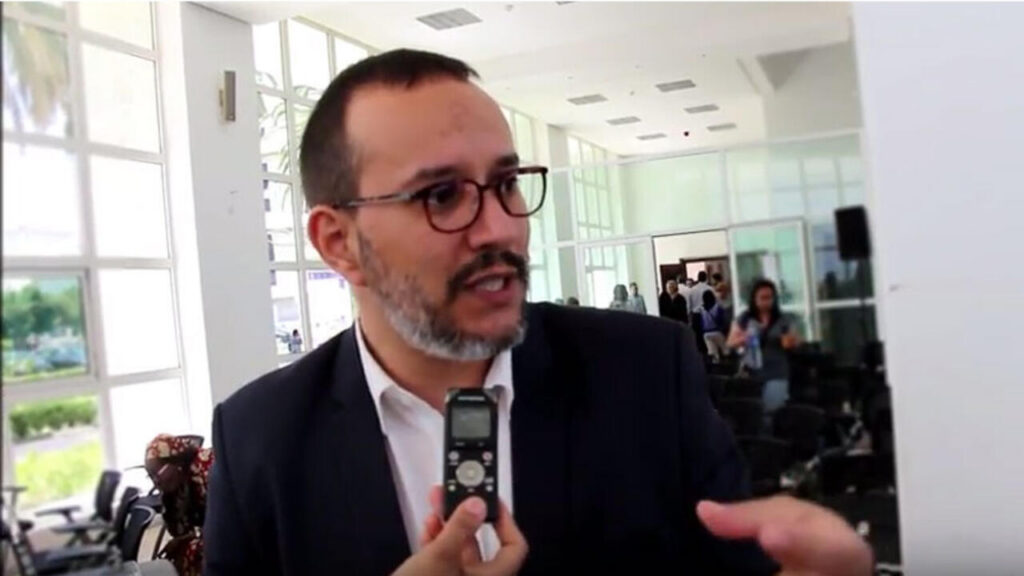
French Prime Minister Sébastien Lecornu arrived in Morocco on July 15, 2026, leading a high-level delegation of more than a dozen ministers. The visit coincides with the signing of several bilateral agreements while tensions around human rights issues surface, as Rabat proceeds with legal actions against a journalist and an artist. Mehdi Alioua, a sociologist at the International University of Rabat and holder of the Migration, Mobility, and Cosmopolitanism Chair, shares his insights on the evolving dynamics between Paris and Rabat, particularly in the context of Africa.
Is Morocco becoming France’s unexpected rival in sub-Saharan Africa?
Question: In recent years, a subtle competition seems to have emerged between France and Morocco across sub-Saharan Africa. Where France appears to be losing ground or making adjustments, Morocco is stepping in with investments and strategic presence. Has the Kingdom of Morocco become the rival that France overlooked in these historically French-preferred regions?
Mehdi Alioua: Partly yes, partly no. First, no, because much of Morocco’s investments are made through joint ventures with French companies or in alignment with French diplomacy. There is strong South-South cooperation that also benefits from North-South ties through the close relationship between Rabat and Paris. However, yes, because Morocco has gone further with fully Moroccan-led investments, backed by a clear diplomatic will from the Moroccan head of state to pursue an African policy designed for Africa.
Could Morocco help mend strained France-Sahel relations?
Question: The Sahel region has seen deteriorating relations between France and the member states of the AES. Given Morocco’s growing influence in the area, could Rabat play a constructive role in improving these ties?
Morocco is indeed striving to play a constructive role. However, the deterioration is not at the people-to-people level but rather at the political level. For instance, in Mali, many Franco-Malians feel that relations have worsened due to populist political rhetoric that has fueled anti-France sentiment. This is not the approach Morocco takes in its diplomacy.
It is essential to recognize that Morocco’s ties with Sahelian countries are ancient, predating Islam and continuing to strengthen over centuries. The legacy of the Almoravid dynasty, from which the French term marabout originates, illustrates these deep historical connections. The Almoravids ruled an empire stretching from Spain to Guinea and present-day Mali from the city of Aghmat near Marrakech. These centuries-old relationships mean Morocco’s diplomacy is well-equipped to revive and strengthen these bonds. While separated by the vast Sahara, both regions have navigated this terrain for centuries.
Recent arrests raise concerns over human rights in Morocco
Question: In recent days, authorities in Morocco have detained prominent critics, including Franco-Moroccan journalist Ali Lmrabet and rapper Mehdi Black Wind. Should these developments be a cause for concern?
Any time journalists or artists are imprisoned, it should raise concerns. In these cases, the authorities claim that justice is handling independent investigations. The detained individuals have the right to defend themselves in court. The journalist has been released but remains under investigation. The situation regarding the rapper’s case is less clear, but human rights lawyers and activists in Morocco are already mobilizing to support the defendants. The justice system will present its accusations, and Morocco has made significant strides in advancing human rights over the years. However, occasional regressive practices still surface.
Is Morocco’s appeal growing in comparison to France?
Question: Earlier, we discussed the France-Morocco dynamic. Does Morocco now exert the same appeal among sub-Saharan Africans as Paris once did—or still does?
No, not yet. However, Morocco is increasingly attracting attention. The Moroccan authorities have made it a priority to draw more interest. The investment in organizing an exceptional Africa Cup of Nations (CAN) football tournament demonstrates this ambition, though it also highlights the fragility of such efforts. The CAN exposed tensions: Moroccan youth questioned why so much money was spent on stadiums when endemic poverty persists, and across Africa, a single final match and a disagreement with Senegal shifted public opinion against Morocco. Statements claiming Moroccan pitches rival European quality, while well-intentioned, lack humility and undermine Morocco’s African diplomacy. These factors create a complex scenario where Morocco both attracts and repels interest. As long as Morocco remains classified as a lower-middle-income country, it will never match the appeal of France. Only when Morocco achieves greater economic wealth and development will it match—or surpass—France’s allure.
More Stories
Niger: Anatomy of a state narrative to conceal the regime’s fractures
Niger’s leader faces rift with special forces after Russian involvement
Crise au Niger, accord FMI-Sénégal, bataille électorale au Maroc… Les 5 infos qu’il ne fallait pas manquer