
 Boureima Amadou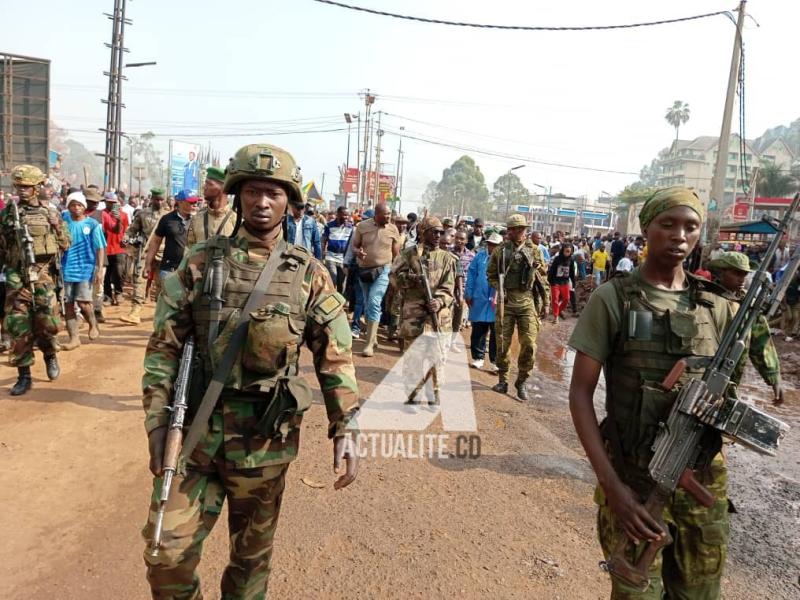
During a recent online discussion hosted by journalist Stanis Bujakera Tshiamala, researcher Joshua Z. Walker shared a cautious yet troubling analysis regarding the prolonged peace process between the Democratic Republic of Congo (RDC) and Rwanda. Walker, an Associate Fellow in Chatham House’s Africa program and a Senior Fellow at New York University’s (NYU) Center on International Cooperation, was asked about potential scenarios if Washington’s patience wears thin with the current deadlock.
“I am not a prophet,” he began, tempering expectations before outlining two primary hypotheses for the future. The first suggests a return to the situation prior to the significant American intervention in 2025, implying a resurgence of dynamics observed before Washington’s increased involvement. The second, more concerning possibility, points to the continuation of the present stalemate.
It is this second scenario that deeply troubles the expert. “I often say that even if there is no M23 withdrawal, every day that passes with the M23 continuing to occupy parts of eastern Congo, they become more entrenched,” Walker explained.
He emphasized that the mere passage of time acts as an aggravating factor: “That is the real fear, in fact: that we reach a point where, simply through the passage of time, we end up with a situation where, de facto, a portion of the RDC remains completely outside government control.”


 Mariama Hamani




