Escalating Ebola crisis in Democratic Republic of Congo demands urgent action
- Health
The World Health Organization’s Director-General, Dr. Tedros Adhanom Ghebreyesus, delivered a sobering assessment of the Ebola outbreak in the Democratic Republic of Congo (DRC) this Thursday, July 16, marking two months since its official declaration. The situation has deteriorated alarmingly, with the disease spreading at an unprecedented rate compared to previous outbreaks in the country.
According to the WHO chief, speaking at a press conference in Geneva, Switzerland, this outbreak has now become the third-largest ever recorded. “Yesterday marked two months since the DRC government declared the Ebola epidemic. Since then, the outbreak has spread rapidly. It is now the third-largest Ebola outbreak ever recorded, and in the past month, its progression has been faster than in any previous outbreaks,” Dr. Tedros stated.
Current statistics paint a grim picture: 2,073 cases have been confirmed, including 796 deaths. For comparison, the 2018-2019 Ebola outbreak in the DRC took over ten months to reach 2,000 confirmed cases.
Critical situation in Ituri Province
The situation remains particularly dire in Ituri Province, where transmission rates remain alarmingly high. “Intense transmission in Ituri Province remains our primary concern,” Dr. Tedros continued. “Over 80% of new cases are being detected outside known contact lists, indicating that unidentified transmission chains persist. Approximately two-thirds of deaths are occurring within communities, among individuals who never accessed healthcare facilities.”
International response and challenges
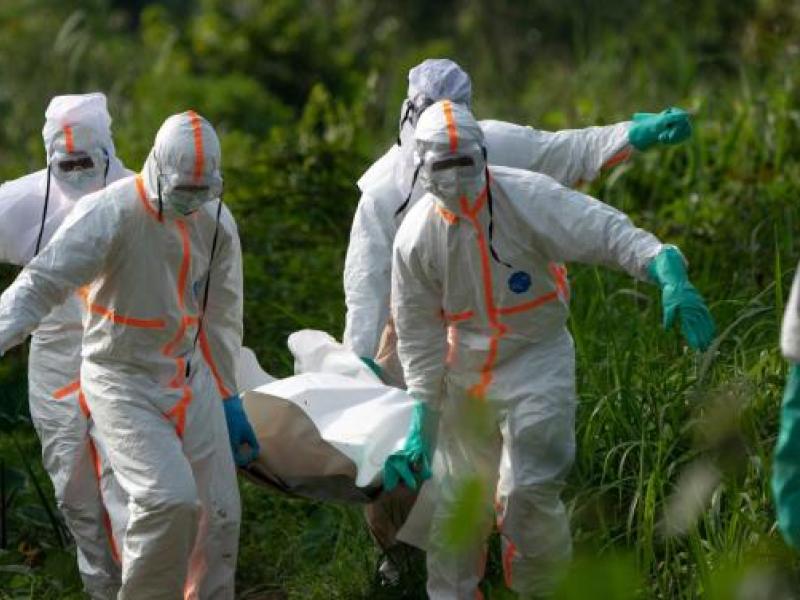
In response to this escalation, the WHO, in collaboration with the Africa Centres for Disease Control and Prevention (Africa CDC) and other partners, continues to support the Congolese government in intensifying the response efforts. “In partnership with Africa CDC and other collaborators, WHO is supporting the government to scale up the response. Treatment capacity now exceeds 800 beds and continues to grow. Laboratory capacity has expanded from one to 16 facilities. Contact tracing has reached nearly 80%. Over 21,000 community workers are undergoing training. Safe and dignified burial conditions have significantly improved,” Dr. Tedros explained.
Research progress amid ongoing challenges
The WHO Director-General also highlighted encouraging developments in research and treatment, despite the absence of approved vaccines or treatments. “Encouraging progress is being made in vaccines and treatments. Earlier this month, we launched a clinical trial for two treatments: the monoclonal antibody MBP134 and the antiviral remdesivir. On Monday, the first safety trial for the ChAdOx1 vaccine, led by the University of Oxford, began. Just yesterday, partners under the guidance of the DRC’s National Institute of Biomedical Research launched a trial of the antiviral obeldesivir as post-exposure prophylaxis for individuals exposed to confirmed cases but not yet symptomatic. Even without approved vaccines or treatments, 377 people have recovered, proving that early diagnosis and appropriate care can help survive and contain this disease,” he noted.
Uganda’s contrasting progress
While neighboring Uganda has made significant strides—with its last confirmed patient discharged today, marking the start of the 42-day countdown to declaring the end of its outbreak—the DRC continues to face formidable challenges. Armed conflict in eastern DRC has severely hampered access to affected areas and slowed response efforts. “Despite progress in Uganda, the Ebola outbreak in the DRC continues to spread faster than our response can contain it,” Dr. Tedros emphasized. “Ongoing armed conflict is restricting access to affected zones and impeding our efforts. Just yesterday, a treatment center in Bunia was attacked. We face technical challenges, but we also urgently need political intervention to facilitate the scale-up of our response.”
Immediate priorities for containment
Dr. Tedros outlined the immediate priorities for the response: “Our priorities are to reduce transmission in Ituri by strengthening surveillance, ensuring safe and dignified burials, improving clinical care, and engaging communities. We must also bolster response capacities in newly affected provinces before transmission becomes established there.”
This outbreak, caused by the Bundibugyo strain and later spreading to Uganda, was declared a Public Health Emergency of International Concern (PHEIC) by WHO on May 17, just two days after the DRC’s official declaration. The epidemic has expanded geographically, and its true scale may be underestimated due to high population mobility, fragile health systems, insufficient infrastructure, and challenges accessing conflict-affected areas. The absence of a vaccine or specific treatment for this strain further complicates containment efforts.
Despite these challenges, DRC authorities remain resolute, emphasizing the collaborative efforts with national and international partners to contain the outbreak. They also point to the country’s extensive experience in managing health crises, having successfully controlled 16 previous Ebola outbreaks through robust response operations.

Boureima Amadou
Journalist
Boureima Amadou
- News
- October 26, 2026
- 15 views
Tagadayat massacre sparks urgent calls for Mali’s security shift amid civilian crisis
The discovery of 54 bodies in the village of Tagadayat, just 35 kilometers southeast of Ménaka, marks a tragic turning point in Mali’s escalating security crisis. This brutal incident not…
Mariama Hamani
- News
- October 26, 2026
- 16 views
Niger’s refoundation charter demands a pivotal moment on foreign troop presence
The Strategic Shift: Does Niger’s New Charter Demand a Public Vote on Foreign Troops? The approval of Algeria’s military deployment to Niger on October 25, 2026, has thrust a critical…