Boureima Amadou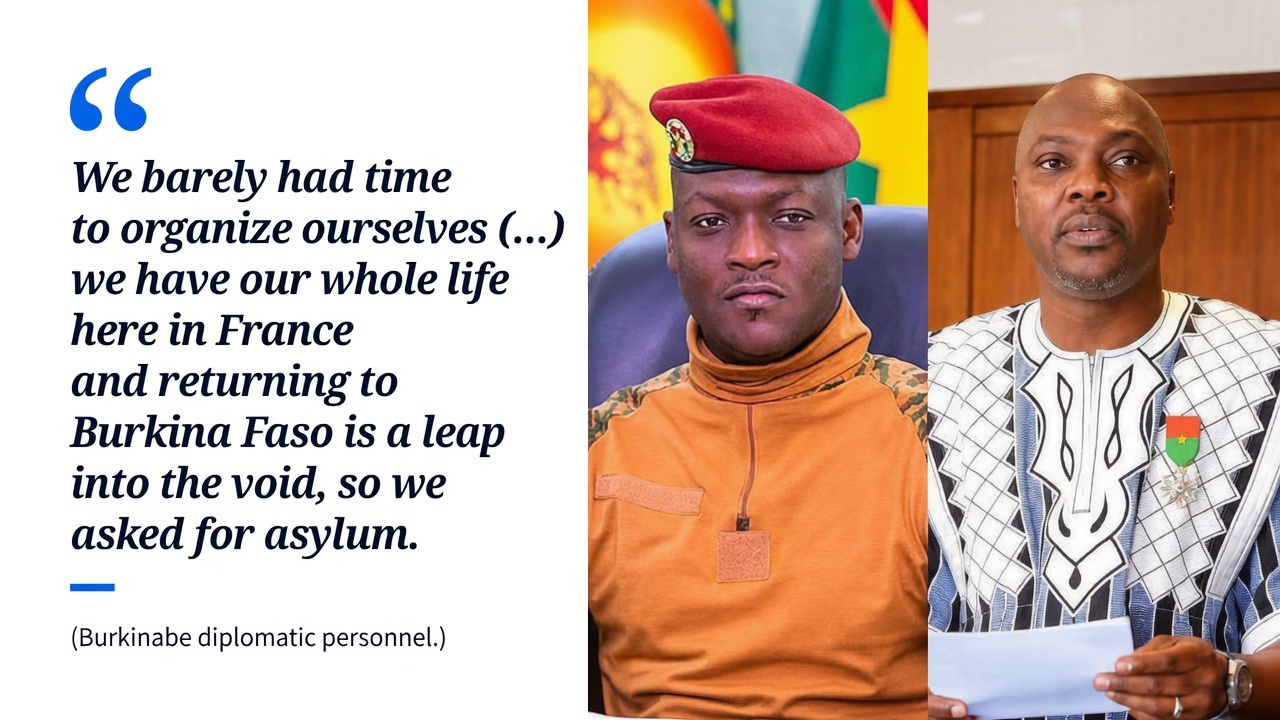
A significant diplomatic predicament has emerged for Burkina Faso’s transitional authorities following a series of asylum requests from staff stationed at the country’s embassy in Paris. The move underscores not only personal circumstances but also a growing sense of unease within the nation’s diplomatic apparatus.
The development follows a series of administrative shifts within Burkina Faso’s diplomatic corps, including the recent recall of several overseas-based officials. While authorities in Ouagadougou framed these changes as routine restructuring, the affected personnel perceive them as far more consequential—a forced repatriation rather than a simple reassignment.
A statement from the embassy staff, widely circulated, reveals the motivations behind their decision to seek protection in France:
« We barely had time to prepare. Our entire lives are here in France—our children are in school, our careers are established. Returning to Burkina Faso feels like jumping into the unknown. That’s why we applied for asylum. »
Their remarks reflect a profound uncertainty, compounded by the logistical and emotional challenges of relocating abruptly. Many have built their professional and family lives in France over years, only to face the prospect of uprooting everything with little notice. Beyond personal disruption, their concerns extend to the broader political climate awaiting them upon return.
This wave of asylum petitions coincides with Burkina Faso’s ongoing security crisis. The country continues to grapple with persistent threats from armed groups, prompting sweeping mobilizations and civilian requisitions under the banner of national defense. While authorities maintain these measures are necessary, human rights organizations and affected individuals have raised alarms about insufficient preparation and heightened risks for those deployed to conflict zones.
Critics argue that the transitional government’s centralized decision-making—particularly under the leadership of Captain Ibrahim Traoré—often overlooks the human impact of administrative changes. The recall of diplomats with long-standing postings abroad is cited as an example of policies that disrupt lives without adequate transition periods or support structures.
Diplomatic experts note the symbolic weight of this situation: when officials tasked with representing their nation abroad choose to seek asylum rather than return, it sends a powerful message about the erosion of institutional trust. Such cases are rare in international relations and typically signal deep-seated political or security concerns.
For Burkina Faso’s transitional government, this episode poses a reputational challenge. Amid claims of restoring national sovereignty and rebuilding public confidence, the asylum requests from its own diplomats cast doubt on the stability and safety of the political environment they claim to uphold.
Ultimately, this affair highlights the human consequences of administrative decisions. Behind the diplomatic recalls lie families, careers, and futures—realities often obscured in official narratives. The embassy staff’s testimony serves as a stark reminder that policies crafted at the highest levels can have far-reaching, personal repercussions for those tasked with executing them.