Mariama Hamani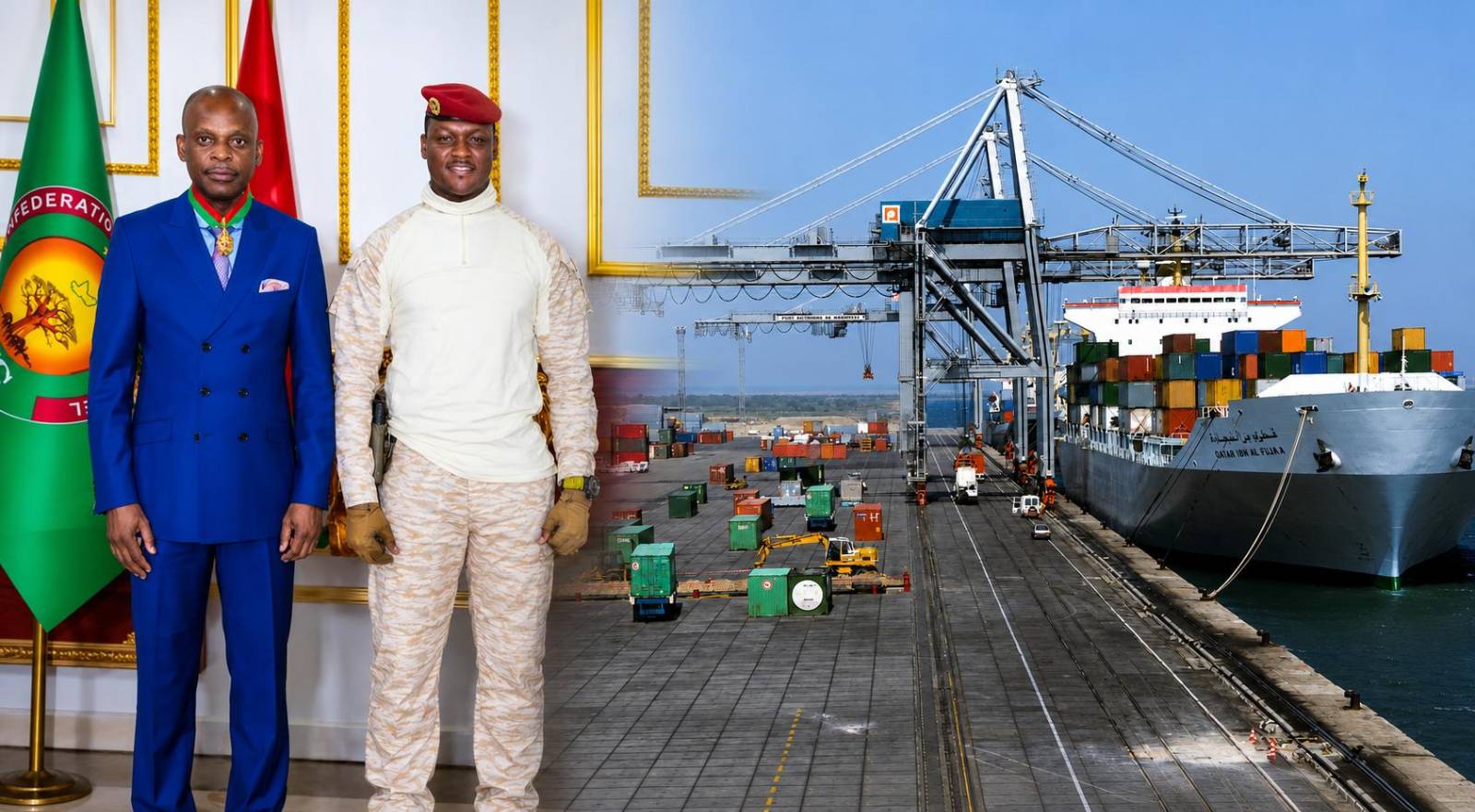
The recent conferment of the rank of Commander of the Order of the Stallion upon Togo’s Minister of Foreign Affairs by Burkina Faso’s authorities has been presented as a milestone in regional diplomacy. While official channels portray this distinction as evidence of a robust policy of openness and solidarity pursued by Lomé toward its neighbors, the underlying political dynamics reveal a far more complex—and less flattering—reality.
The limits of symbolic diplomacy
Honorific distinctions in diplomacy often serve as tools to reinforce alliances, but their true significance frequently lies in the unspoken messages they convey to regional partners. In this instance, the award raises a pivotal question: Is it a genuine recognition of diplomatic excellence, or merely a calculated move to align with mutual political and economic interests?
The timing of this gesture cannot be overlooked. It follows a period of heightened tension in which the Togolese government, led by President Faure Gnassingbé, extended temporary asylum to former Burkina Faso President Roch Marc Christian Kaboré—only to swiftly abandon this commitment in favor of economic concessions. This abrupt shift underscores a pattern of diplomatic pragmatism that prioritizes tangible benefits over ideological consistency.
The weight of economic interdependence
The strategic value of the Autonomous Port of Lomé (PAL) in Togo’s foreign policy cannot be overstated. As Burkina Faso’s primary maritime gateway, the port is indispensable for the landlocked nation’s trade flows. By accommodating Ouagadougou’s demands for preferential transit conditions, Lomé secures not only lucrative commercial agreements but also a pivotal role in the regional supply chain.
This mutual economic reliance forms the bedrock of the two countries’ diplomatic rapprochement. While both capitals emphasize solidarity, the underlying motivation is undeniably transactional. The exchange of political asylum for enhanced logistical privileges exemplifies a broader trend in West African diplomacy, where economic imperatives increasingly dictate the terms of engagement.
A shift in regional priorities
Observers highlight a growing tendency among sub-regional states to prioritize economic and security considerations over traditional diplomatic principles. Alliances are now forged and dissolved based on the perceived balance of trade advantages, logistical necessities, and geopolitical stability—often at the expense of democratic values and human rights commitments.
The contrast between official narratives and on-the-ground realities has not gone unnoticed. While authorities in both Lomé and Ouagadougou celebrate this distinction as a symbol of unbreakable brotherhood, critics argue that it merely masks a partnership built on convenience rather than conviction. The ethical contradictions inherent in such arrangements risk eroding public trust in the integrity of regional governance.
The erosion of diplomatic credibility
When diplomatic gestures are perceived as little more than transactions, the credibility of state institutions suffers. The conferment of this honor, framed as a testament to Togolese-Burkinabé solidarity, instead invites scrutiny into the true motives behind the gesture. Does it reflect a shared commitment to regional stability, or is it a calculated bid to consolidate economic leverage?
Ultimately, this distinction serves as a stark reminder of the evolving nature of African diplomacy. In an era where pragmatic interests often eclipse ideological alignment, the distinction between principle and opportunism becomes increasingly blurred. The award, while symbolically significant, underscores a reality in which cold political calculation prevails over the rhetoric of fraternity.

 theafricantribune
 Boureima Amadou