Mariama Hamani
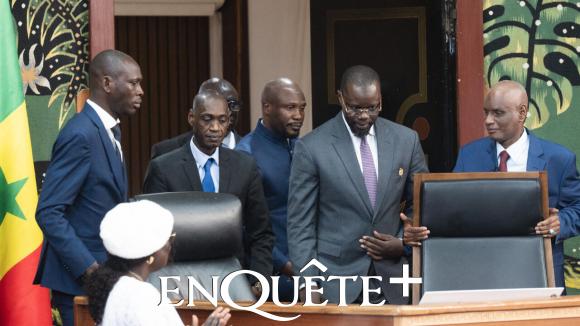
controversy over ousmane sonko’s seat in Senegal’s national assembly
The Front for the Defense of Democracy and the Republic (FDR) has escalated its legal and political battle to challenge Ousmane Sonko’s parliamentary mandate in Senegal’s National Assembly. In a sharply worded statement issued yesterday, the coalition argued that the processes enabling his return to the legislative chamber violate both the Constitution and the Electoral Code, urging immediate action to uphold republican institutions.
The FDR, a broad alliance of opposition parties and civil society actors, condemned what it described as an “attempted parliamentary coup” orchestrated by the Pastef party. A coalition of 147 political movements had already denounced this situation in a joint statement published on May 24, aligning behind the FDR’s position that Sonko’s presence in the Assembly is legally untenable.
The crux of the dispute revolves around a legal technicality: Article LO172 of the Electoral Code states that a minister elected as a deputy automatically loses their parliamentary seat if they fail to resign from the government within eight days. The FDR contends that Sonko, who served as a minister before returning to the Assembly, did not comply with this requirement. Furthermore, the coalition asserts that amendments to the Assembly’s internal regulations cannot override constitutional provisions or organic laws governing ministerial deputies.
The opposition bloc, including the FDR, has taken the matter to the Constitutional Council, seeking to invalidate the procedural steps that allowed Sonko to reclaim his seat. Legal experts and political analysts are closely watching the Council’s deliberations, as its ruling could set a precedent for how future cases of this nature are handled. The stakes are high, with both sides framing the debate as a test of democratic integrity and institutional balance.
Amid these developments, the FDR dismissed claims by Pastef’s leader that the opposition’s legal challenge was politically motivated, arguing instead that the issue transcends partisan divides. The coalition reiterated its commitment to defending “the pillars of democracy and the Republic,” calling on all national stakeholders to unite in opposing what it views as a breach of legal and constitutional norms. As the Constitutional Council prepares to rule, the political temperature in Senegal continues to rise, with public opinion sharply divided over the legitimacy of Sonko’s parliamentary status.

 Boureima Amadou