Boureima Amadou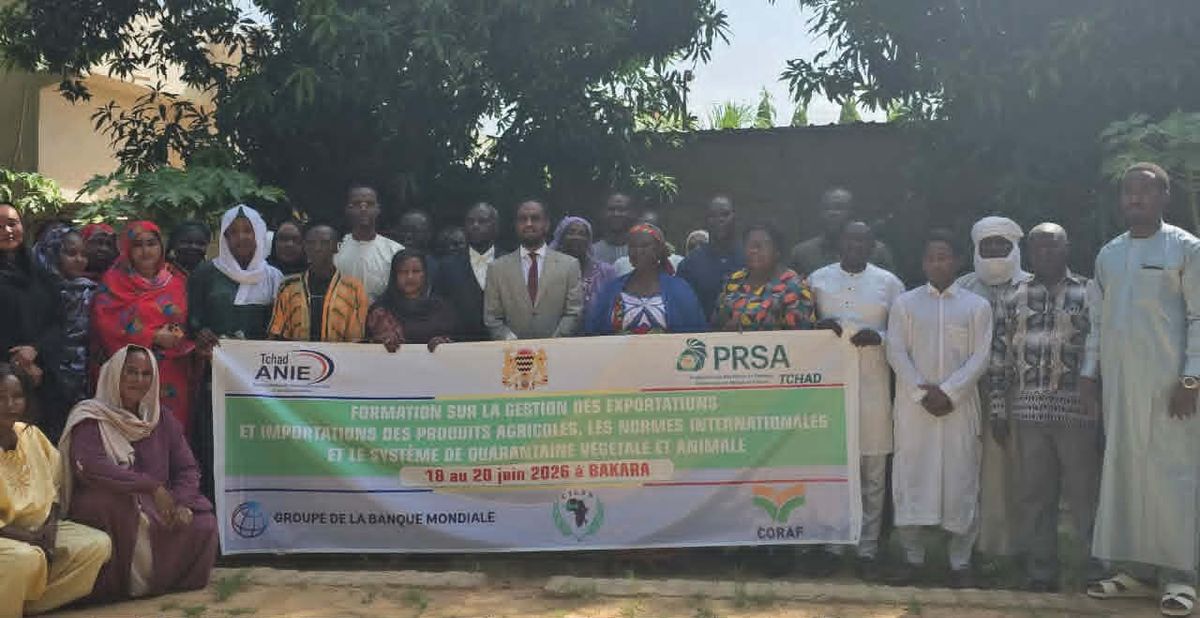
In a strategic move to elevate its agricultural sector, the World Bank and Chad’s National Investment and Export Agency (ANIE) recently concluded a specialized training session in Bakara. The program, part of the Agricultural Sector Resilience Program (PRSA), zeroed in on equipping local stakeholders with essential skills to navigate the complexities of international trade regulations and export procedures.
Overcoming trade barriers through targeted upskilling
Trade barriers remain a persistent challenge for Chadian farmers and agribusinesses, particularly when it comes to meeting stringent international quality and safety benchmarks. The training, held on June 18, 2026, addressed critical pain points such as compliance with international certifications, efficient logistics management, and adherence to sanitary and phytosanitary measures. These skills are vital for producers aiming to tap into lucrative export markets while avoiding costly customs pitfalls.
According to Gotoraye Arnaud, Coordinator of the PRSA Agricultural Market Dashboard, the session was designed to demystify the export process. « Many producers struggle not only with procedural hurdles but also with the technical requirements of foreign markets. This training bridges that gap by providing actionable insights into global trade norms, » he explained.
A strategic pillar of Chad’s economic vision
The initiative aligns with Chad’s broader economic development goals, as outlined in the Tchad Connexion 2030 National Development Plan. The plan emphasizes private-sector growth, local value addition, and export promotion as key drivers of job creation and regional economic integration. Dadi Adoum Arsin, Deputy Director General of ANIE, highlighted the training’s role in this strategy: « Building a resilient economy isn’t just about producing more—it’s about selling more. By strengthening our export capabilities, we’re not only boosting revenues but also asserting our economic sovereignty. »
The timing of the training is particularly significant. With the African Continental Free Trade Area (AfCFTA) now in effect, Chad stands at a crossroads. The agreement opens doors to a market of over 1.4 billion consumers, but success hinges on the country’s ability to meet high standards in quality, standardization, and certification. « Chad cannot afford to be left behind, » Arsin emphasized. « We must invest in our human and institutional capacities to fully capitalize on this historic opportunity. »
Empowering businesses to thrive in global markets
ANIE’s mission extends beyond organizing training sessions. The agency aims to foster an ecosystem where businesses—whether smallholder farmers or large-scale processors—have access to real-time market intelligence, technical support, and strategic partnerships. « Our goal is to be more than a facilitator; we want to be a catalyst for transformation, » said an ANIE spokesperson. « By equipping local enterprises with the tools they need, we’re helping them compete on the world stage while championing the quality and ingenuity of Chadian products. »
The session brought together a diverse cohort, including public officials, private-sector representatives, sanitary inspectors, and agri-food producers. Together, they explored best practices in export documentation, risk mitigation, and compliance with regional trade agreements. The collaborative approach underscores a shared commitment to building a more competitive and integrated agricultural sector.