Mariama Hamani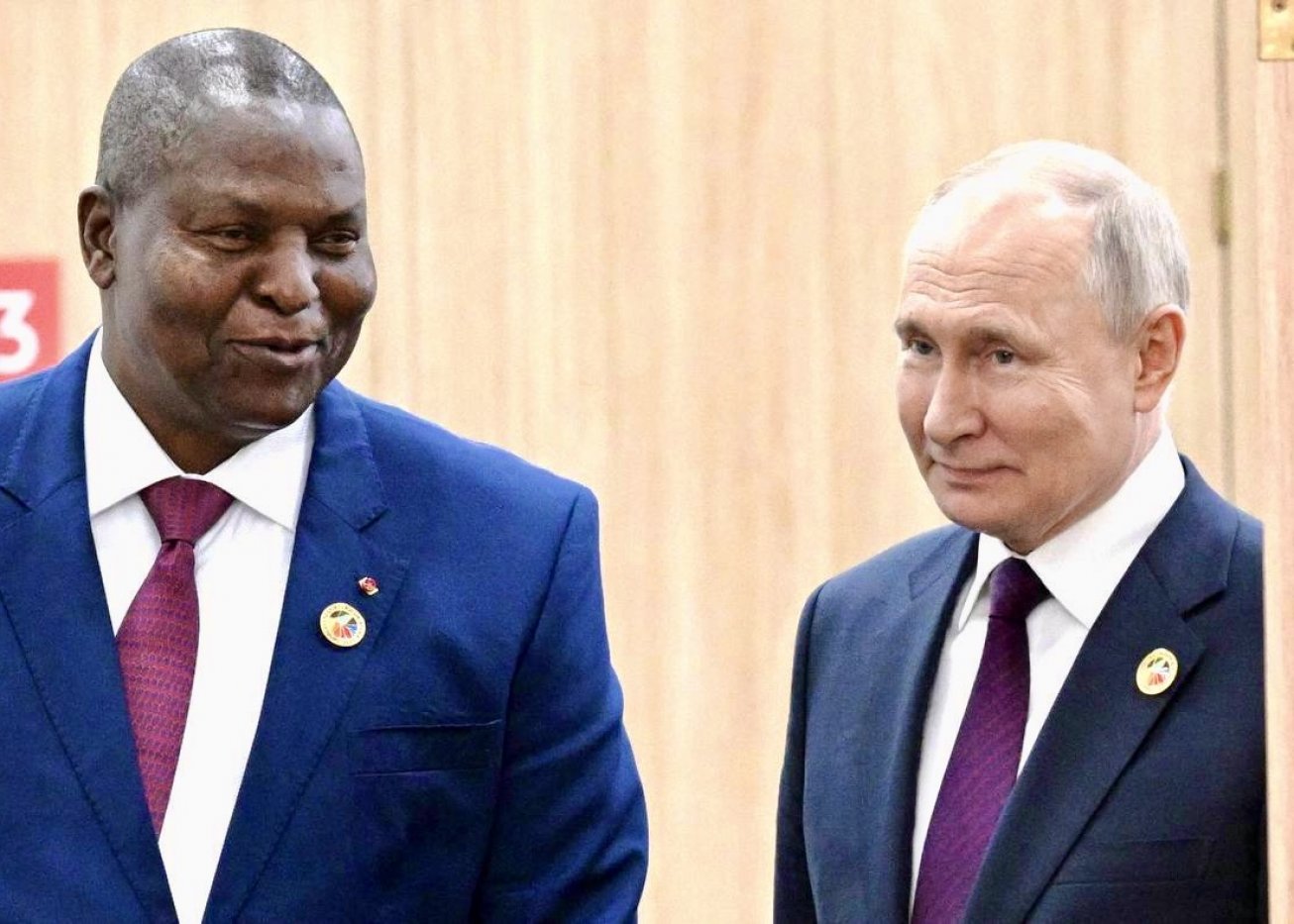
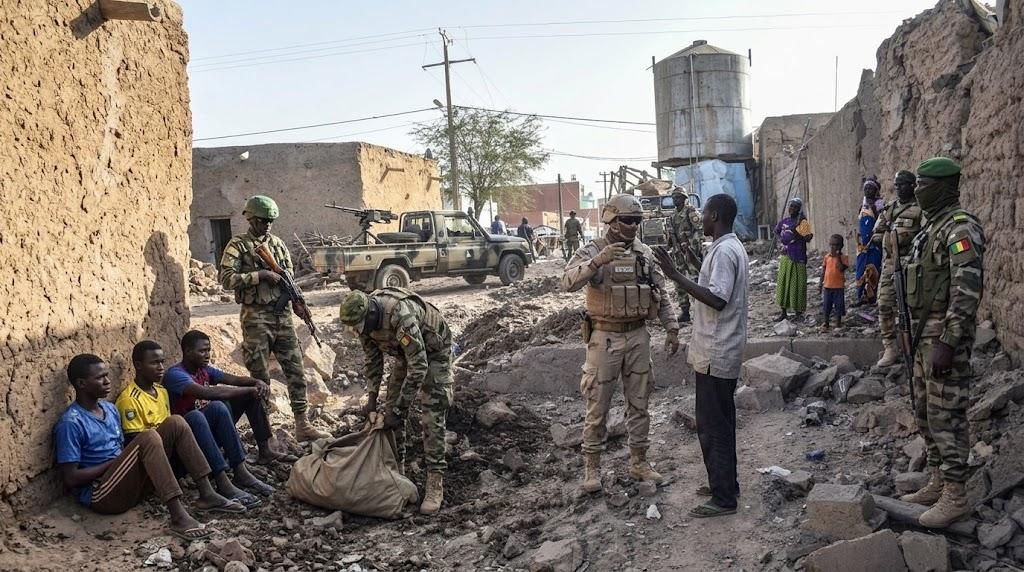
In the heart of the Central African Republic, a new wave of horror has once again gripped the nation, as chilling videos surfaced on social media earlier this month. The footage, captured in early July, reveals a scene of unspeakable brutality orchestrated by mercenaries from the Wagner Group, a paramilitary entity operating with apparent impunity under the blessing of Bangui’s authorities.
The images depict a calculated act of violence, where individuals—some armed combatants seeking to disarm, others unarmed civilians—were systematically executed and decapitated. The severed heads were deliberately arranged on the ground, forming a grotesque tableau that underscores the mercenaries’ disregard for human life. Disturbing audio accompanies the visuals, with Wagner’s commander issuing a chilling ultimatum: “You don’t want peace? Then this is it. Slaughter every last one of them!” The macabre display echoes the propaganda techniques of jihadist factions, once infamous for their staged executions, now mirrored by Wagner’s operatives.
The normalization of atrocity
This latest episode is not an isolated incident but part of a disturbing pattern of behavior that has become distressingly routine in the Central African Republic. The victims, often members of armed groups or civilians caught in the crossfire, were lured under the pretense of a disarmament operation—a process cynically hijacked by Wagner’s forces. The mercenaries’ presence, sanctioned by the Central African government, has transformed the nation into a theater of unchecked violence, where the specter of brutality is an everyday reality for its people.
The Central African Republic has long been described as a “non-state” or “a country that does not exist”, a title that reflects its chronic instability. Decades of political upheaval, failed coups, and mutinies have left the nation fragmented, with a feeble central government clinging to power in Bangui while myriad armed factions carve out their territories. The United Nations’ stabilization mission, MINUSCA, has struggled to curb the spiraling chaos, and the arrival of Wagner’s operatives has only exacerbated the descent into lawlessness. International observers appear increasingly desensitized to the Central African Republic’s plight, accepting the normalization of such horrors as an unfortunate but inevitable reality.
Wagner’s colonial-style rule
Wagner’s footprint in the Central African Republic extends far beyond mere military operations. The group has embedded itself into the fabric of the nation, wielding control over the military, police, judiciary, intelligence services, and even airport security in Bangui. This parallel governance structure operates with near-total autonomy, enforcing its own brand of order through disappearances, torture, and extrajudicial killings. Reports suggest that Wagner’s influence often eclipses that of the Central African government, with local officials reduced to figureheads in a system dictated by Moscow’s mercenaries.
Unlike in other African nations where Wagner has rebranded as the “Africa Corps,” the Central African Republic remains a bastion of the group’s original identity. A statue erected in honor of the late Wagner founder, Evgueni Prigojine, stands as a grim testament to the group’s enduring presence. Each year, on Prigojine’s birthday, Central African soldiers join their Wagner counterparts in celebrations, further cementing the mercenaries’ grip on the nation. This unabashed display of power reflects a neo-colonial order, where the Central African Republic serves as both a resource-rich territory and a proving ground for Wagner’s brutal methods.
Despite the mounting outrage from opposition figures and civil society, calls for Wagner’s withdrawal have fallen on deaf ears. The Central African government, under President Faustin-Archange Touadéra, has repeatedly justified its alliance with the mercenaries, even as their actions provoke international condemnation. During a 2022 meeting with ministers, Touadéra allegedly declared, “We need the Russians. It’s thanks to them that we retain power.” The message was clear: retaining control, no matter the cost, has taken precedence over the safety and dignity of the Central African people.
As the Central African Republic continues to spiral into a vortex of terror, the world watches in silence. What was once a nation teetering on the edge of oblivion has now become a stage for Wagner’s brand of ruthless governance—a chilling reminder of the human cost of unchecked power and foreign intervention.

 Boureima Amadou