Mariama Hamani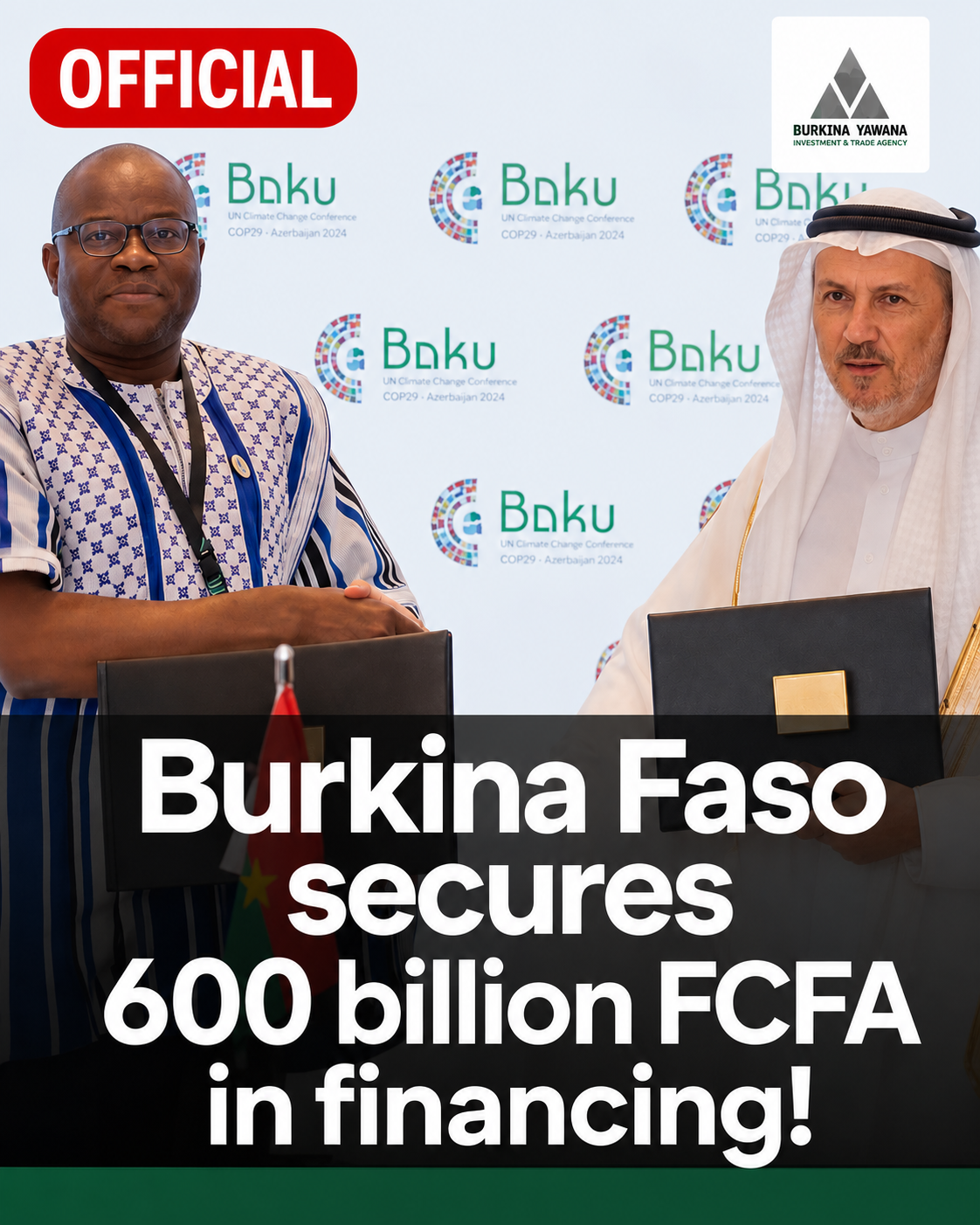
The recent agreement signed by Minister Aboubakar Nacanabo in Baku has injected new financial lifeblood into Burkina Faso’s struggling economy. Through a partnership with the International Islamic Trade Finance Corporation (ITFC), critical sectors such as fuel, food staples, fertilizers, and small business support are set to receive substantial funding. While this infusion promises immediate relief to domestic markets, it also exposes a glaring contradiction in the nation’s economic narrative.
Financial lifeline amid political rhetoric
Though the signing ceremony in Azerbaijan may have gone unnoticed by local media, its impact on Burkina Faso’s economic stability is undeniable. The funds will directly address pressing shortages in essential goods and agricultural inputs, ensuring that farmers can maintain production and consumers face less pressure at the pump. Without this injection, the risk of supply chain disruptions and price volatility would have intensified, further straining public trust.
The paradox of self-sufficiency claims
For months, official statements and public rallies have echoed a bold refrain: Burkina Faso is forging ahead with ‘no external credit’, proudly touting its ability to fund growth independently. Yet this rhetoric of financial autonomy collides head-on with the nation’s reliance on international financing. The paradox is striking—a country that insists on its self-sufficiency is simultaneously securing multi-million-dollar loans thousands of kilometers away.
The illusion of a ‘debt-free’ economy, while politically convenient, risks obscuring a harsher truth. By dismissing the inevitability of foreign financing, the public remains largely unaware of the mounting debt burden. The consequences of this disconnect may soon become clear: a potential debt crisis looms, one that could leave the nation just as constrained as before—only now, burdened by both debt and unmet expectations.
Economic laws defy political narratives
The hard realities of economics do not bend to political slogans. While the ideal of national self-reliance remains commendable, Burkina Faso’s present-day survival still hinges on foreign financial agreements. The government’s recent maneuvers underscore a pragmatic truth: sustainable development cannot be achieved in isolation. Until domestic revenue streams mature, international partnerships will continue to play a pivotal role in steering the economy forward.

 theafricantribune
 Boureima Amadou