
 Mariama Hamani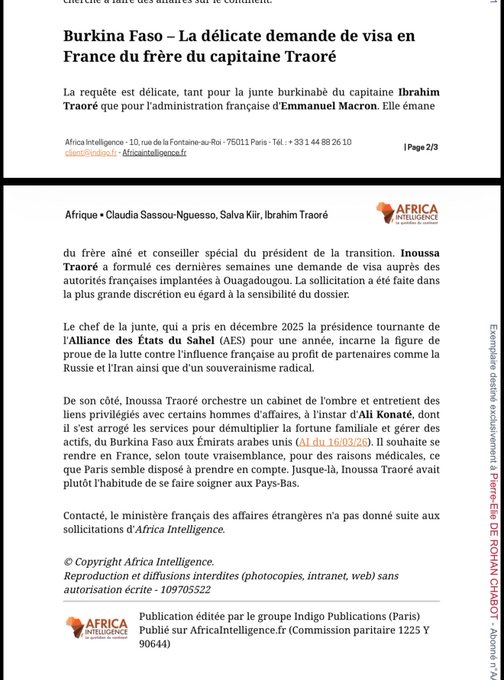
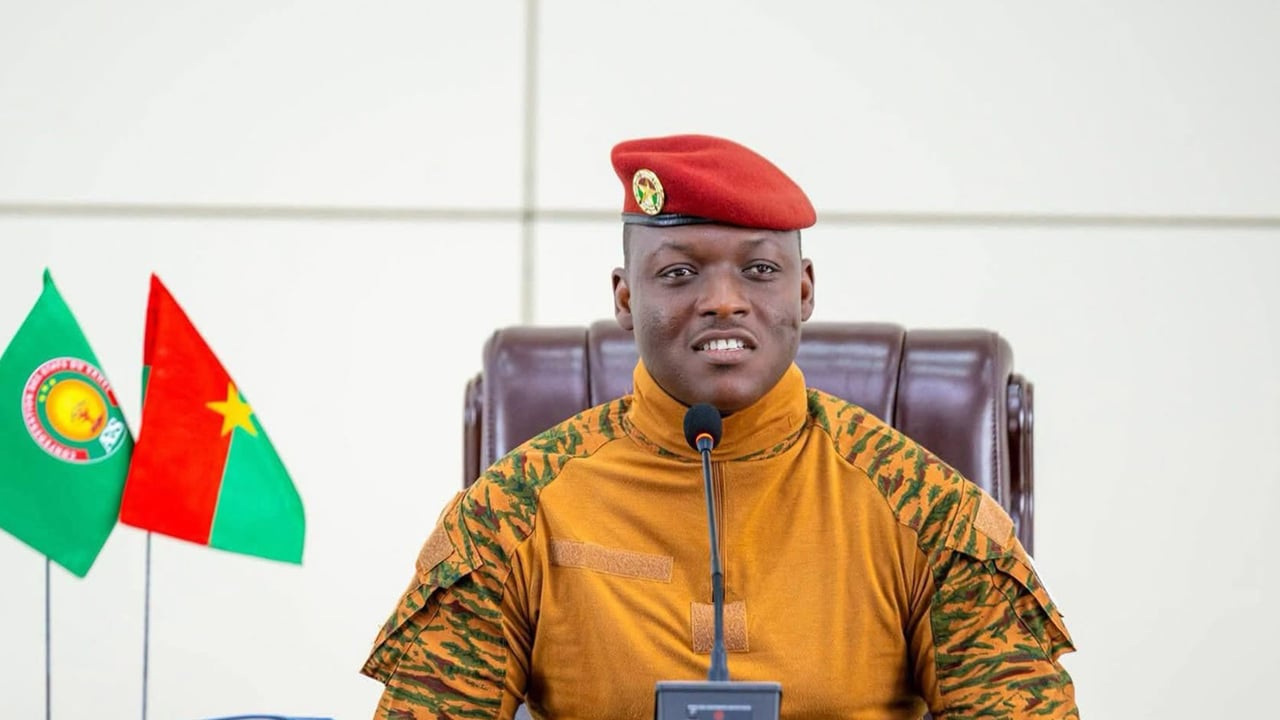
For over two years, Burkina Faso’s authorities have consistently voiced strong anti-French sentiments. Under Captain Ibrahim Traoré’s leadership, Paris is frequently depicted as a symbol of a colonial past that Burkina Faso aims to definitively shed. Actions like expelling French forces, condemning Western influence, and openly aligning with Russia and Iran have cemented this break as a cornerstone of the government’s public messaging.
However, beneath this assertive rhetoric of confrontation, certain developments raise questions.
Recent intelligence suggests a discreet move by a prominent figure close to the Burkinabè head of state. Inoussa Traoré, Captain Traoré’s elder brother and reportedly a special advisor to the transitional president, is said to have recently submitted a visa application to French authorities in Ouagadougou. This highly confidential step, detailed in a document, was reportedly taken with extreme discretion due to its sensitive nature.
Reports indicate that Inoussa Traoré seeks to travel to France for medical treatment, a departure from his usual practice of receiving care in the Netherlands. The French Ministry of Foreign Affairs has, however, neither confirmed nor commented on these reports.
A contradiction fueling criticism
Should these details prove accurate, they would underscore a significant and undeniable paradox. Since assuming power, Ibrahim Traoré has meticulously cultivated a political persona built on direct opposition to France. Official statements frequently castigate Paris, blaming it for numerous issues, while the government urges a complete severance of ties with former Western powers.
Within this context, the alleged request for a French visa by such a close member of the presidential family prompts a critical political inquiry: why seek entry into a nation consistently portrayed as a strategic adversary in official discourse?
This situation undoubtedly provides ammunition for the regime’s critics, who have long highlighted a discrepancy between the government’s public communication and the private decisions of some leaders, a common theme in African current affairs.
Sovereignist discourse versus reality
The Burkinabè government champions complete sovereignty and declares a definitive end to reliance on France. Yet, the practicalities of medical, financial, or administrative needs often reveal that international relations extend beyond political slogans. Numerous African officials continue to travel to Europe for specialized healthcare, business, or personal matters, even amidst official rhetoric that is often sharply critical.
In the case of the Traoré family, this visa application, if confirmed, risks fueling accusations of « two weights, two measures. » It could suggest a tough public stance designed for the general population, while in practice, France remains a destination of choice when circumstances demand it.
Between political communication and credibility
This incident serves as a reminder that in politics, actions are frequently scrutinized with the same intensity as words. When a nation is publicly labeled an enemy or an undesirable partner, any private overture towards that same country can be perceived as a contradiction. While this alone may not definitively prove political inconsistency, it inevitably sparks debate regarding the credibility of the sovereignist narrative advanced by authorities in Ouagadougou, impacting African governance perceptions.
Ultimately, if officially corroborated, this information would illustrate the inherent limitations of a policy founded on an overt break with Paris, simultaneously demonstrating how personal or institutional realities can sometimes lead to seeking services from the very nation one publicly criticizes.

 theafricantribune
 Boureima Amadou




