
 Mariama Hamani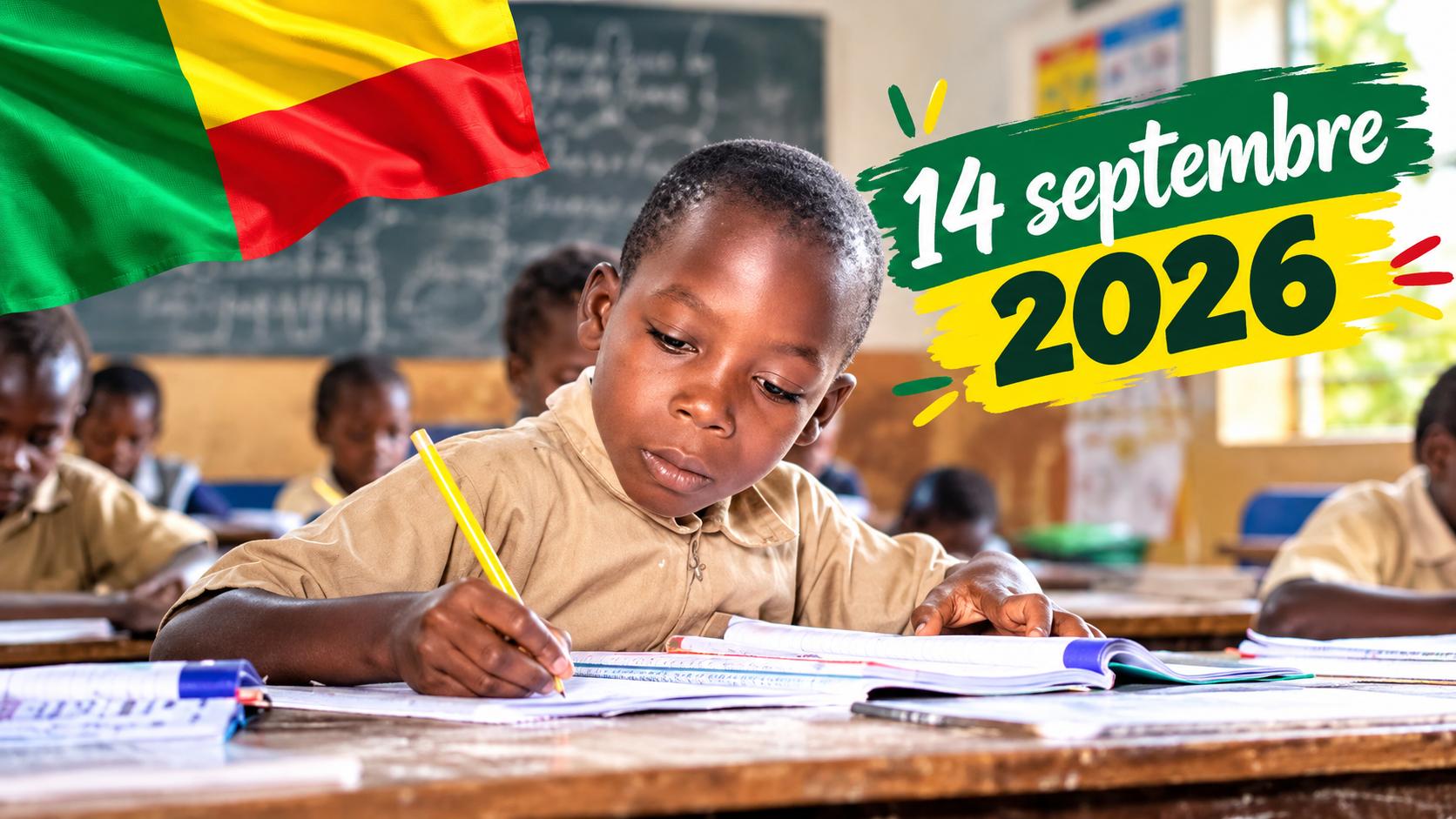
On Monday 14 September 2026, Benin’s classrooms came back to life. Pupils and teachers returned to schools in every part of the country, restarting the daily routine of lessons, registrations and timetables. The new academic year opens in a setting that looks more reassuring than in recent years: jihadist attacks have dropped sharply in the exposed areas of the north, and the government’s social programmes for learners — including the removal of tuition fees at the levels concerned — remain in force.
A countrywide return to class on 14 september
After weeks away from their desks, Beninese pupils picked up their school year again on Monday 14 September 2026. Primary schools and secondary establishments alike moved back into teaching mode, gradually settling into the rhythm that will carry them through the coming months.
In towns and villages across the territory, teachers and school administrators worked to welcome learners and to get activities running under the best possible conditions. A reopening that holds everywhere is no small achievement for Benin’s education system, and it carries real weight for families who organise their lives around the school calendar.
It also reflects a deliberate choice: to keep education running continuously, even while the wider West African region faces serious security pressures. For parents, seeing children back in class marks the start of another year devoted to learning and to building what comes next.
Free tuition lightens the load for households
Alongside the question of security, another factor shapes this school year: the social support offered to families. The authorities have put in place a series of measures designed to make it easier for children to reach the classroom and to reduce the financial weight carried by parents.
Among them is the abolition of tuition fees at the relevant levels. That policy matters for many households, especially those living on modest incomes, since it removes a cost that once decided whether a child enrolled or stayed at home.
By cutting expenses tied directly to schooling, the state aims to widen access to education and to fight the dropouts that financial hardship so often triggers. For parents, the support makes enrolment and continued attendance more manageable; for learners, it opens a wider path to progress through the system under better conditions.
A security situation that is better contained
This reopening also unfolds against a security backdrop that has shifted in an encouraging direction. Faced with the terrorist threat affecting several countries in the sub-region, Benin has steadily reinforced its defence and security apparatus over recent years, with particular attention to the northern departments.
Operations carried out by the defence and security forces have helped limit armed group incursions and have brought about a substantial fall in jihadist attacks. That improvement is decisive for keeping economic and social activity going — education included, since schools cannot function where fear keeps families indoors.
Security nevertheless remains a priority. The authorities continue their surveillance, prevention and protection work in sensitive zones, and that vigilance is what allows schools to stay open as normally as possible.
The return to class on 14 September therefore reads as a positive signal: although threats persist in certain areas, the country keeps its education system running and keeps defending children’s right to learn.
Getting pupils in is only the first step
Free tuition belongs to a broader effort to strengthen inclusion and fairness in education. The idea is straightforward: economic hardship should not become a permanent barrier to schooling. Because education drives development, widening access also means investing in human capital and in the country’s future.
Yet enrolment is only the beginning. Keeping learners in class throughout the year, raising the quality of teaching, ensuring that infrastructure is available and improving study conditions all remain open challenges.
A successful school year will depend on how far the entire education community pulls together: the government, teachers, parents, school heads and the learners themselves.
What this school year could deliver
The effective reopening of classes on 14 September 2026 across the whole national territory stands out as an encouraging indicator. It comes at a moment when security efforts are containing the jihadist threat more effectively, and when social policies are trying to lower the financial obstacles that stand between children and school.
Safety and social support together create a friendlier environment for the education of Beninese children. The task now is to hold that momentum for the whole academic year — preserving peace and security, consolidating the social measures already in place, and continuing to work towards schooling that is both accessible and of good quality.
So on 14 September, classrooms once again have their pupils. More than the simple start of a new year, this reopening symbolises the continuity of a public education service and the ambition of giving every learner the means to prepare for what lies ahead.


 Boureima Amadou





