Boureima Amadou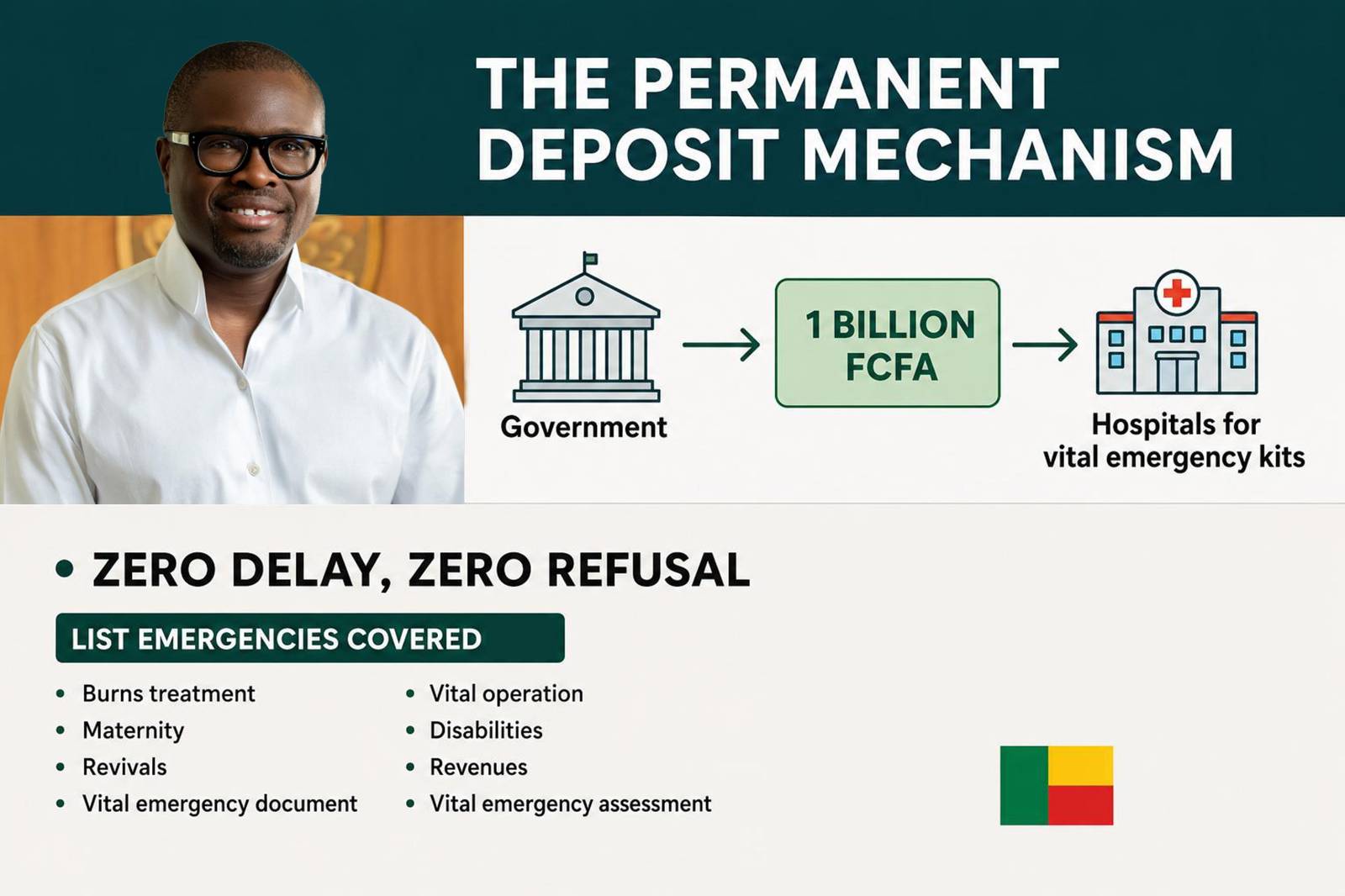
President Romuald Wadagni’s bold initiative to eliminate financial barriers in emergency care
On June 3, 2026, President Romuald Wadagni announced a historic financial allocation of one billion West African CFA francs to public health facilities across Bénin. This unprecedented measure is designed to ensure that emergency medical care remains accessible without financial constraints, fundamentally altering how critical healthcare services are delivered.
“First, we heal. Then, we address the financial implications,” declared the Head of State, encapsulating the transformative approach to healthcare governance. By establishing a permanent financial guarantee for public hospitals, the government is directly confronting a pressing yet often overlooked public health crisis: preventable deaths resulting from immediate financial inability to access emergency treatment.
The allocated funds will be automatically deployed for vital emergency cases, including road accidents, severe obstetric complications, respiratory distress, and cardiac arrests. Under this new system, financial limitations or the absence of family members to facilitate payment will no longer delay or deny life-saving interventions.
Transforming emergency care accessibility
While the exact number of beneficiaries remains unpredictable due to the unpredictable nature of medical emergencies, financial analyses of essential emergency care costs provide valuable insights. Typical expenses for emergency kits, initial medical supplies, and stabilization procedures range from 25,000 to 100,000 CFA francs. With this one billion franc allocation, an estimated 10,000 to 40,000 patients facing life-threatening conditions will receive immediate care without financial barriers.
The ripple effects of this policy extend far beyond individual patients. In Bénin, a single hospitalization can destabilize the financial security of an entire household. By removing the immediate financial burden of emergency care, this initiative shields vulnerable families from catastrophic health expenditures, potential debt cycles, asset liquidation, or the tragic loss of loved ones. The broader societal impact could benefit up to 200,000 individuals indirectly, reinforcing the social safety net for the most economically disadvantaged.
Empowering healthcare professionals
Beyond the financial implications, this reform alleviates the ethical and professional dilemmas faced daily by healthcare workers. Doctors and nurses in public hospitals will no longer be constrained by the need to prioritize payment collection over delivering urgent medical interventions. This decision enables medical professionals to fully adhere to their ethical obligations, focusing exclusively on saving lives without the distressing requirement to assess financial means in critical moments.
“No life should be lost due to financial inability when immediate medical action is required. Human life is invaluable,” affirmed the President, emphasizing his commitment to fostering a healthcare system that prioritizes humanity and protection for all citizens.
Comprehensive healthcare infrastructure development
This landmark financial allocation is part of a larger strategic vision championed by President Romuald Wadagni to strengthen the nation’s healthcare infrastructure. To ensure optimal functioning of health facilities, an additional ten billion CFA francs have been earmarked for universal access to clean water and reliable electricity in all public health centers currently lacking these essential services.
These simultaneous initiatives mark a decisive step toward achieving universal healthcare access in Bénin by 2030. The policy underscores the principle that medical efficacy must be inseparable from social justice. The focus now shifts to the Ministry of Health, tasked with implementing and meticulously managing this emergency care fund to ensure every allocated franc translates into preserved lives and restored health across the nation.