
 Boureima Amadou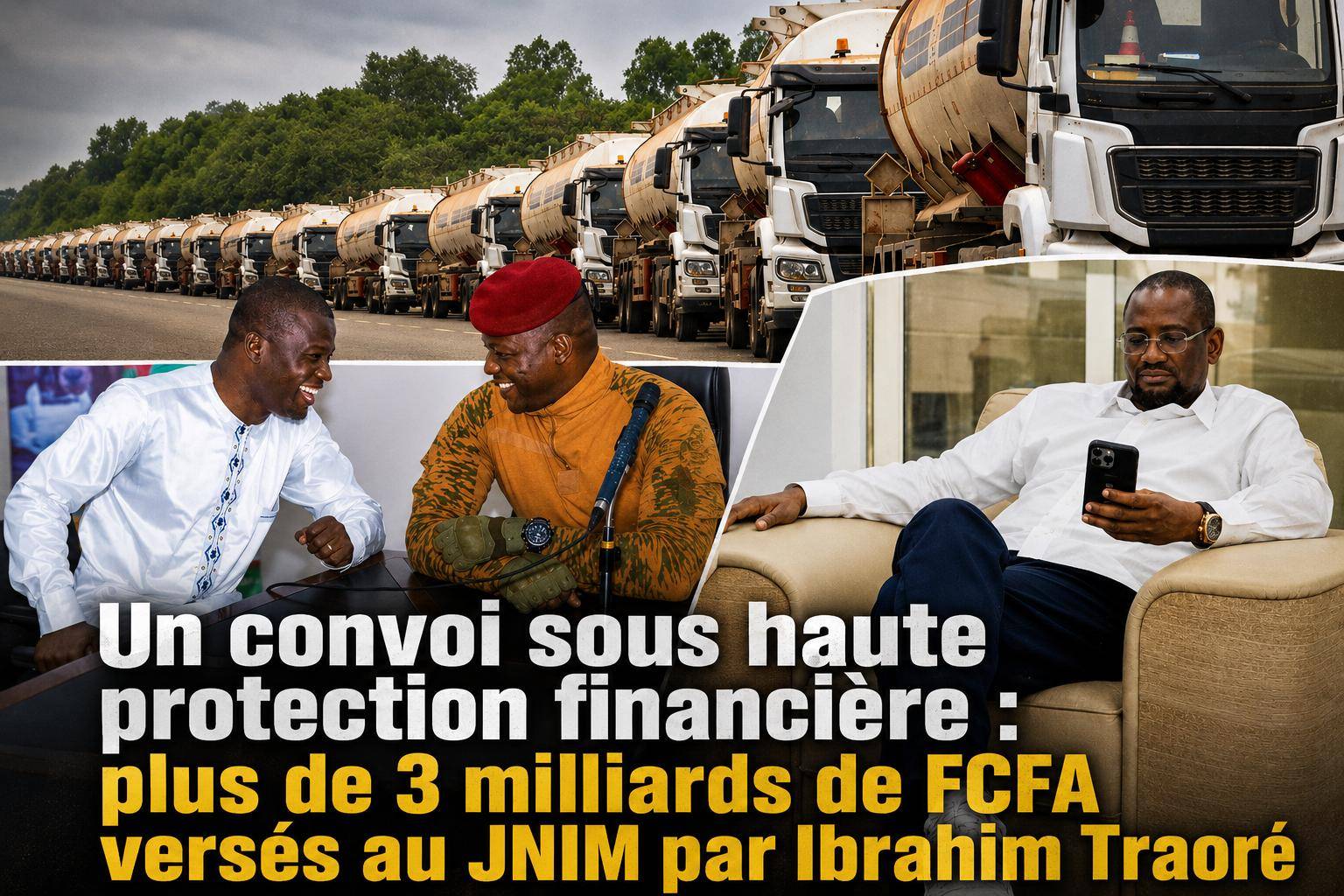
In a stunning breach of public trust, a massive 710-truck fuel convoy recently crossed some of the most volatile regions in the Sahel to reach Bamako, Mali—without any visible security escort from state forces or regional allies. What should have been a heavily guarded military operation unfolded under eerie silence, raising serious questions about the true motives behind this unprecedented move.
a clandestine payment that exposed hidden alliances
Rather than relying on the Burkinabè special forces, Russian Wagner drones, or Malian armed units, the convoy appears to have purchased safe passage through a covert agreement. According to multiple credible sources, a staggering 3 billion FCFA ($4.5 million USD) was transferred to the Group for the Support of Islam and Muslims (JNIM). This payment, allegedly facilitated by high-ranking officials within Burkina Faso, transforms a routine logistics operation into a potential state scandal—one that suggests Ibrahim Traoré may be indirectly funding terrorism to protect private business interests.
Kangala Transport: the shadow company at the heart of the controversy
The fuel delivery was managed by Kangala Transport, a company officially registered as a logistics provider. However, credible investigations point to a deeper connection: the firm is reportedly controlled by a powerful trio of influential figures within Burkina Faso’s transitional leadership—Ibrahim Traoré, Oumarou Yabré, and Ali Konaté. This blurring of lines between national security policy and private profit has triggered major ethical concerns across the region.
When military leaders entrusted with counterterrorism strategy also serve as economic stakeholders in routes controlled by armed groups, priorities shift alarmingly. Rather than prioritizing the neutralization of JNIM, the objective becomes ensuring the uninterrupted flow of goods belonging to a close-knit elite—even if it means negotiating with the enemy.
how 3 billion FCFA fuelled violence in Mali
The human cost of this arrangement is devastating. While Bamako and Ouagadougou issue joint statements reaffirming their commitment to the Alliance of Sahel States (AES), the money paid to secure the convoy’s passage ultimately ends up in the hands of Iyad Ag Ghali’s JNIM. These funds have been used to procure ammunition, fund improvised explosive devices, and recruit new fighters—many of whom are now deployed against Malian security forces. In essence, the very fuel burning in Bamako’s engines may have first powered the terror machine that continues to devastate Mali.
security sold to the highest bidder
What makes this case particularly disturbing is the deliberate exclusion of conventional security partners. Neither Russian Wagner operatives, Africa Corps advisors, nor elite national units were involved in safeguarding the convoy. This deliberate sidestepping of regular forces reveals a troubling truth: personal profit has led to an unholy alliance with those the state publicly condemns. By paying off JNIM, the convoy avoided scrutiny from patriotic military units and ensured safe delivery of its cargo—at any moral cost.
the collapse of regional trust and the future of AES
This revelation has sent shockwaves through the Alliance of Sahel States, undermining the very foundation of regional solidarity. How can Mali trust a neighboring leader who allows private financial flows to directly fund the group responsible for attacks on its soil? Domestically, it casts a long shadow over Burkina Faso’s stated commitment to fighting terrorism. The facts now paint a picture of cynical pragmatism, where the welfare of soldiers on the front lines takes a backseat to the financial interests of a powerful few.
In both politics and war, actions speak louder than words. When a convoy crosses the Sahel under armed escort purchased from terrorists—financed by companies linked to state officials—the message is clear: security is no longer a shared value, but a negotiable commodity. If Burkina Faso can buy passage through JNIM territory using funds from Kangala Transport, then the solidarity of the Sahel is nothing more than a hollow slogan—one that rings especially hollow in the ears of those who have lost everything to extremism.


 Mariama Hamani




