
 Mariama Hamani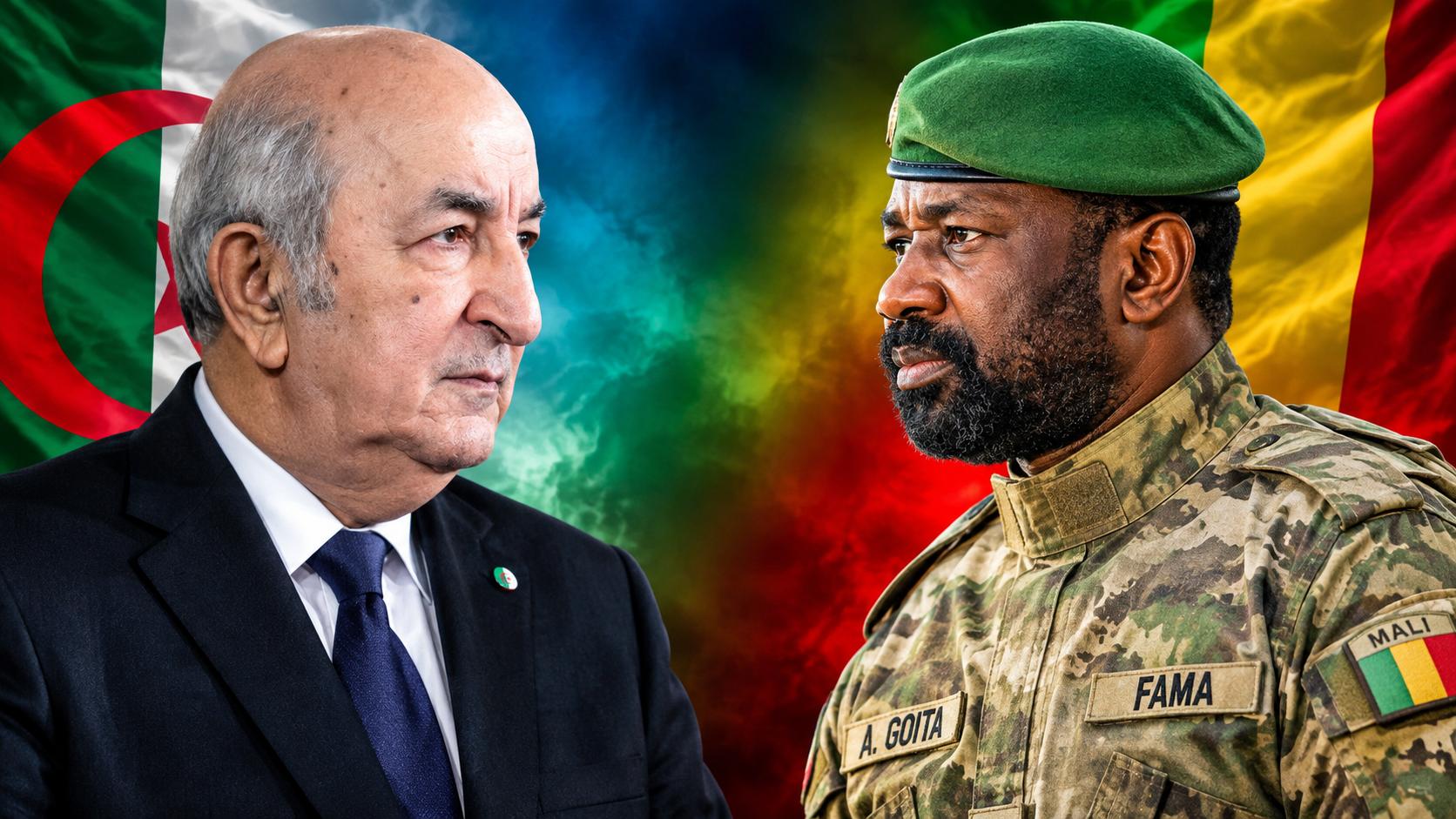
A handshake at Koulouba that conceals a fragile reality
Algeria’s prime minister, Sifi Grine, spent Monday in Bamako, standing shoulder to shoulder with the man who now runs Mali, army general Assimi Goïta. The encounter was staged as a landmark moment meant to cement a fresh rapprochement between the two Sahelian neighbours, complete with formal honours and warm words. Yet the choreography of the visit struggles to mask a far messier diplomatic picture: the shadow of recent bitter quarrels, and the lingering memory of the Algiers Accord, still hang over a relationship that has rarely been so strained.
What was actually on the table at the palace
Inside the reception rooms of the Koulouba palace, the agenda centred on three themes: tightening bilateral links, deepening security cooperation and reviving economic exchanges across a region under intense pressure. For Algiers, the trip forms part of a clear ambition to reassert influence across its southern hinterland. For Bamako, parading a heavyweight diplomatic partner offers a way out of a deepening international isolation. Seasoned observers of the region, however, remain unconvinced by the picture of unity on display.
Two governments, two very different calculations
Algiers wants its southern backyard back
Algeria has long regarded the Sahel as its own strategic depth and has no appetite for a permanent zone of instability along its southern frontier, where militant networks and cross-border trafficking thrive. Re-engaging Bamako is, from this perspective, less an act of friendship than a matter of self-protection.
Bamako needs a diplomatic lifeline
Mali’s military authorities, having cut ties abruptly with their traditional Western partners and entangled themselves in uncertain regional alliances, are now hunting for new backers. A high-profile visit from Algiers delivers exactly the kind of visible endorsement they crave.
The heavy baggage of Bamako’s recent accusations
This sudden show of brotherhood follows months of unusually sharp diplomatic confrontation. Not long ago, the junta in Bamako was piling criticism on Algiers, accusing its northern neighbour of meddling in Malian domestic affairs. Among the grievances repeated at every opportunity were Algeria’s hosting of Malian opposition figures and influential religious leaders, and, above all, the alleged backing given to autonomy-seeking rebel groups in the north.
By portraying Algiers as a sponsor of “hostile acts” carried out through peace intermediaries, the military leadership was also looking for an external scapegoat to explain away its own security deadlock and the deteriorating situation on the ground.
The Algiers Accord still tilts the balance towards Algeria
In this quiet tug of war, Algeria keeps a strategic edge it has never really lost. Cast for decades as the region’s security gatekeeper and indispensable mediator, it long set the peace agenda in the Sahel, most notably through the 2015 Algiers Accord. When the junta unilaterally renounced that framework in early 2024, it believed it was asserting its authority and casting off outside supervision.
Reality proved otherwise. Dropping the Algerian negotiating framework brought neither peace to northern Mali nor an end to the security threat. By travelling to Bamako now to press its terms and restart dialogue, Algiers is demonstrating just how central it remains: Bamako may try to sidestep Algerian diplomacy, but it always ends up having to reckon with it.
A marriage of convenience rather than a genuine alliance
The rapprochement celebrated this week looks far more like a forced arrangement than a lasting partnership built on trust. Each side is playing a pragmatic game: save appearances, keep the relationship from tipping past the point of no return, but leave the accumulated resentment untouched.
What this visit leaves unresolved
If the protocol delivers general Assimi Goïta a welcome burst of favourable coverage, it settles none of the underlying problems. The Malian authorities continue to anchor their legitimacy in security rhetoric while indefinitely postponing any return to a constitutional, democratic order.
Without a real commitment to domestic political stability and a sincere acknowledgement of regional balances, the pledges exchanged during this meeting risk amounting to little more than public relations. Behind the diplomats’ smiles and the crisp uniforms, relations between Bamako and Algiers remain a minefield, with each side watching for the other’s first misstep.


 Boureima Amadou





