Mariama Hamani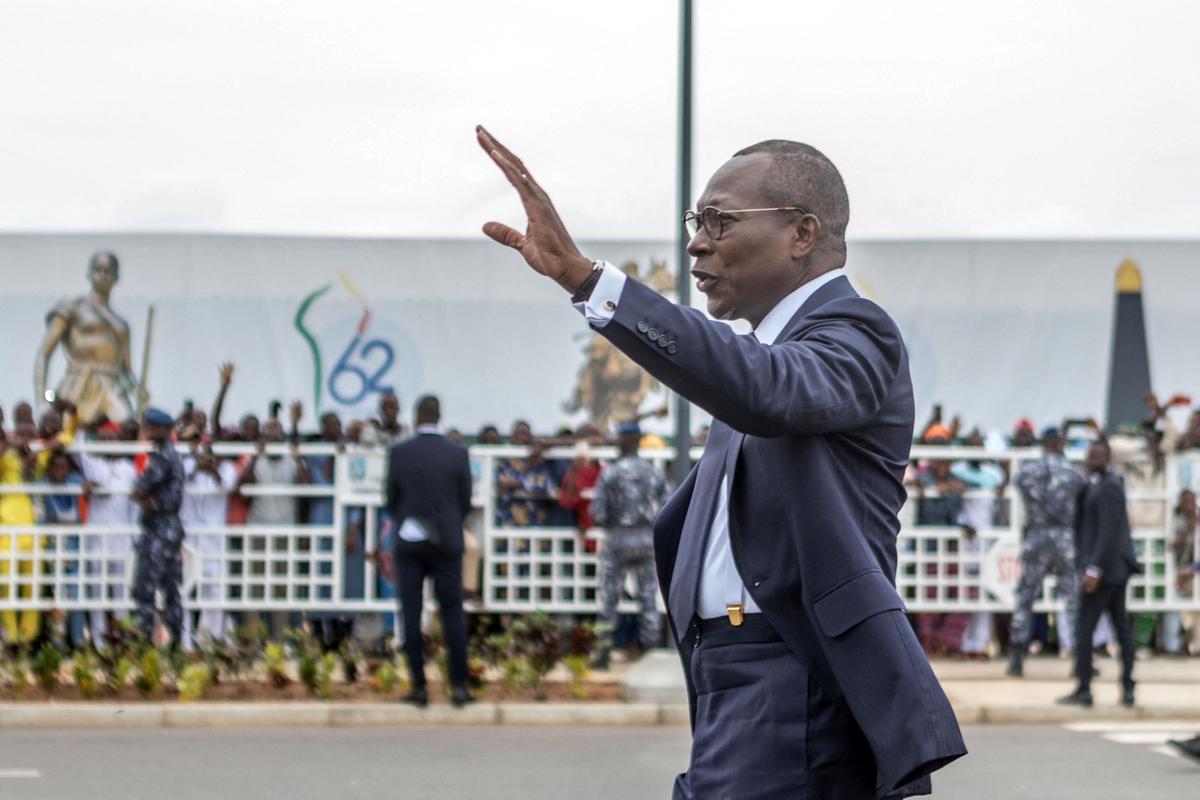

Gunfire erupted in Cotonou, Benin’s economic hub, this Sunday morning as a group of soldiers announced on national television that President Patrice Talon had been removed from office. The government swiftly responded, declaring the attempted coup had been « thwarted ». Authorities confirmed the situation was under control as soldiers attempted to seize key institutions.
What exactly unfolded in Cotonou?
Eight soldiers, wearing berets in various colors and armed with assault rifles, appeared on Benin’s national television claiming to represent the « Military Committee for Refoundation » (CMR). They declared they had ousted President Patrice Talon and installed a lieutenant colonel as their « president of the CMR ».
The group cited several grievances, including:
- deteriorating security conditions in northern Benin
- neglect of fallen soldiers and their families
- unfair promotions that overlooked deserving military personnel
- alleged « veiled erosion of fundamental freedoms »
Witnesses reported gunfire near the presidential palace and military blockades at the national television headquarters. Access to the Sofitel hotel and areas housing international institutions was restricted, though most of Cotonou carried on with normal activities.
How did Benin’s government react?
Interior Minister Alassane Seidou addressed the nation on television, stating that « loyal armed forces thwarted the coup attempt ». He described the group as a « tiny faction that only temporarily controlled the television » and assured citizens that Cotonou and the country remained secure.
According to military sources, about a dozen soldiers, including the coup leaders, were arrested as cleanup operations continued to restore full stability.
Who is President Patrice Talon?
Patrice Talon has served as Benin’s president since 2016 and is expected to step down in April 2026 after completing his second term, as mandated by the constitution. His tenure has been marked by economic growth achievements but also by increasing authoritarian trends that critics argue undermine the nation’s democratic traditions.
The upcoming presidential election has excluded the main opposition party, pitting the ruling party against a self-described « moderate » challenger. Benin faces ongoing security challenges from jihadist violence in its northern regions.
International responses to Benin’s crisis
The Economic Community of West African States (ECOWAS) strongly condemned the coup attempt, declaring it « unconstitutional and a subversion of the Beninese people’s will ». The regional bloc pledged « all necessary support » to the legitimate government and people of Benin.
The African Union (AU) issued a similar statement, vehemently rejecting the putsch and calling on all involved military personnel to « immediately cease illegal actions » and return to their professional duties.
Historical context of military interventions in Benin
Benin has a complex political history marked by multiple coups and attempted overthrows:
- 1963: Colonel Christophe Soglo overthrew the government
- 1965: Military returned to power, again placing Soglo in charge
- 1969: Another coup replaced Émile Derlin Zinsou with a military directorate
More recently, Benin experienced failed coup attempts in 2020 and September 2024. The current incident follows a broader trend of military takeovers across West Africa since 2020, affecting countries like Mali, Burkina Faso, Niger, Guinea, and most recently Guinea-Bissau.

 Boureima Amadou