
 Mariama Hamani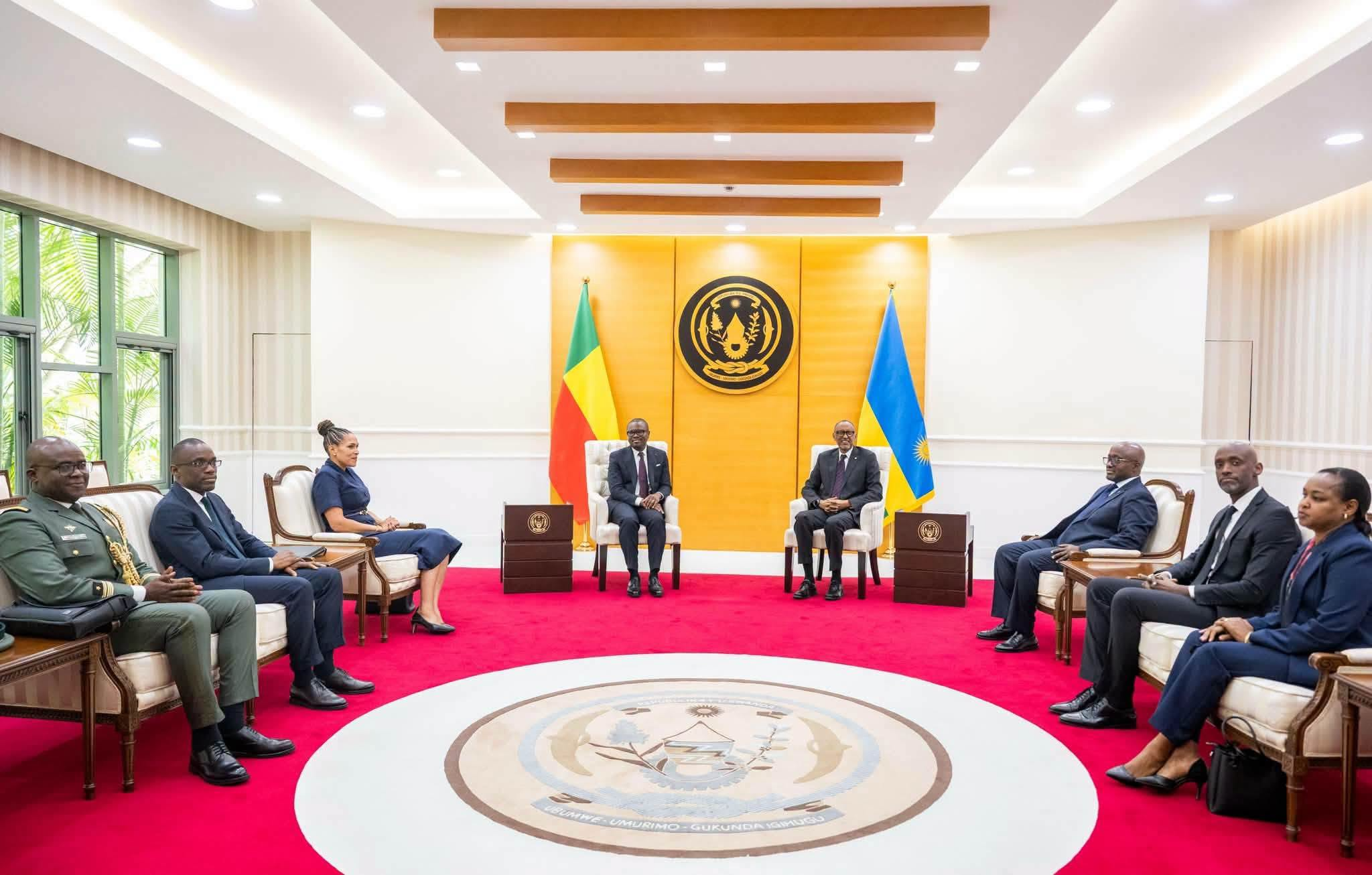
It was his first official journey to Rwanda since taking the oath of office last May, and President Romuald Wadagni of Benin made it count. Forty-eight hours in the Rwandan capital, crowned by a summit with President Paul Kagame, have triggered a broader conversation in Cotonou and beyond: what does this partnership really produce, and where is it headed next?
Why the trip is being read as a turning point
For Benin’s diplomatic apparatus, the visit was never simply ceremonial. It signalled continuity — a deliberate effort to keep alive a bilateral relationship that has come to be seen as a reference point on the continent. The meeting between the two heads of state is being interpreted as a way of locking in momentum rather than opening a new chapter from scratch.
A two-day agenda built around security and governance
Welcomed with full honours at Village Urugwiro, the presidential palace, the Beninese head of state began with a one-on-one exchange with his Rwandan counterpart before the talks widened to include both ministerial delegations. Two priorities framed the discussions: deepening security cooperation and modernising the way the state manages public affairs.
Border protection and shared intelligence
On the security front, Cotonou and Kigali are keeping a tight working relationship aimed at reinforcing regional stability and the exchange of information. Both leaders restated their commitment to continued technical and logistical support, with particular attention to safeguarding frontier zones.
Rwanda’s investment and digital playbook in Benin’s sights
On the economic and administrative side, the Beninese delegation examined how Rwanda draws in foreign direct investment and how it has moved public services online. Wadagni, whose background is in finance and economics, underlined the importance of building practical synergies between the two capitals in order to stimulate trade within Africa.
Gisozi memorial: remembrance as part of the state visit
In keeping with the republican tradition observed during official visits to Kigali, the Beninese president also visited the Gisozi Genocide Memorial. There he laid a wreath in tribute to the victims of 1994, praising the resilience of the Rwandan people and their capacity to rebuild a prosperous and united nation.
The debate now shifts to delivery
What this visit confirms is that the Cotonou-Kigali axis remains a central pillar of Benin’s foreign policy, anchored in economic development, technological innovation and shared security. What it leaves open is the harder question: how fast the stated intentions turn into measurable results, and whether the partnership can keep its promise as attention moves away from the summit table.
What to watch in the months ahead
- Whether security and intelligence cooperation extends beyond border protection into wider regional coordination.
- Whether Rwandan expertise on investment promotion and digital administration is translated into concrete Beninese reforms.
- Whether intra-African trade between the two economies genuinely grows as a result of the stated synergies.
- Whether the Cotonou-Kigali relationship is sustained through regular follow-up rather than remaining a diplomatic high point.
The coming months will show whether this 48-hour visit is remembered as a symbolic milestone or as the moment a strategic partnership moved from declarations to deliverables. That, more than the protocol, is what observers on both sides are now waiting to see.


 Boureima Amadou





