
 Mariama Hamani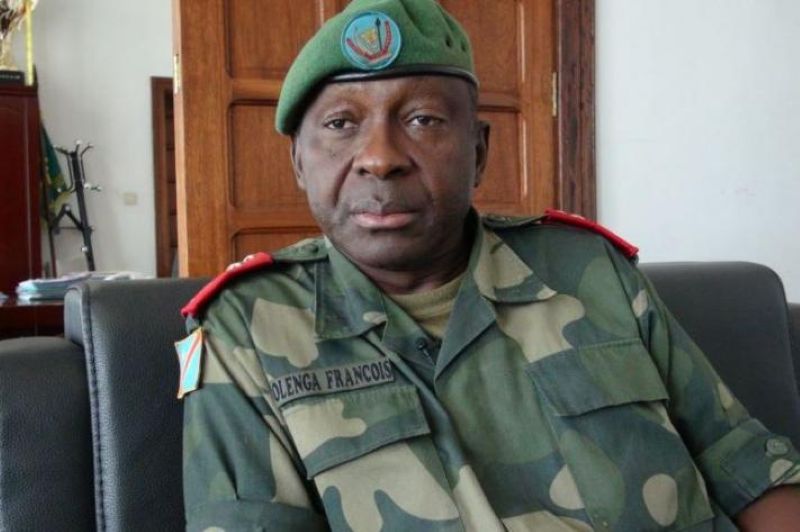
After more than nine years on Washington’s financial blacklist, retired four-star General François Olenga and his Safari Club complex can once again deal with American citizens and companies — a shift that carries direct consequences for the people, businesses and institutions that orbit one of Kinshasa’s best-known leisure and hospitality destinations.
A decision that reaches far beyond one man
The practical effect is immediate: the retired general is no longer barred from interacting with American nationals, and Safari Club, his sprawling tourist complex in N’sele, is free to welcome US clients and partners again. For a site that had been frozen out of any commercial relationship with American entities or individuals, the change reopens a door that had been sealed since June 2017.
His lawyer, Aimé Kilolo Musamba, confirmed the development in a statement dated 23 September, saying the US Treasury had formally notified him of the OFAC decision to remove General François Olenga Tete and Safari Club from the American sanctions list.
Nine years of legal work behind the reversal
Kilolo described the outcome as the culmination of more than nine years of effort, travel and advocacy, including repeated trips to Washington to press the case before US institutions.
“I have always maintained that the elements of the case did not justify keeping these sanctions against my client. Today, this long procedure has reached its conclusion,” he wrote, adding that the episode proves an African lawyer can mount a defence at the highest international level and take on the complex legal machinery of major powers.
Consequences for how the DRC handles sanctions
For Kilolo, the lesson extends to every Congolese citizen. He argues the DRC must shake off its lethargy on international sanctions and stop depending almost entirely on the United States or the European Union to impose individual and financial measures.
Faced with international crimes committed in the east of the country, he insists, Kinshasa cannot keep waiting for others to act.
“Our country, the DRC, must equip itself with a national legislative framework allowing its own institutions to adopt targeted sanctions, in compliance with the rule of law and the rights of the defence, against persons and entities involved in international crimes committed on its territory,” he said from Brussels.
He framed sovereignty as the capacity of a state to deploy its own legal instruments to protect its population and fundamental interests, adding that justice should not remain a responsibility Congo abandons to others.
What triggered the original blacklisting
General Olenga was placed on Washington’s financial blacklist in June 2017, while he headed the close protection detail of former president Joseph Kabila. His assets were frozen and he was barred from travelling to the United States.
Washington accused him of obstructing the democratic process in a country that had slid into crisis after Kabila stayed in power beyond the expiry of his mandate in December 2016.
The US Treasury said that under his control, the Republican Guard had harassed political opponents, carried out arbitrary arrests and executions, and obstructed the work of UN observers.
Economic ripple effects for Kinshasa and beyond
The measures had frozen any assets the general might hold in the United States and prevented him from doing business with American entities or individuals. The same restrictions hit Safari Beach in N’sele, a high-profile tourism and leisure complex whose access to US customers and partners was cut off.
The delisting now restores the possibility of American commercial ties — a change likely to be felt by employees, suppliers and service providers connected to the complex, and by a wider business community watching how international sanctions shape investment and trade in the DRC.


 Boureima Amadou





