
 Mariama Hamani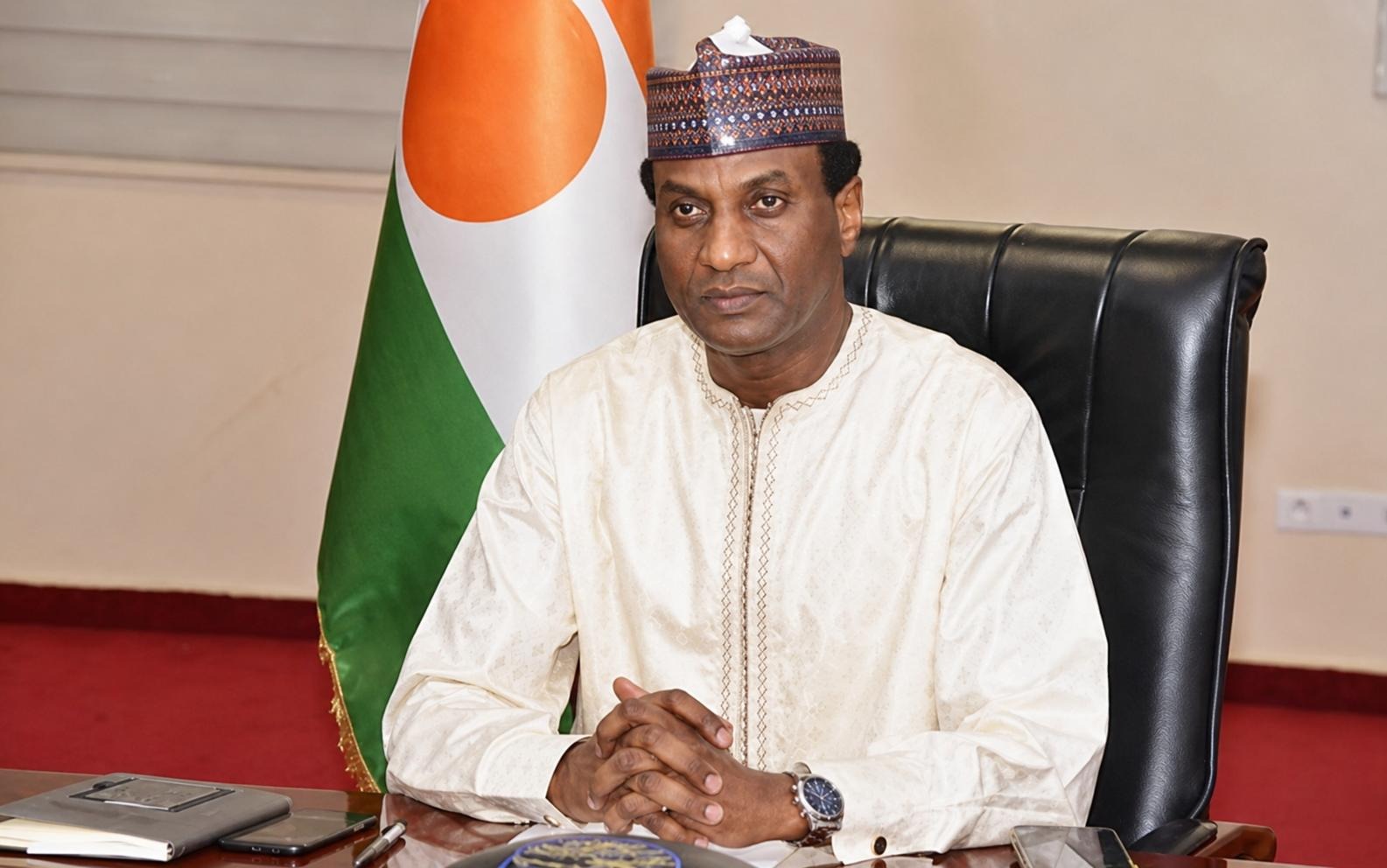
From trusted collaborator to restricted figure: the shifting status of Niger’s prime minister
In military-led transitional regimes, the line separating a favored associate from a person under suspicion can vanish without warning. The recent developments surrounding Niger’s civilian Prime Minister, Ali Mahamane Lamine Zeine, have once again exposed the precarious position of public officials navigating the shadow of armed factions.
Observers within the Prime Minister’s inner circle report growing unease about the sudden tightening of security protocols surrounding the economist. His entire protection detail has been replaced without prior notice, while even those granted access to his office now face rigorous and systematic body searches. While authorities attribute Lamine Zeine’s prolonged absence from his duties to a severe bout of malaria, whispers in the corridors of power suggest a more calculated move: a de facto house arrest, with persistent rumors of his impending resignation fueling speculation.
The art of invisible containment
The absence of clear and transparent communication only deepens the uncertainty. In systems where military command dictates the flow of information, opacity becomes a tool of governance. The security measures imposed on a civilian leader—far beyond standard protective protocols—paint a picture of containment rather than care.
This pattern is familiar across Sahelian military transitions. When technocrats or civilian figures resist aligning with the strategic or ideological shifts imposed by uniformed leaders, the security apparatus swiftly moves to neutralize internal dissent. Rather than risking public dismissal—potentially unsettling the facade of national unity—juntas often resort to subtler forms of exclusion: restricted movement, enhanced surveillance, and tighter control over communications.
Such tactics offer political advantages. By maintaining the official presence of a civilian leader while systematically eroding their authority, military authorities preserve the illusion of institutional continuity while consolidating decision-making power. The approach also allows authorities to gauge reactions—from the public, foreign partners, and internal factions—before taking bolder steps.
The limits of civilian autonomy under military rule
The case of Lamine Zeine raises a critical question: how much real independence do civilian leaders truly possess in military-led transitions? In several Sahelian nations, technocrats are often brought in to reassure donors, stabilize economies, and project an image of structured governance. Yet their administrative legitimacy remains contingent on unwavering political loyalty to the military command.
This dynamic mirrors situations observed in neighboring states within the Alliance of Sahel States. Whether examining the challenges faced by Choguel Maïga in Mali or the power dynamics surrounding Apollinaire Kyélem de Tambèla in Burkina Faso, the outcome remains consistent: civilian officials serve as economic buffers or diplomatic shields only for as long as they comply unreservedly with military directives. Any deviation from the expected alignment triggers swift repercussions.
Beyond preventing potential dissent, these measures send a clear message across the state apparatus: no official, regardless of rank, operates beyond the scrutiny of the ruling military core. Renewing a protection detail, limiting access, or filtering communications are not merely security protocols—they are political signals, reinforcing hierarchy and control.
For Ali Mahamane Lamine Zeine, the challenge now extends beyond policy implementation. He must navigate a labyrinth of suspicion where every movement is documented and every silence scrutinized. More broadly, this episode underscores a harsh reality: in military-led regimes, civilian authority may appear in organizational charts, but its durability hinges entirely on the military’s tolerance. Trust, where it exists, is conditional—and easily revoked.

 theafricantribune
 Boureima Amadou




