Mariama Hamani
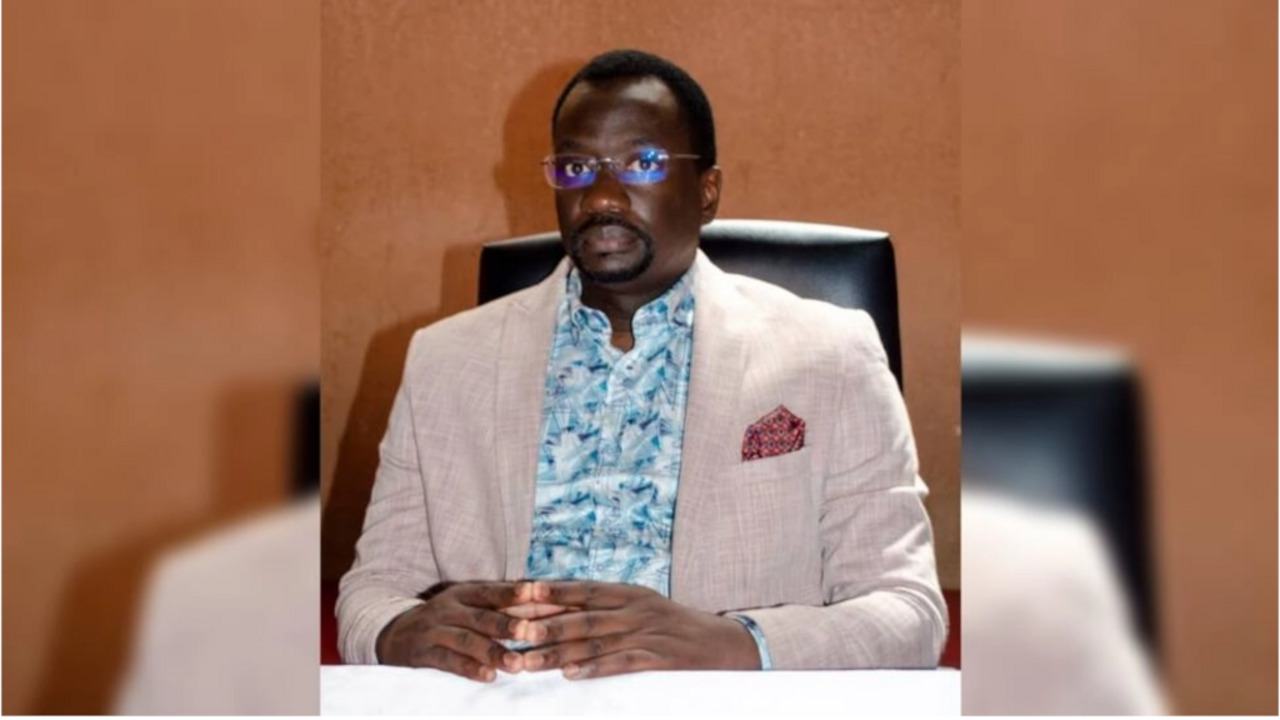
For years, the political party Les Transformateurs, led by Chadian figure Succès Masra, maintained a vibrant presence, marked by frequent Facebook live sessions, near-weekly rallies, and regular meetings. Masra, who briefly served as Prime Minister from January to May 2024, has now been incarcerated for over a year, casting a long shadow over the party’s future.
In May 2025, Masra, then 41, faced arrest, trial, and conviction on charges of “disseminating hateful and xenophobic messages” and “complicity in murder.” These charges stemmed from intercommunal violence between farmers and herders that erupted days earlier in Mandakao, a southern Chadian locality. Authorities reported approximately forty fatalities in these recurring clashes. The opposition leader was accused of publishing an audio message that allegedly urged certain communities to arm themselves for self-defense. However, investigations revealed this audio dated back to 2023. For these offenses, Succès Masra received a twenty-year prison sentence and a fine of 1 billion CFA francs (approximately 1,500,000 euros). This harsh penalty came despite his previous assertion that “the life of no Chadian should be trivialized.” The appeals court upheld this conviction on May 21, rendering him permanently ineligible for public office under electoral law.
With its charismatic leader now imprisoned, the trajectory of Les Transformateurs appears precarious. Established in 2018, the party rapidly ascended to become one of Chad’s most significant political forces. Its president, a renowned orator, skillfully captured the aspirations of a youth yearning for a leader embodying renewal and weary of a stagnant traditional political class. This establishment, perceived as unyielding and incapable of offering a genuine alternative to the Déby family (Idriss Déby Itno and now his son Mahamat), has governed the nation since the coup of December 1, 1990. Yamingué Betinbaye, a political analyst observing Chadian affairs, explains that a “large segment” of the youth, “frustrated by exclusions, saw in Succès Masra a new personality who could address their various vulnerabilities.”
a presidential runner-up, then a boycott too far
Following the tragic events of October 20, 2022, when protests called by Les Transformateurs against the extension of the transition were violently suppressed, Succès Masra was compelled to seek exile in the United States for over a year. Upon his return, facilitated by Congolese President Félix Tshisekedi under the African Union’s mediation, he accepted the role of Prime Minister during Phase II of the transition. This transitional period had commenced in 2021 after the death of Idriss Déby Itno during an attack by rebels from the Front for Alternation and Concord in Chad. In this capacity, he played a crucial role in organizing the May 2024 presidential election. On January 7 of that year, during an interview on Télé Tchad, he commended the establishment of the National Agency for Election Management (ANGE), the body tasked with organizing elections, replacing the National Independent Electoral Commission (Céni). However, just months later, he disputed the election results, where his party secured second place with 18.54% of the vote.
Against the ruling Patriotic Salvation Movement (MPS), the party founded by Idriss Déby, no other political formation had achieved a better score than Les Transformateurs in the 2024 elections. Since 1996, the year of Chad’s first election following the coup against Hissène Habré, the opposition’s highest previous score was Ngarlejy Yorongar’s 16.35% in 2001.
After not being reappointed to the premiership post-presidential election, Masra subsequently refused to participate in the legislative and municipal elections intended to conclude the transitional period. “With over 18% in the presidential election, Les Transformateurs were guaranteed the largest representation (18 to 24 deputies) in the National Assembly,” estimates Yamingué Betinbaye. The opposition party would have emerged as the country’s second most powerful political force.
By boycotting these polls, Succès Masra inadvertently deprived his party of institutional standing and the legitimacy that electoral participation confers. Yamingué Betinbaye explains that after “approaching power, Succès Masra realized his political calculation had failed.” Consequently, he sought to “take strong actions, including boycotting the legislative, senatorial, and communal elections, to demonstrate his return to opposition.”
shifting alliances and internal rifts
Since these events, the MPS has governed with an overwhelming majority in both the National Assembly and the Senate. This political landscape is unlikely to change before 2031, the year of the next presidential election, as the 2025 constitutional revision extended presidential and legislative terms from five to seven years and four to six years, respectively.
The story, however, did not end there. On January 28, 2025, during a live broadcast on a popular social network, the leader of Les Transformateurs declared his acceptance “to work with the President of the Republic for the stability and development of [the] country.” He further stated his readiness “to collaborate with Marshal Mahamat Idriss Déby, to bring, with everyone, the added value of [his] political force to this republican gathering in service of the Chadian people.”
Succès Masra’s fluctuating political stances—contesting the transition’s extension before accepting the Prime Minister role, participating in the presidential election then boycotting legislative polls—have caused considerable irritation within his own party. Academics, artists, political leaders, young graduates, and ordinary citizens had flocked to Les Transformateurs, a party that nurtured many young talents. Throughout its eight years of “struggle” (as Masra termed it), some militants paid a heavy price, enduring imprisonment or even losing their lives. Yet, many have since sought new paths, some enticed by the allure of power. Succès Masra now struggles to retain key figures, including close collaborators and co-founders of the party.
Moustapha Masri, a co-founder and vice-president, resigned days after the October 20, 2022 events. He subsequently launched his own political party before being appointed Deputy Chief of Staff to the Presidency in January 2024. By April, he was promoted to Minister of State, Secretary-General of the Presidency. More than three years after his departure from Les Transformateurs, Moustapha Masri has become a central figure in the government and a close confidant of the Head of State. His party, Peace and Social Cohesion, founded in 2023, even fielded a candidate in the partial legislative elections held on June 21 following a deputy’s passing.
a cascade of resignations
Another resignation that garnered significant attention was that of Sitack Yombatina Béni. An academic, doctor of law, and lecturer at the University of N’Djamena, he was part of Masra’s inner circle. On August 12, 2025, through a social media post, he announced “with full awareness, clarity, freedom [and] independence…” his decision to step down as vice-president of Les Transformateurs and resign from the party. This announcement came shortly after Masra’s trial verdict and his subsequent appointment of Hoinathy Moh Ndomal Claudia as interim president.
While Sitack Yombatina officially presented his departure as a personal decision, many observers link it to this specific appointment. This event was even discussed in the highest echelons of the state. Abdoulaye Sabre Fadoul, the Minister of Foreign Affairs, remarked: “When one feels useless and despised, the only option is to leave.” Following the April 1 cabinet reshuffle, Yombatina was appointed Minister of Higher Education in Prime Minister Allamaye Halina’s third government.
Mahamat Assouyouti, a close associate of Masra who held the Economy portfolio during his premiership, was appointed Director General of the state-owned Chad Petroleum Company on May 11. Finally, Les Transformateurs suffered a significant loss with the passing of Rays’Kim, civil name Djasrabé Kimassoum Yilmian. An engaged artist and early militant, he served as the party’s spokesperson and a fervent supporter of Masra until his death from illness on October 6, 2025. His demise represents an immense blow to the party.
Les Transformateurs are undoubtedly looking towards the next electoral cycle, the general elections of 2031. However, the ruling power might introduce a requirement for any party wishing to contest national elections to demonstrate at least one elected official. Such a provision exists in other nations; in Cameroon, Maurice Kamto and his party were barred from participating in the last presidential election after boycotting previous polls, leaving them without elective representation.
a minor party like any other?
Deprived of their leader, would Les Transformateurs agree to present an alternative candidate? Even if a presidential pardon has been frequently mentioned, only an amnesty could enable Succès Masra to participate. This scenario recalls the 2021 episode when the then 39-year-old opposition figure refused to field a substitute candidate because he did not meet the age requirement, which was then a minimum of 40 years (now 35) to run for the highest office.
Between legal constraints, political calculations, and potential revisions of electoral rules, the equation remains complex for Les Transformateurs. Their ability to remain a significant force in the upcoming electoral cycle will depend both on the evolution of the institutional framework and their capacity to adapt their strategy. All this unfolds within a context of democratic tightening and a political environment dominated by a party that, by 2031, will have accumulated four decades in power.
Despite the early challenges and the current difficulties facing his party, Succès Masra has undeniably etched the name of Les Transformateurs into Chad’s political history. Amidst the perceived inconsistencies of their president, the government’s maneuvers to further diminish their influence, and successive defections, will Les Transformateurs manage to reclaim their position as the leading opposition party? Or will they be relegated to the sidelines, joining the hundreds of minor parties that already populate the Chadian political scene?


 Boureima Amadou