Mariama Hamani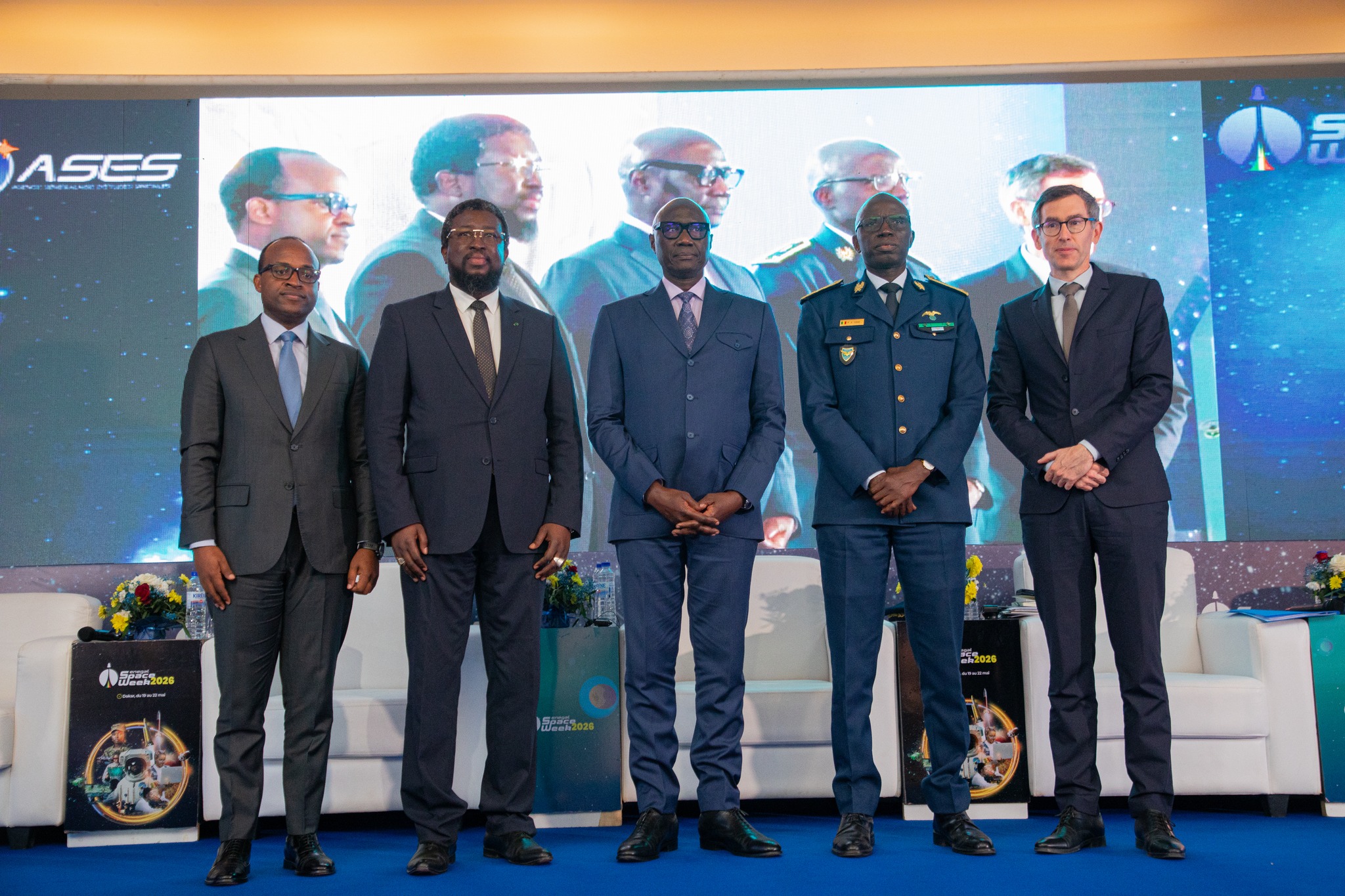
Senegal’s bold push for space and AI dominance in Africa
The Senegal Space Week 2026 has become the cornerstone of Dakar’s strategy to position itself as a leading African hub for space technologies, data analytics, and artificial intelligence. This year’s edition, held under the patronage of President Bassirou Diomaye Faye, builds on the momentum from 2025, sharpening its focus on national security, defense, and territorial governance through geospatial intelligence.
The event’s theme, “Space for Security and Defense: Geointelligence Applications for National Safeguarding”, reflects the country’s evolving priorities in an era where technological sovereignty is reshaping global power dynamics. With the Agence Sénégalaise d’Études Spatiales (ASES) at the helm, the conference has emerged as a pivotal platform for discussing how satellite capabilities, AI-driven insights, and real-time data can fortify Senegal’s borders, maritime zones, and critical infrastructure.
Geopolitical stakes: why space mastery is non-negotiable
In a keynote address that underscored Africa’s shifting security landscape, Defense Minister Biram Diop emphasized that the battle for influence is no longer confined to land or sea alone. “The new frontiers of power now stretch into the cosmos,” he declared, noting how space-based assets have become indispensable for tracking illicit movements, preempting natural disasters, and countering asymmetric threats like terrorism.
His remarks echoed a growing consensus among African policymakers: nations that fail to develop indigenous space capabilities risk ceding control over their own development narratives. The minister highlighted specific domains where satellite technology delivers decisive advantages—cybersecurity resilience, maritime surveillance, and the monitoring of transnational criminal networks—all areas where Senegal is seeking to reduce dependence on external partners.
A national ecosystem taking shape
Under the leadership of ASES Director General Maram Kaïré, the country’s space ambitions are transitioning from theoretical frameworks to tangible infrastructure. Critical projects unveiled during the week include:
- Khombole Observatory: The groundbreaking for Senegal’s first astronomy and astrophysics observatory in November 2025 marks the beginning of a new era in scientific research, offering data that will feed into climate modeling and disaster prediction models.
- Satellite Data Hubs: New ground stations in Dakar and Ziguinchor will process high-resolution imagery from international and future national satellites, enabling rapid response to security incidents or environmental crises.
- AI Integration Labs: Partnerships with regional universities are creating centers where geospatial data meets machine learning, producing actionable intelligence for policymakers and military strategists.
- Microsatellite Assembly: Plans for a dedicated facility aim to localize satellite manufacturing, reducing costs and accelerating innovation cycles.
These initiatives are designed not only to enhance security but also to stimulate a high-tech sector that could become a magnet for investment and talent across West Africa.
Diplomatic maneuvering in the space race
The ASES has been quietly cultivating alliances with global space agencies and international organizations, positioning Senegal as a credible intermediary between African nations and established space powers. “We are not just building satellites—we are building diplomatic capital,” Kaïré explained. By hosting training sessions for fellow African countries and participating in multilateral forums, Senegal is laying the groundwork for a Pan-African space governance model that prioritizes shared sovereignty over foreign dominance.
Investing in the next generation of African innovators
No technological leap is possible without human capital, and that reality is central to Senegal’s strategy. The Space Week agenda included:
- Scholarships and exchange programs for STEM students at top engineering schools.
- Hackathons focused on AI and remote sensing, targeting university teams across the continent.
- Public awareness campaigns using mobile technology to introduce schoolchildren to satellite imagery and its applications in everyday life.
“The future of Senegal’s space program will be written by the young minds we inspire today,” Kaïré remarked during a panel discussion. The government has pledged substantial budget allocations to expand technical education, with a particular emphasis on increasing female participation in STEM fields—a move aimed at creating a more inclusive innovation ecosystem.
From ambition to reality: the road ahead
The Dakar event served as both a showcase and a planning session, with officials announcing a roadmap for the next five years. Key milestones include:
- Launching the first national microsatellite by 2027, primarily for environmental monitoring.
- Establishing a national space academy to standardize training and certification across the sector.
- Developing a national space law to provide legal clarity on data ownership, commercialization, and security protocols.
As Senegal prepares to host more international delegations following this week’s event, it is clear that the country is no longer content with being a passive consumer of space technology. Instead, it is laying the foundation for a future where African voices shape the governance of the final frontier—and where Dakar could become the continent’s go-to destination for cutting-edge space solutions.

 Boureima Amadou