Boureima Amadou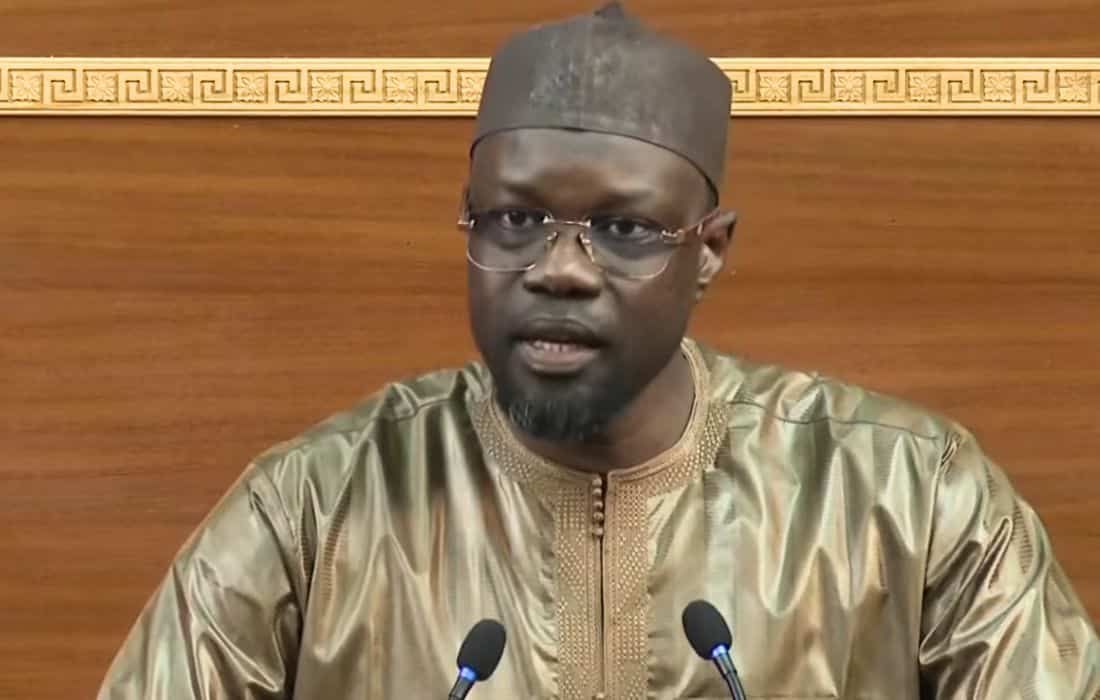
Senegal’s Prime Minister Ousmane Sonko recently sparked national discussion by denouncing what he termed the “dictates” of Western nations, accusing them of attempting to “impose homosexuality” on countries like Senegal. Speaking before the National Assembly, he framed the issue as a clash between national sovereignty and human rights, particularly in light of the country’s tightening laws against same-sex relations.
The Prime Minister’s remarks reflect a broader political narrative that increasingly positions LGBT rights as a geopolitical battleground, where resistance to Western influence is equated with the defense of national identity and cultural values.
Since the beginning of 2026, Senegal has further hardened its legal stance on same-sex relationships, with penalties now ranging from five to ten years in prison. This legislative shift has unfolded amid heightened public scrutiny, social stigma, and documented arrests, prompting concerns from human rights advocates about the growing vulnerability of LGBT individuals in the country.
LGBT rights debate in Senegal: sovereignty versus universal values
Public reactions to LGBT issues in Senegal have often been polarized, especially on social media, where phrases like “we won’t let our laws be dictated”, “these are our values”, and “mind your own business” frequently surface. At the heart of this discourse lies a recurring tension: the assertion of national sovereignty versus the recognition of universal human rights.
In this context, discussions around LGBT rights are often reframed as foreign interference, while legal restrictions are justified in the name of tradition, culture, or national identity. This narrative shift obscures the real-life experiences of LGBT individuals, diverting attention from their lived realities and safety concerns.
Harsh penalties and persistent stigma
Same-sex relations in Senegal are criminalized under the Penal Code, a legal framework that was significantly strengthened in early 2026. The updated legislation now carries sentences that can extend up to a decade behind bars, intensifying the risks faced by LGBT individuals.
Beyond the courtroom, human rights organizations have highlighted the severe social consequences of this criminalization, including widespread stigma, arbitrary arrests, and increased exposure to violence. For many, the debate is no longer just about legality—it is about survival, dignity, and the basic right to live without fear of persecution.
Why international concern over LGBT rights in Senegal matters
The question of why external observers or organizations engage with LGBT rights in Senegal often arises. The answer lies in the principle of the universality of human rights—a cornerstone of international law. When individuals are criminalized or subjected to violence because of their sexual orientation, it transcends national borders. It becomes a matter of global human dignity, safety, and justice.
To ignore such violations would be to accept that human rights protections end at a nation’s frontier, despite their intended universality.
Human rights: a matter of commitment, not imposition
Contrary to common misconceptions, human rights are not an external imposition. They are grounded in international commitments voluntarily undertaken by states. Senegal itself enshrined the Universal Declaration of Human Rights into its 2001 Constitution, affirming its dedication to non-discrimination and the protection of fundamental freedoms.
Raising awareness of these commitments is not an act of cultural imperialism. It is a call to uphold existing legal and moral obligations. In the case of LGBT rights in Africa, this distinction is crucial: the focus is not on imposing foreign ideals, but on safeguarding individuals who face real and immediate threats.
LGBT identities are not foreign to Senegal
A persistent myth suggests that LGBT identities are alien to African societies or the result of external influence. This claim lacks factual basis. LGBT individuals exist across all societies, including Senegal, where they are born, live, and contribute to the community.
Historical and anthropological evidence also challenges this narrative. In West Africa, including Senegal, diverse gender and sexual identities have been documented for centuries. Figures such as the goor-jigeen—traditional gender roles in some Senegalese communities—demonstrate that non-conforming identities are not recent imports, but part of long-standing social fabric.
Cultural identity and human rights: navigating complex tensions
The debate over LGBT rights in Senegal is shaped by multiple layers of tension: colonial legacies, domestic political agendas, social dynamics, and overt hostility toward LGBT individuals. In this atmosphere, the defense of human rights is often framed as an external pressure, while legal restrictions are justified under the banner of culture or tradition.
Such rhetoric not only sidelines the lived experiences of LGBT people but also risks dehumanizing them. Terms like “threat” or “cancer” used in public discourse reduce individuals to abstract problems, stripping away their humanity and right to protection.Defending rights without imposing change
Organizations advocating for LGBT rights in Senegal emphasize that their mission is not to impose foreign values, but to ensure that no person is criminalized, marginalized, or subjected to violence due to their sexual orientation. Behind slogans of sovereignty and cultural defense lies a stark reality: real people are living in fear, their identities criminalized, and their safety compromised.
This is not a theoretical debate. It is a matter of life and safety for those affected.
Global solidarity in the fight for human rights
Violations of human rights are not confined to Senegal. They occur worldwide, from Russia to China and beyond. Human rights organizations respond based on local context, available resources, and ground-level alerts. Their engagement is not about ranking suffering, but about responding to urgent needs where they arise.
The fight for human rights is inherently contextual, yet its principles remain universal: dignity, equality, and freedom from persecution.
Taking action to support LGBT individuals in Senegal
In response to these challenges, advocacy groups have launched initiatives to provide direct support to LGBT individuals in Senegal. These efforts include emergency aid, legal assistance, and crisis intervention for victims of violence and discrimination. By supporting such campaigns, individuals can turn awareness into tangible change, offering hope and protection to those most at risk.