Boureima Amadou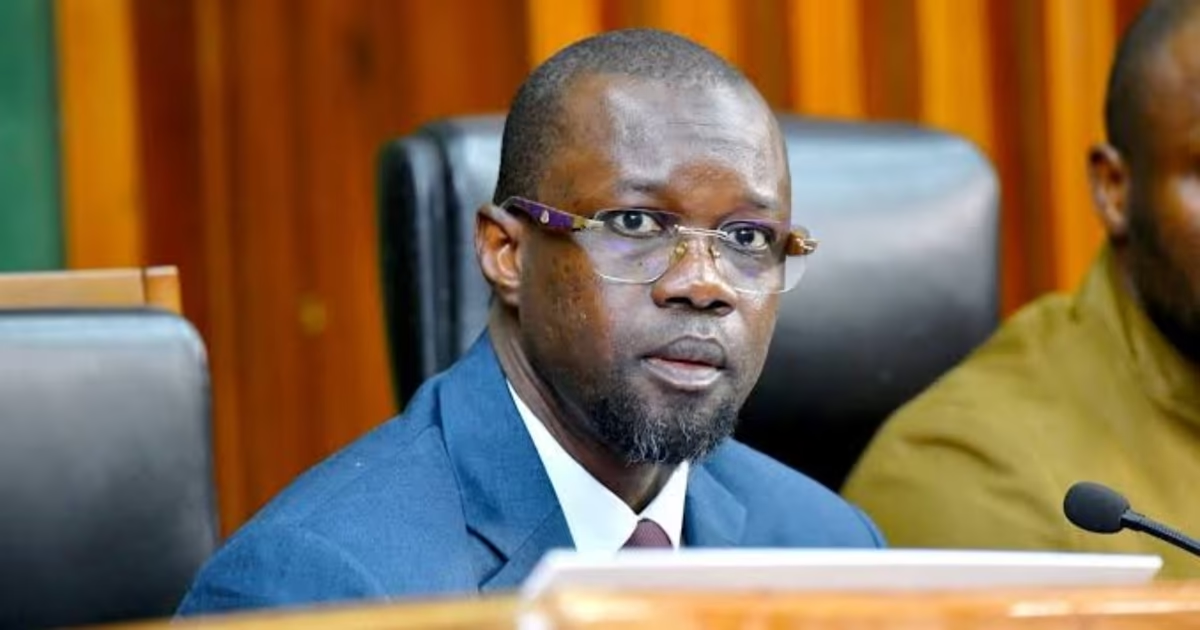
Senegal’s National Assembly is set to convene an unprecedented emergency session this week, marking the first extraordinary legislative gathering of the 2025-2026 term. The move follows a decisive meeting of the Assembly’s Bureau, chaired by President Ousmane Sonko, where critical decisions were made to address pressing institutional reforms.
Key decisions from the Bureau meeting
The Bureau of the National Assembly has finalized plans for an intensive two-week session, commencing Monday, August 10, 2026, at 10:00 AM sharp. This follows months of preparatory work and aligns with the Assembly’s constitutional mandate to convene extraordinary sessions when necessary. The session’s agenda has been meticulously structured to ensure compliance with the 15-day legal limit imposed by the Assembly’s internal regulations.
Under Sonko’s leadership, the Bureau has confirmed the examination of two legislative proposals, three government bills, and six requests to establish parliamentary inquiry commissions. These initiatives were pre-approved during July’s legislative reviews, demonstrating the Assembly’s proactive approach to governance amid evolving national priorities.
Legislative agenda: transparency and accountability in focus
The emergency session will prioritize two landmark proposals: one aimed at amending Article 37 of Senegal’s Constitution to strengthen presidential asset declarations, and another seeking to regulate special credit allocations and discretionary funds. Both proposals were deemed admissible by the Bureau in July 2026, reflecting growing public demand for greater fiscal transparency.
Additionally, the Assembly will deliberate on establishing six new parliamentary inquiry commissions to investigate critical issues affecting the nation. These commissions will operate under strict procedural guidelines, with their mandates clearly defined prior to the session’s commencement—a requirement stipulated by the Assembly’s rules of procedure.
Regulatory framework and procedural clarity
The Bureau’s decisions underscore a commitment to procedural integrity. When an extraordinary session is called by the Assembly itself, as in this case, the Bureau issues an official decree to formalize the agenda and schedule. This contrasts with sessions requested by the executive branch, which are initiated via presidential decree. The distinction ensures clarity in governance processes while maintaining the Assembly’s autonomy.
The session will commence with a quorum verification, followed by opening remarks from President Sonko. The Conference of Presidents, comprising the Assembly’s leadership, will then finalize the session’s detailed work plan, ensuring all discussions adhere to pre-established parameters.
Session duration and outcome
Contrary to routine legislative activities, extraordinary sessions are bound by a strict 15-day timeline. This constraint ensures focused deliberations while preventing unnecessary extensions. The session will conclude automatically upon the exhaustion of its pre-defined agenda, with no provisions for mid-session adjustments.