Mariama Hamani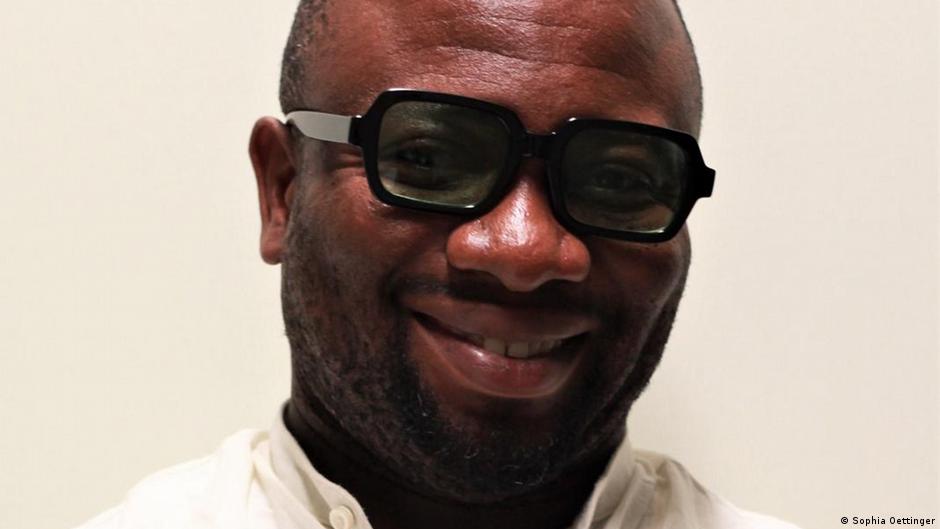
Eastern Democratic Republic of the Congo (DRC) remains locked in a complex security crisis that extends far beyond military confrontations. Recent developments suggest this turmoil is being deliberately sustained to serve broader geopolitical ambitions, according to academic researcher Josaphat Musamba, a PhD candidate at Ghent University in Belgium.
The Congolese government recently announced a new protocol with Rwanda’s Democratic Forces for the Liberation of Rwanda (FDLR), outlining plans for their disarmament, demobilization, and cantonment in eastern DRC. Yet Rwanda has dismissed the initiative as a deliberate delay tactic, reigniting decades-old tensions over the group’s presence.
Decades of discord and shifting alliances
The FDLR’s history is deeply intertwined with the 1994 Rwandan genocide, a fact Kigali uses to justify its ongoing military operations in eastern DRC—often alongside the M23 rebel coalition. While Kinshasa and Kigali signed agreements in Washington last year to withdraw troops and neutralize armed groups respectively, the current standoff reveals deeper unresolved issues.
Musamba argues that Rwanda’s rejection of diplomatic engagement is not just political posturing—it reflects a calculated strategy. “Kigali is not negotiating in good faith,” he states. “Its reluctance to engage in meaningful dialogue suggests it benefits from the status quo in eastern DRC.”
Military incapacity or strategic convenience?
Despite repeated claims that the FDLR pose an existential threat, Rwanda and its allies—including the M23—have failed to dismantle the group within their areas of control. This raises critical questions: Are they truly unable to act, or is the persistent instability serving a larger purpose?
Musamba asserts that the chaos in eastern DRC is not accidental but strategically advantageous for Kigali. “By destabilizing Congolese administrative structures, Rwanda can expand its influence in mineral-rich regions,” he explains. “The FDLR serve as a pretext for deeper intervention, masking geopolitical expansion under the guise of security.”
Can diplomacy outpace military confrontation?
Kinshasa’s approach contrasts sharply with Kigali’s hardline stance. Rather than pursuing all-out war, DRC authorities are prioritizing dialogue with the FDLR—an approach Musamba calls contextual and pragmatic. “Opening additional military fronts would be unsustainable,” he notes. “The priority must remain neutralizing external threats like the RDF and M23 while engaging the FDLR through persuasion.”
However, the FDLR’s future hinges on more than military defeat. Their ideological resistance to the Rwandan government suggests they won’t vanish entirely—even if their armed factions are dismantled. “The ideology persists, even if the group’s military structure collapses,” Musamba warns. “Kigali’s real challenge is addressing the underlying grievances fueling this resistance.”
Implications for regional stability
The prolonged instability in eastern DRC is more than a bilateral dispute—it reflects a broader struggle for influence in Central Africa. As Rwanda consolidates its presence under the pretext of security, neighboring nations and international actors must reconsider their strategies to prevent further escalation.


 Boureima Amadou