
 Boureima Amadou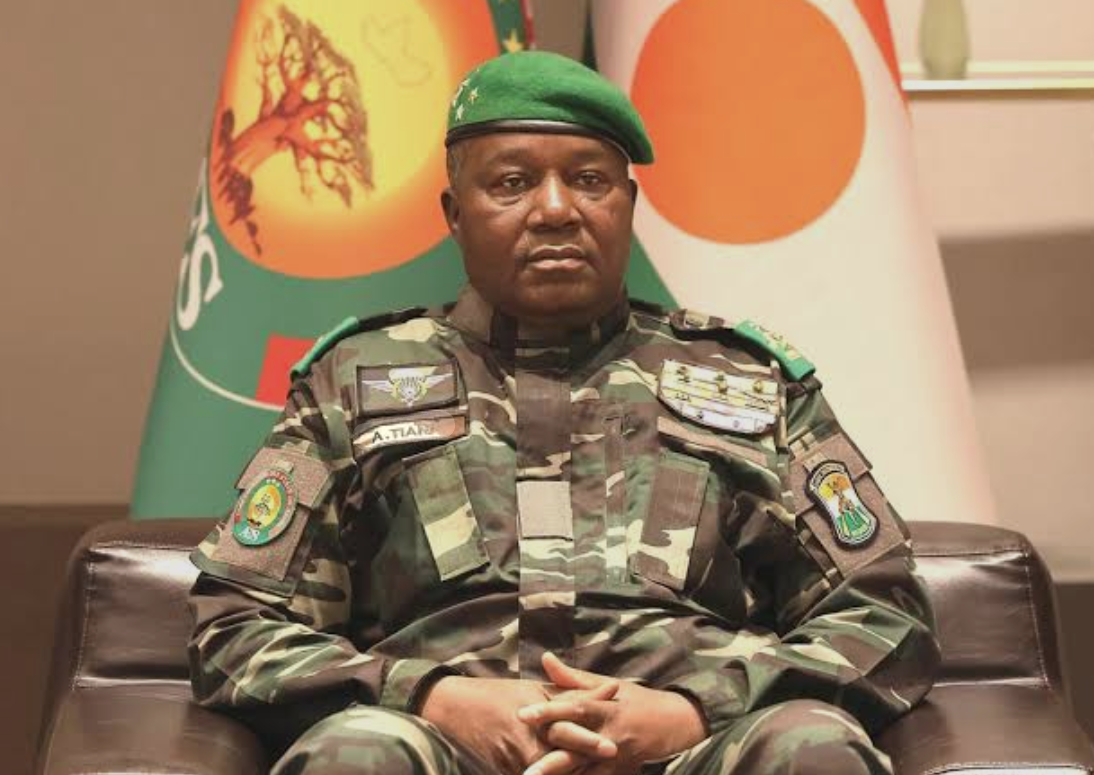
The political crisis in Niger has entered a volatile new phase, and the fallout is reshaping public debate across the country. Just days after a sweeping reshuffle at the top of the military hierarchy, General Abdourahamane Tiani dismissed four key ministers—a move that has ignited widespread reaction and left citizens and observers asking what comes next. The purge, coming on the heels of a failed coup attempt in late August, has exposed a regime gripped by fear and a nation bracing for the consequences.
The failed coup that changed everything
In the early hours of August 29, the streets of Niamey became the stage for an abortive putsch. For General Tiani, the man who has held the country’s highest office since 2023, the shock was profound. He had believed his grip on the state apparatus and the armed forces was absolute. Instead, the event laid bare a reality he could no longer ignore: his own house was not in order.
The National Council for the Safeguard of the Homeland (CNSP) responded with speed and severity. Military commanders were removed, arrests followed, and then the purge reached the executive branch. By presidential decree, four government figures were abruptly stripped of their portfolios.
Which ministries were hit—and why it matters
The portfolios affected were far from marginal. Agriculture, Agrarian Reform, Energy, and Communications all saw immediate changes at the top. These are ministries that control food security, land policy, the country’s energy lifeline, and the flow of public information. In reshuffling these critical posts, the junta leader is clearly attempting to tighten his inner circle and secure every strategic lever of the state.
The timing and choice of ministries suggest a regime trying to lock down both material resources and the narrative. But the move has also fueled debate about the government’s priorities: is this about good governance, or simply about survival?
The irony of a putschist fearing a putsch
There is a bitter irony in watching a leader who seized power by force now tremble at the prospect of the same fate. General Tiani rose to power in July 2023 by overthrowing Mohamed Bazoum, the democratically elected president. As former head of the presidential guard, Tiani used his position and the trust placed in him to orchestrate his own takeover.
Now he finds himself trapped by the very logic he unleashed. Aware of how quickly an undemocratic regime can crumble from within, he lives in a state of perpetual alert. In politics as in the barracks, legitimacy cannot be decreed. Those who take power by the gun inevitably expose themselves to the same end.
This paranoia at the summit of the state reflects an undeniable truth: the CNSP no longer controls its own house. Frictions within the armed forces are mounting, and the August coup attempt was merely the visible symptom of a much deeper fracture within Niger’s military elite.
A nation paying the price for instability
While General Tiani rearranges his ministries and rewards loyalists to guarantee his personal security, the people of Niger bear the heavy cost of chronic instability. Since the military junta took power, the country has slid into a disastrous security spiral.
The original justification for the 2023 coup—improving security against armed terrorist groups—has completely collapsed. On the ground, the reality is stark:
- A growing terrorist threat: Attacks by groups affiliated with Al-Qaeda and the Islamic State have multiplied in border areas, claiming numerous civilian and military victims.
- A strategic vacuum: By abruptly breaking traditional military alliances and expelling partner forces, the regime has left entire swaths of territory without effective protection.
- A humanitarian and economic crisis: Rising insecurity and sanctions have paralyzed the local economy, plunging millions into extreme vulnerability.
What comes next for Niger?
The latest ministerial reshuffle will not solve any of Niger’s structural problems. By replacing individuals rather than changing methods, General Tiani is merely postponing the inevitable. The constant militarization of institutions and the witch hunt within the government demonstrate a lack of any clear political vision for the country.
Governing through fear, suspicion, and permanent purges isolates the military regime a little more each day. Neither press censorship nor the rapid replacement of the Energy or Communications ministers will mask a glaring truth: the CNSP’s promise of stability has turned into a security and institutional chaos whose main victim remains the Nigerian people.
The fallout from the failed coup and the subsequent purge has sparked public debate about the direction of the country. As the regime tightens its grip, the question on many minds is whether this spiral of paranoia can be broken—or whether Niger is headed for even darker days.








