Mariama Hamani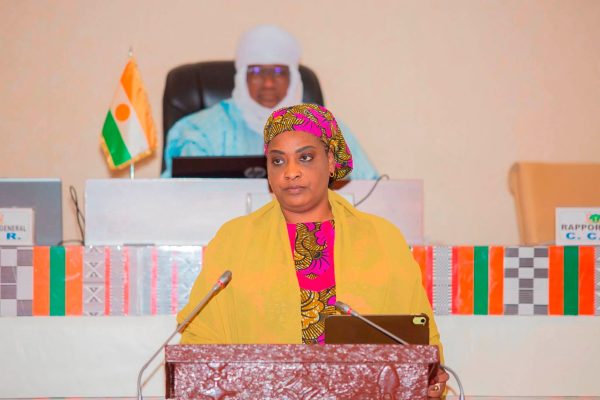
Niger’s civil service reform gathers pace with digitization milestone
Niamey — The Nigerien government has reached a significant milestone in its civil service transformation journey. During the first ordinary session of 2026, the Consultative Council for Refoundation (CCR) convened under the leadership of Dr. Mamoudou Harouna Djingarey to assess progress on key administrative reforms. Minister of Public Service, Labour and Employment Aïssatou Abdoulaye Tondi presented a comprehensive update on the sweeping changes reshaping Niger’s public administration.
The reforms aim to create a more efficient, equitable and responsive civil service, aligned with the broader goals of the Refondation agenda. Discussions centered on restructuring human resources management, modernizing administrative processes and strengthening national employment policies.
Digital transformation drives administrative efficiency
The cornerstone of these reforms is the Integrated State Human Resources and Payroll Management System (SIGRHEP), a digital platform designed to streamline and secure the management of public sector employees. Minister Tondi highlighted the system’s rapid progress, with over 16,500 personnel files digitized and 23,000 records updated to date.
Once fully operational, SIGRHEP will oversee the management of nearly 200,000 civil servants and support the work of 150+ HR and payroll specialists across Niger. The platform will also integrate multiple specialized applications to enhance administrative efficiency and transparency.
The digital overhaul represents a strategic shift toward modern governance, reducing bureaucratic delays and improving service delivery for Nigerien citizens.
Structural reforms and performance tools take center stage
Beyond digitization, the ministry has implemented sweeping institutional changes. Key achievements include the adoption of updated civil service statutes, the introduction of performance evaluation tools and strategic redeployment initiatives to address staffing needs in post-crisis regions.
Additional reforms involve the ongoing organization of competitive examinations, direct recruitments and career tracking systems for thousands of public officials. These measures are designed to align the civil service with contemporary governance standards and citizen expectations.
Council endorses reform progress with formal recognition
The CCR’s deliberations culminated in a formal motion commending the government’s reform efforts. Members emphasized the importance of modernizing Niger’s administration to strengthen state effectiveness and support the objectives of the Refondation framework.
The reforms reflect a broader commitment to building a public sector that is agile, transparent and capable of meeting the evolving needs of Niger’s population. As the digital and structural transformations progress, Niger is positioning itself at the forefront of governance innovation in West Africa.


 Boureima Amadou