Boureima Amadou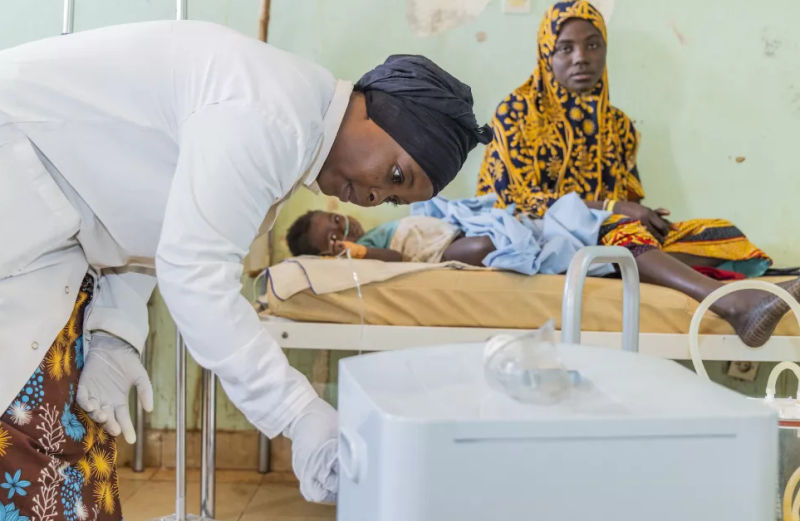
Niger strengthens healthcare with integrated digital ecosystem
The Republic of Niger is advancing its healthcare system through a five-year bilateral cooperation agreement with the United States, valued at a total of $179.3 million. This partnership underscores Washington’s commitment to global health initiatives under the America First strategy.
Investment priorities and national commitment
The U.S. Department of State has pledged up to $107.4 million to support Niger’s efforts in combating malaria, improving maternal and child health, and enhancing epidemiological surveillance and crisis response systems. In parallel, the Nigerien government has pledged $71.9 million in domestic funding, demonstrating a strong commitment to national ownership of health programs.
Digital transformation in healthcare
A key component of the agreement includes a $5 million allocation to establish a global health security framework and a fully integrated digital health ecosystem. This system will incorporate six information systems designed to:
- Electronic medical records: digitizing patient data for streamlined care delivery
- Laboratory and pharmacy management: optimizing resource allocation and operational efficiency
- Epidemiological surveillance: enabling early detection of disease outbreaks
- Health product inventory management: ensuring timely access to essential medicines
- National data warehouse: centralizing health information for better policy decisions
The initiative aims to bolster Niger’s ability to detect and respond rapidly to epidemic threats, minimizing the spread of health crises at their onset.
Alignment with global health goals
This agreement is part of a broader U.S. strategy to strengthen health security worldwide. A similar $60.8 million partnership has been established with the Dominican Republic, focusing on HIV/AIDS prevention and the implementation of a 7-1-7 surveillance system—a framework designed to detect and respond to health threats within seven days of detection, in one day of notification, and within seven days of response.
Together, these agreements represent over $240 million in combined U.S. and partner country investments, signaling a robust commitment to global health resilience and pandemic preparedness.