Mariama Hamani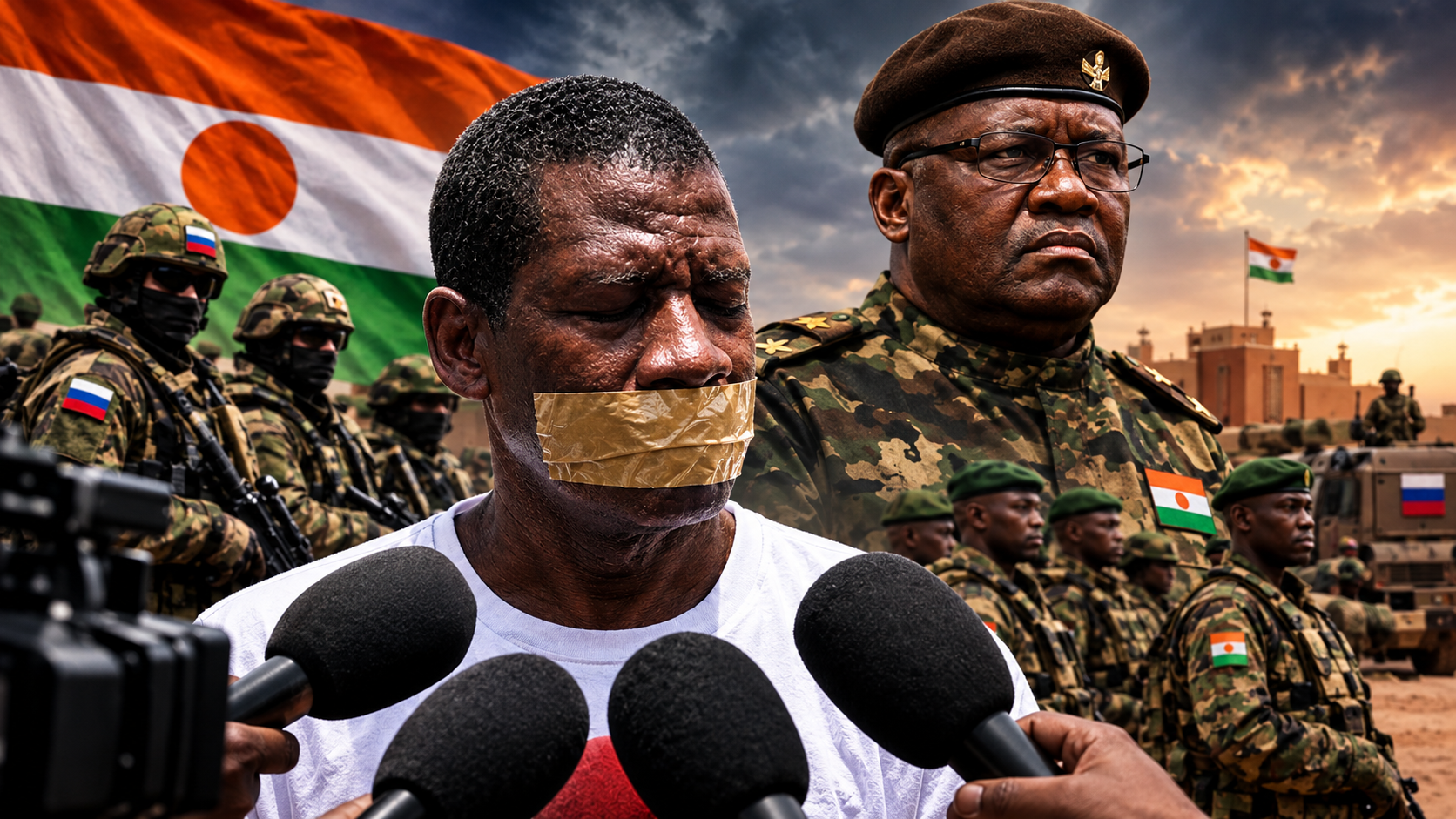
Confirmed: Moussa Kaka is alive and held by authorities
The prolonged disappearance of Nigerien journalist Moussa Kaka has reached a critical juncture. After more than a month without public updates, authorities confirmed on October 6 that he is both alive and detained by state forces. The announcement, delivered to Reporters Sans Frontières (RSF), marks the first official acknowledgment of his status while leaving critical questions unanswered.
The justice minister’s statement provided no details regarding his detention location, the alleged charges against him, or the legal basis for his confinement. This lack of transparency has intensified concerns about the circumstances surrounding his case.
Who is Moussa Kaka and why does his detention matter?
Moussa Kaka is a seasoned journalist with a distinguished career. Formerly a correspondent for international outlets and director-general of Radio Télévision Saraounia, his work has made him a prominent figure in Niger’s media landscape. His sudden disappearance on August 31, shortly after exiting the broadcaster’s headquarters in Niamey, triggered immediate alarm among press freedom organizations, including the International Federation of Journalists and the World Organization Against Torture.
The authorities have not disclosed whether his detention is connected to specific investigations or journalistic work. However, the timing and nature of his disappearance amid escalating security challenges suggest deeper implications. The junta’s insistence on presenting a narrative of stability contrasts sharply with ground realities marked by persistent instability and internal military strife.
Nigeria’s security paradox: stability claims versus ground realities
While the government asserts control over security, the situation on the ground tells a different story. Deadly attacks continue to plague several regions, and recent military unrest in Niamey exposed fractures within the armed forces. Soldiers have openly criticized their leadership, citing inadequate resources, equipment shortages, and the prioritization of certain security deployments over frontline needs.
In August, reports surfaced of a mutiny in Niamey, where a faction of armed forces rebelled against leadership. The episode underscored deep-seated tensions, particularly regarding resource allocation and operational priorities. Analysts suggest that military discontent stems from perceived favoritism toward external security partners.
The Russia factor: new dynamics in Niger’s security architecture
An increasingly prominent element in Niger’s security landscape is the presence of Russian-linked forces. The Africa Corps, operating under Russia’s defense ministry, has established a footprint in Niger and played a documented role during the Niamey mutiny. Reports indicate that Russian personnel provided support to forces loyal to the ruling junta, reinforcing perceptions that their deployment is as much about regime protection as counterterrorism.
While not a replacement for national forces, the Africa Corps’s involvement has sparked debate. Critics argue that recent military acquisitions, ostensibly aimed at enhancing national capacity, may be diverted toward bolstering foreign security arrangements rather than addressing immediate threats faced by Nigerien troops at the front. The disparity in resources has fueled resentment among soldiers who face daily dangers with inadequate equipment.
Beyond the case of Moussa Kaka: a test of credibility for the junta
The detention of Moussa Kaka is not an isolated incident but part of a broader pattern. The junta’s handling of the case will serve as a litmus test for its commitment to transparency and accountability. Authorities have yet to explain the legal basis for his detention or provide evidence to substantiate any allegations. Until such information is disclosed, skepticism will endure.
In a country where the government pledges to restore sovereignty and security, the unresolved case of Moussa Kaka raises stark questions about its priorities. His detention without clear justification challenges the junta’s narrative of stability and exposes gaps between official claims and reality. Whether the silence is strategic or symptomatic of deeper issues remains to be seen.
As the situation evolves, the world watches closely. The junta’s next moves will determine not only Moussa Kaka’s fate but also Niger’s trajectory toward transparency, accountability, and the restoration of public trust.
By Boureima Amadou — Journaliste / Rédacteur


 Boureima Amadou