Boureima Amadou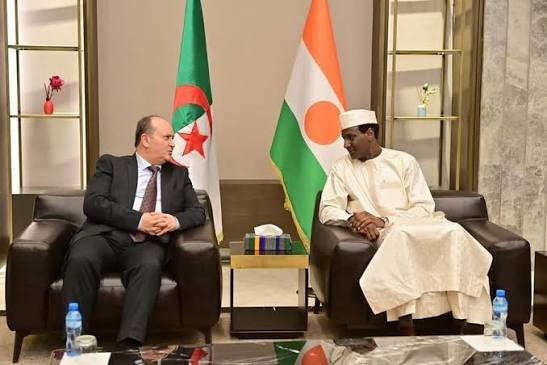
Assamaka becomes the gateway for a digital corridor connecting Algeria and Niger
The trans-Saharan fiber optic link between Algeria and Niger is now operational at Assamaka, a strategic border crossing in the heart of the Sahara. This long-awaited launch marks more than just a technical achievement—it signals a fundamental shift in the region’s digital landscape, enhancing connectivity and reshaping economic and security dynamics across the Sahel.
The backbone of a digital revolution: what the fiber optic link delivers
At Assamaka, on the Algerian-Nigerien frontier, officials from both nations gathered to celebrate the activation of the trans-Saharan fiber optic corridor. This milestone is part of a broader regional initiative designed to integrate Algeria, Niger, Nigeria, Chad, Mali, and Mauritania into a unified digital infrastructure network.
But beyond the fiber itself, the project’s real value lies in its capacity to deliver high-speed internet access, reduce digital dependency, and create new economic opportunities for both nations. For Niger—one of the world’s most landlocked countries—this connection offers a lifeline to global bandwidth, enabling faster and more reliable connectivity.
Niger’s digital transformation: progress backed by significant investment
The Nigerien segment of the project, valued at approximately 43 million euros, is a cornerstone of the country’s digital future. Funded primarily by the African Development Bank (AfDB), this investment includes:
- 1,031 kilometers of fiber optic cable across five major routes
- A Tier III national data center
- A local loop spanning 88 kilometers
According to Nigerien authorities, the total project cost exceeded 30 billion West African CFA francs, with financing structured as a mix of loans, grants, and national contributions. This financial architecture highlights the collaborative nature of the initiative, dispelling any notion of a unilateral transaction between Algeria and Niger.
Algeria’s strategic play: more than just a transit route
For Algeria, this fiber optic corridor represents more than an infrastructure—it is a geopolitical asset. With over 2,500 kilometers of fiber already laid across its territory, Algeria is positioning itself as a regional digital hub. By connecting Niger’s network to its own international bandwidth capacity, Algeria aims to become the primary gateway for Sahelian countries seeking access to global digital networks.
The partnership extends beyond infrastructure. In September 2026, Algérie Télécom and Niger Télécom formalized a cooperation agreement, donating high-capacity transmission equipment to link In Guezzam (Algeria) with Agadez (Niger), initially enabling a 100-gigabit capacity. This gesture underscores Algeria’s commitment to fostering operational integration rather than merely collecting transit fees.
Economic dividends: unlocking new opportunities for both nations
For Niger, the benefits are multifaceted. The trans-Saharan link promises:
- Increased internet capacity and improved service quality
- Reduced dependence on traditional, often congested, routing paths
- Greater competition among bandwidth providers, lowering costs
- Enhanced adoption of digital public services and e-commerce
- Improved connectivity for northern regions previously disconnected
For Algeria, the economic gains may be indirect but no less significant. As Sahelian countries route their digital traffic through Algerian infrastructure, the country stands to gain from transit fees, technological partnerships, and strengthened diplomatic influence in a region where multiple global powers—including Russia, Turkey, Gulf states, China, and Western actors—are vying for influence.
A fragile infrastructure in a volatile region
The trans-Saharan fiber optic link is a triumph of engineering, but its long-term success hinges on security. Niamey faces escalating threats from armed groups, including the Islamic State in the Sahel (ISSP) and the JNIM (affiliated with Al-Qaeda), which have demonstrated the ability to disrupt critical infrastructure—even in the capital. A 2026 attack on Niamey’s airport and military base underscored the persistent risks to national stability.
The fiber’s route through the Sahara exposes it to sabotage, accidental damage, and logistical challenges in maintaining a 1,000-kilometer-plus corridor. Yet, its protection is not just a technical concern—it is a matter of national sovereignty. The Nigerien government is already embedding the infrastructure within its broader digital strategy, including the planned Tier III data center designed to safeguard critical government and financial systems. Protecting this fiber link may soon become as vital as safeguarding highways or oil pipelines.
Security cooperation: a critical complement to the fiber optic project
In February 2026, Algeria and Niger reaffirmed their commitment to enhancing border security and deepening counter-terrorism cooperation. The resilience of the trans-Saharan fiber optic link depends on this partnership. A stable digital corridor could reinforce economic ties, while instability risks undermining the project’s viability.
Assamaka, once a remote border post, is now at the center of a high-stakes experiment: Can a fiber optic link transcend its physical form to become a catalyst for regional economic growth and digital sovereignty? The answer will depend not only on the cable’s durability but also on the broader security and geopolitical landscape of the Sahel.
What’s next? The road ahead for the Algeria-Niger digital corridor
The fiber optic link is operational, but its true impact remains to be seen. While investors and policymakers celebrate the achievement, key questions linger:
- What will be the annual revenue generated from data transit through the Algerian network?
- How much will Niger save on international connectivity costs?
- What share of the economic benefits will flow to local operators?
Public data remains scarce, but one fact is clear: Niger has secured a 43-million-euro investment in its national digital backbone, while Algeria has expanded its own fiber network to connect with its southern neighbor. Together, they have woven a digital corridor that could redefine the Sahel’s economic and strategic future. Whether it thrives or falters will depend on security, governance, and the ability to translate technical success into tangible development.