
 Mariama Hamani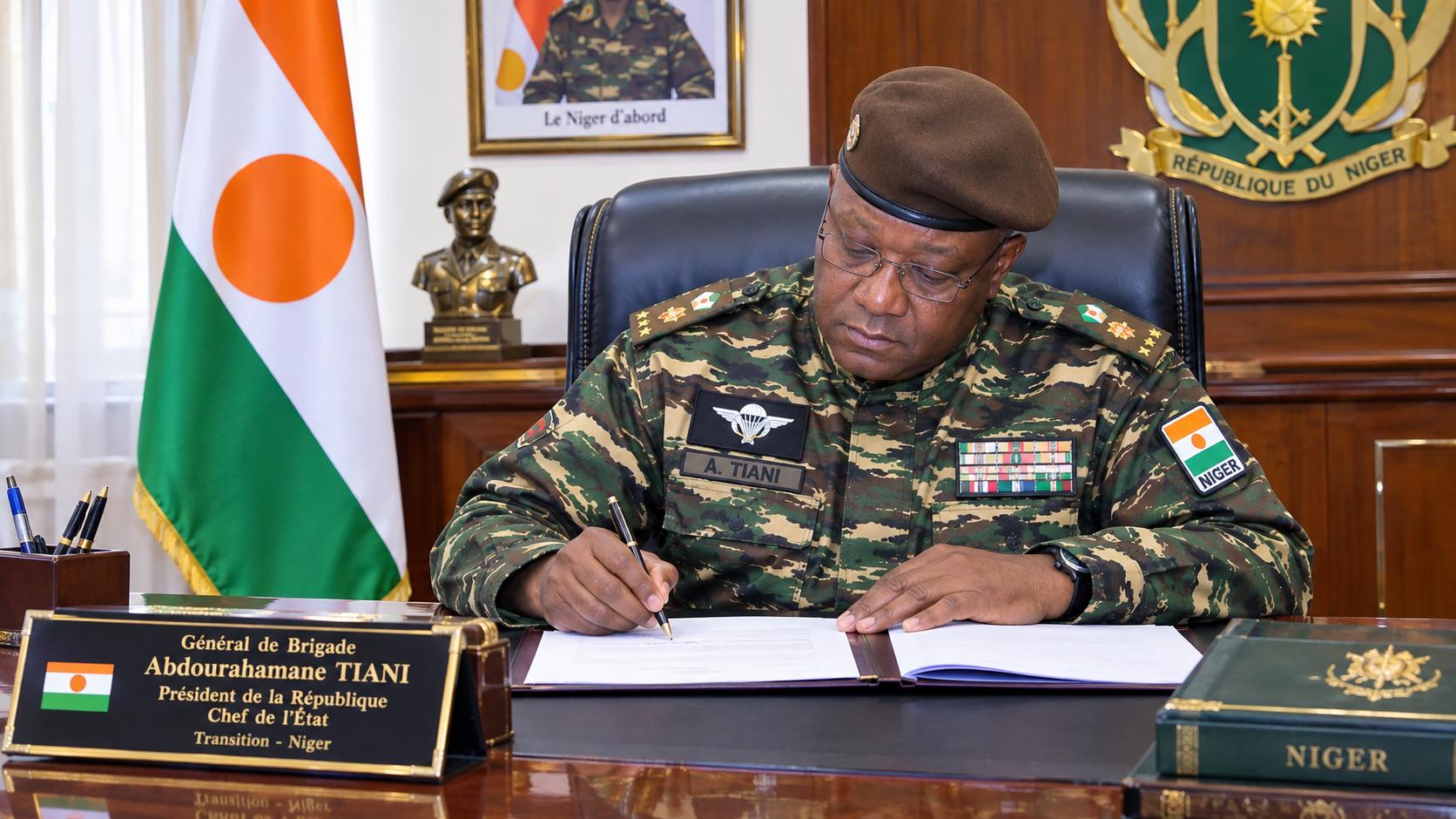
In Niger, nationality has become a privilege that can be revoked at the whim of the ruling general. Since the National Council for the Safeguard of the Homeland (CNSP) seized power by force in July 2023, the hunt for dissidents and critical voices has crossed a dangerous threshold. General Abdourahamane Tiani no longer settles for silencing opponents through prison or exile: he now erases their legal existence. By turning citizenship revocation into a systematic instrument of governance, the military junta in Niamey is enforcing a dangerous doctrine in which political disagreement is treated as high treason.
What citizenship revocation actually costs ordinary Nigeriens
The consequences of these decrees reach far beyond the individuals named in them. When a former minister or a civic activist loses nationality overnight, the shockwaves hit families, local businesses and the wider economy. Stripped of identity papers, the targeted person can no longer travel, hold a bank account, sign contracts, own property formally or access public services. Spouses and children often find themselves in administrative limbo, unable to complete school enrollment, obtain loans or secure inheritance rights. Traders and entrepreneurs linked to blacklisted figures see partnerships frozen, supply chains disrupted and investments put on hold. In a country already grappling with economic hardship, each decree removes a thread from the social and commercial fabric, deepening uncertainty for citizens who have no political involvement at all.
A legal weapon built for authoritarian rule
The repressive framework was reinforced in late August 2024 when General Tiani signed an ordinance creating a “National Register of Persons Involved in Acts of Terrorism or Threats to State Security.” Behind this catch-all label and the convenient pretext of counterterrorism lies a legal guillotine aimed at the political class, civil society and the military.
The most toxic provision of this mechanism allows for temporary or permanent revocation of Nigerien nationality against anyone suspected of “activities likely to disturb peace and security,” “regionalist or xenophobic remarks,” or “collusion with a foreign power.” These deliberately vague criteria turn any protest cry or editorial critique into grounds for national repudiation.
The escalating machinery of repression under the CNSP
- Creation of the “security threats” register (August 2024)
- Asset freezes and travel bans targeting opponents
- Presidential decrees ordering citizenship revocation
- Confiscation of ID documents and the manufacture of legal statelessness
A blacklist that grows with every decree
The junta’s scorecard expands with each presidential decree. Successive waves of removals methodically target the circle of deposed president Mohamed Bazoum, former ministers and key opposition figures.
| Targeted figure | Role / Position | Reason cited by the junta |
|---|---|---|
| Ouhoumoudou Mahamadou | Former Prime Minister | Alleged intelligence with a foreign power |
| Hassoumi Massoudou | Former Foreign Minister | Threat to national security and conspiracy |
| Rhissa Ag Boula | Former Minister of State, head of the Resistance Council (FRR) | Reforming an armed group, incitement to uprising |
| Alkache Alhada | Former Interior and Trade Minister | Disseminating data disturbing public order |
| Amadou Barou Chekaraou | Former state apparatus executive | Threat to state security and advocacy of violence |
Alongside these major political figures, civil society actors, media activists such as Mariama Djibrine (known as Mayra) and former senior military officers have seen their identity confiscated by simple executive decree. With a stroke of the pen, men and women born on Nigerien soil, who served the country for decades, find themselves administratively banished, turned into virtual stateless persons, deprived of passports, bank accounts and all civic rights.
The patriotic illusion of a runaway regime
The CNSP’s rhetoric rests on a permanent mystification: the deliberate confusion between the nation and the military power in place. For General Tiani, challenging the junta equates to betraying Niger. This populist posture seeks to flatter the population’s sovereigntist sentiment while masking the total absence of political prospects and the deteriorating security situation in the three-border zone.
In reality, this purge through citizenship betrays deep nervousness. A power confident in its popular legitimacy and territorial control has no need to hand out patriotism certificates or manufacture stateless persons to rule. By hermetically sealing off channels of republican dialogue and confiscating the nationality of its opponents, the junta only hardens resentment and pushes dissent toward clandestinity or armed action.
A flagrant violation of international commitments
On the international legal front, the Tiani government’s decisions directly violate the Universal Declaration of Human Rights, whose Article 15 clearly states that “everyone has the right to a nationality” and that “no one shall be arbitrarily deprived of his nationality.” By applying these sanctions retroactively, extrajudicially and without the guarantee of a fair trial before an independent court, the Nigerien authorities flout the regional and international conventions that Niger has signed.
Jurists and human rights organizations are sounding the alarm: by creating a precedent in which nationality becomes a reward for loyalty to an authoritarian regime, the CNSP weakens the very notion of citizenship. If being Nigerien now depends on the goodwill of the junta’s leader, the entire republican edifice collapses.
An autocratic drift with no way out
By turning nationality into a political adjustment variable, Abdourahamane Tiani’s regime shows its true face: that of an autocracy in full flight forward, incapable of tolerating the slightest contradiction. Depriving people of identity will neither lower the price of staple goods in Niamey nor restore security in the Liptako-Gourma region.
History teaches that regimes which strip their citizens of papers out of fear of debate always end up losing their own legitimacy. General Tiani would do well to remember that a people’s identity is rooted far deeper than a military decree, however peremptory it may be.


 Boureima Amadou





