
 Mariama Hamani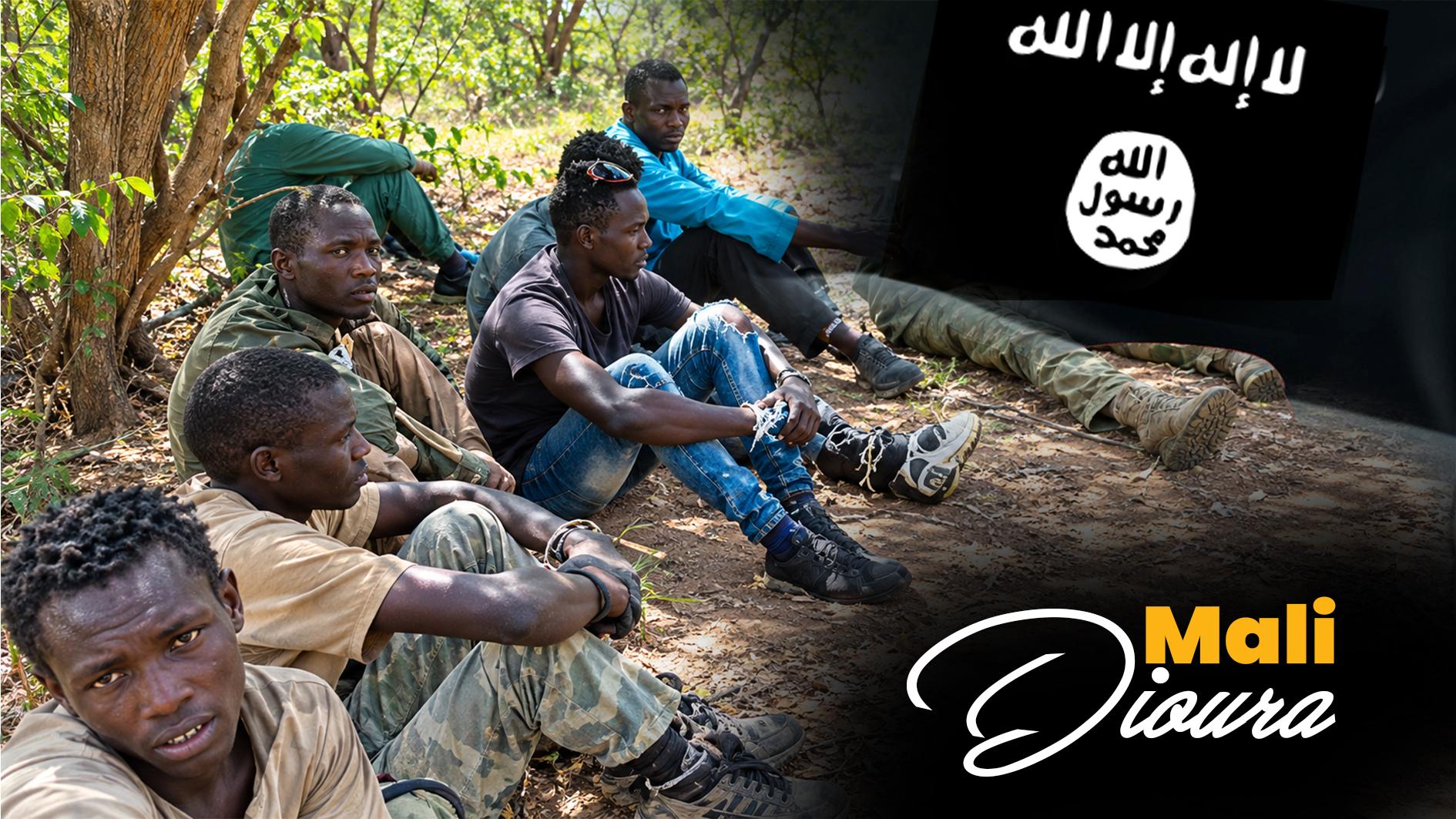
The cost of silence: what Dioura means for Mali’s soldiers, families and economy
When Mali’s chief of general staff dismissed the situation at Dioura with a curt “there is nothing at Dioura,” the Group for the Support of Islam and Muslims (JNIM) answered with a communiqué that laid out a devastating toll. Claiming responsibility with meticulous detail and visual evidence, the jihadist organisation exposed the communication strategy of the military government in Bamako. Between the scale of human losses and the material haemorrhage suffered by the army, the official narrative is buckling under a reality on the ground that is increasingly slipping out of control — and the consequences are being felt far beyond the battlefield.
The ripple effects on Mali’s civilians and local economies
For ordinary Malians, the fallout from Dioura is not an abstract military setback. When dozens of soldiers are killed or captured, entire communities lose breadwinners, protectors and local customers. Families in garrison towns across central and northern Mali face sudden loss of income, while markets that depend on military spending — food stalls, transport services, small traders — see their activity dry up. The capture of 93 soldiers adds a painful emotional and social dimension: their relatives are left without news, and their release becomes a potential bargaining chip that could shape local dynamics for months.
A blunt rebuttal to official rhetoric
The junta’s strategy of downplaying setbacks has hit a steel wall. By publicly declaring that no major event had occurred in Dioura, the military command likely hoped to smother the impact of yet another strategic disappointment. It reckoned without the media reflexes of JNIM, Al-Qaeda’s Sahel branch, which quickly issued a rebuttal as firm as it was detailed.
For Assimi Goïta’s government, built on a narrative of sovereign reconquest and a rising military, the contrast is striking. By denying the obvious before it surfaced on social networks, Bamako exposes itself to a destructive loss of credibility — not only among international observers but above all among a Malian population increasingly uncertain about the country’s real security situation.
Human and material losses on an unprecedented scale
The figures put forward by JNIM describe a genuine military carnage. The group claims to have killed 150 Malian soldiers in the clashes, including senior officers such as a colonel and a captain. To this already heavy human toll, it adds 93 soldiers taken prisoner — a considerable political and strategic pressure point for the armed organisation.
On the logistical front, the rout described by the group is equally spectacular:
- Army material losses: Confirmed destruction of 15 military vehicles and more than 100 motorcycles used by patrols.
- Captured vehicles: Seizure of 6 tactical vehicles and 10 motorcycles in working condition.
- Heavy arsenal recovered: 6 14.5 mm-calibre weapons, 17 DShK heavy machine guns, 32 PK machine guns, 10 RPG rocket launchers, 3 mortars and one SPG recoilless cannon.
- Light weapons and ammunition: 233 Kalashnikov assault rifles and a massive stock of ammunition of various calibres.
To back up these claims and pre-empt any contestation, JNIM accompanied its communiqué with photographic and video evidence detailing the loot and the captives.
The information war: Bamako’s strategic weak point
The Dioura episode highlights a systemic flaw in the junta’s crisis management. By favouring denial or radio silence in the face of tactical setbacks, the military command leaves the field open to enemy propaganda. When jihadist groups release verifiable images of seized equipment and captured soldiers, official communication collapses — reinforcing the sense of isolation among troops deployed at the front.
This battle for the narrative is all the more crucial because JNIM is demonstrating its ability to carry out complex operations, combining mass assault with the systematic recovery of heavy weaponry. Every defeat not acknowledged by the authorities erodes confidence within army ranks and weakens national cohesion.
Economic and security consequences beyond the battlefield
The long-term economic impact is equally troubling. Each lost convoy, each destroyed vehicle and each captured weapon represents a direct financial drain on a state already struggling to equip its forces. Replacing 15 vehicles, 100 motorcycles and dozens of heavy weapons requires funds that could otherwise go to schools, health centres or roads. Meanwhile, insecurity along key routes disrupts trade, raises transport costs and deters investment in the very regions the army is supposed to secure.
For local businesses, the uncertainty is crippling. Traders in towns like Dioura and surrounding areas face interrupted supply chains, while farmers and herders avoid routes where military patrols have been ambushed. The psychological effect of knowing that a fortified position can be overrun undermines the confidence needed for any economic recovery.
The test on the ground versus the sovereignty discourse
The reality on the ground reaffirms the complexity of the security crisis in central and northern Mali. Despite the display of a strategic break and the use of new partners, the nuisance capacity of armed groups remains intact. The Dioura attack proves that JNIM retains tactical mobility and strike power capable of disrupting fortified army positions.
Faced with the precision of the elements provided by the attackers, silence or downplaying by the authorities cannot serve as a military strategy. For Mali’s junta, the challenge is no longer only reconquering territory, but facing the facts to readjust a security response that is now severely tested — and whose failures are paid for by soldiers, their families and the wider economy.


 Boureima Amadou





