Mariama Hamani
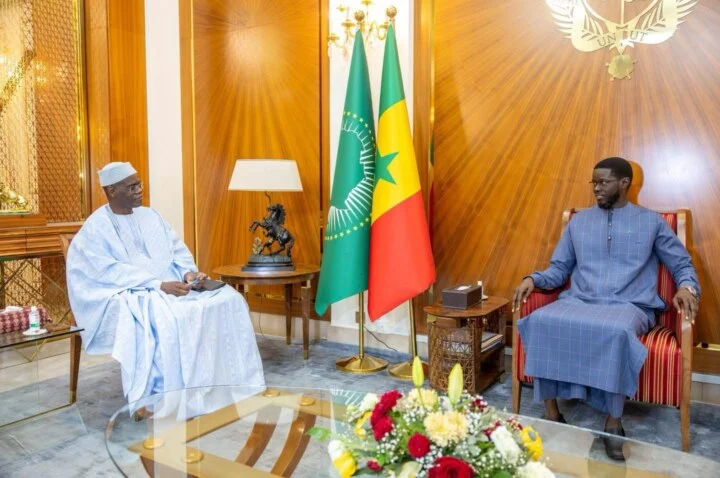
The newly formed Senegalese government under Prime Minister Ahmadou Al-Aminou Lo has incorporated several figures closely linked to the political movement associated with Ousmane Sonko, despite the PASTEF-Les Patriotes party’s decision to withdraw from the executive.
The party, led by Ousmane Sonko, announced its refusal to participate in the government, citing disagreements over the structure of the executive branch. While PASTEF will not be officially represented, the cabinet’s composition reveals notable connections to the party’s orbit, raising questions about the true political alignment of the new administration.
Key figures from Ousmane Sonko’s circle in the cabinet
Among the appointed ministers, several are widely recognized in Senegal’s political landscape as being closely tied to the vision championed by Ousmane Sonko and the president, Bassirou Diomaye Faye, during the 2024 presidential election. These include:
- Yankhoba Diémé, appointed Minister of Armed Forces, a role traditionally reserved for trusted figures within the administration.
- Cheikh Tidiane Dièye, who now oversees the Ministry of Hydraulics and Sanitation, a portfolio that aligns with Sonko’s emphasis on public infrastructure and social services.
- Ibrahim Sy, heading the Ministry of Health and Public Hygiene, a sector where PASTEF has historically advocated for reforms.
- Marie Angélique Mame Selbe Diouf, serving as Minister of Family and Social Solidarity, a position reflecting the party’s focus on social welfare.
- Déthié Fall, appointed Minister of Infrastructure, another critical area for Sonko’s political agenda.
These ministers are often perceived as either core supporters of the ruling coalition or as part of the broader political alliances that contributed to Bassirou Diomaye Faye’s election victory.
The government also features technocrats and independent political figures, such as Cheikh Diba, Cheikh Niang, and Boubacar Camara, whose backgrounds do not align directly with PASTEF’s partisan identity. Their inclusion suggests a deliberate effort to balance political representation with professional expertise in the new administration.


 Boureima Amadou