Boureima Amadou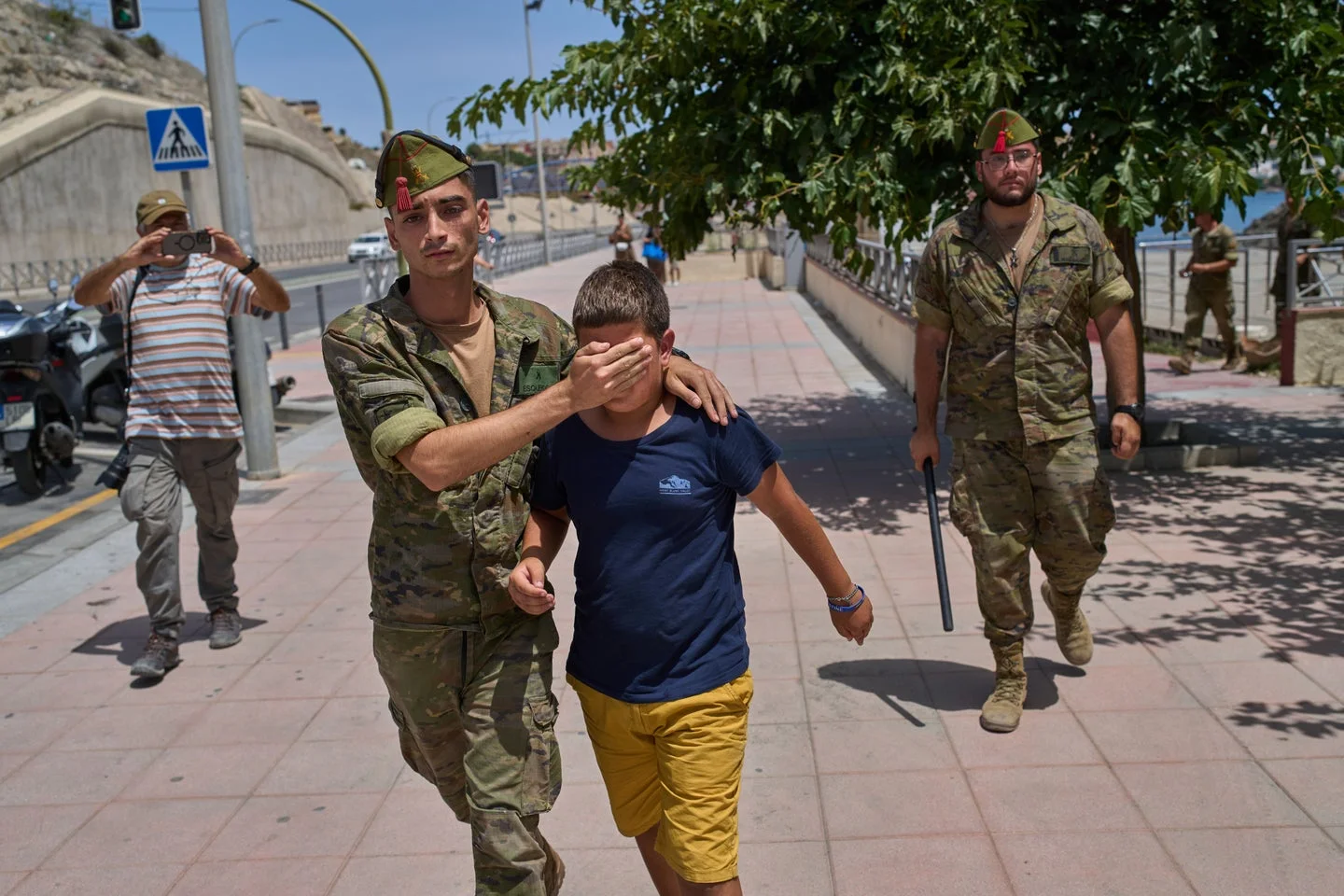
Morocco’s Justice Minister, Abdellatif Ouahbi, has urged for the organized return of Moroccan minors currently in Spain, including those who arrived in Ceuta during the recent migration surge. This call aligns with directives from the Moroccan monarchy, instructing relevant ministries to expedite the identification and repatriation process of these unaccompanied minors.
While the exact number of affected minors remains unclear, Spanish authorities reported 1,527 unaccompanied minors in Ceuta following the crisis. Notably, this figure includes some children who were already present in the enclave prior to the July 30-31 migration wave.
Legal framework enables but does not guarantee returns
A common misconception suggests that Moroccan minors cannot be repatriated from Spain. However, an existing bilateral agreement between Rabat and Madrid, effective since 2007, outlines procedures for the prevention of irregular migration by unaccompanied minors, their protection, and their concerted return. The agreement facilitates cooperation between the two nations to trace the minors’ families and, where feasible, facilitate their return to their families or to Moroccan authorities.
Yet, this agreement does not permit collective or automatic repatriations. Spanish law mandates an individual assessment for each minor to determine whether repatriation serves their best interests. Authorities must evaluate family circumstances, consult Moroccan counterparts, and allow the child to express their views. The public prosecutor’s office also plays a critical role in this process.
This requirement for case-by-case evaluation explains why minors could not be repatriated alongside adults during the immediate border pushback. Their irregular entry does not negate their status as minors under the protective jurisdiction of Spanish authorities.
2021 Precedent complicates current repatriation efforts
The cautious approach taken by Spanish authorities stems directly from the 2021 Ceuta migration crisis. During that event, hundreds of minors were repatriated to Morocco in a coordinated operation by Spanish officials.
However, the Spanish judiciary later ruled that these repatriations were unlawful. In January 2024, the Supreme Court upheld this decision, citing failures to adhere to legal safeguards—particularly the lack of sufficient individual assessments for each minor. This precedent now looms large over any future repatriation efforts.
While both Rabat and Madrid seek solutions—Rabat to reclaim its nationals and Madrid to ease Ceuta’s overcrowding—the Spanish government must ensure that every repatriation complies strictly with legal requirements. Collective actions remain legally vulnerable without meticulous adherence to procedure.
Alternative measures: distributing minors across Spain
In the absence of repatriations, Spain faces an immediate challenge: Ceuta’s overwhelmed infrastructure. To alleviate the strain, the central government has activated measures to redistribute some unaccompanied minors to other autonomous communities. This process operates independently of repatriation discussions and does not preclude eventual returns to Morocco.
The redistributive approach has sparked political friction in Spain. While the central government advocates for regional dispersal to relieve Ceuta, the opposition Popular Party insists on prioritizing repatriation to Morocco. Juan José Imbroda, President of Melilla, has also advocated for the implementation of the 2007 agreement with Morocco.
The current impasse is less about Spain refusing to return the minors and more about the complexity of meeting legal obligations. Morocco has expressed readiness to receive its minors, but Spain must navigate individual assessments and procedural safeguards meticulously. The coming weeks will test whether bilateral cooperation can swiftly identify families and meet the conditions for safe repatriation. The 2021 judicial precedent underscores the risks of hurried collective actions, which could once again expose authorities to legal challenges.


 Mariama Hamani