Boureima Amadou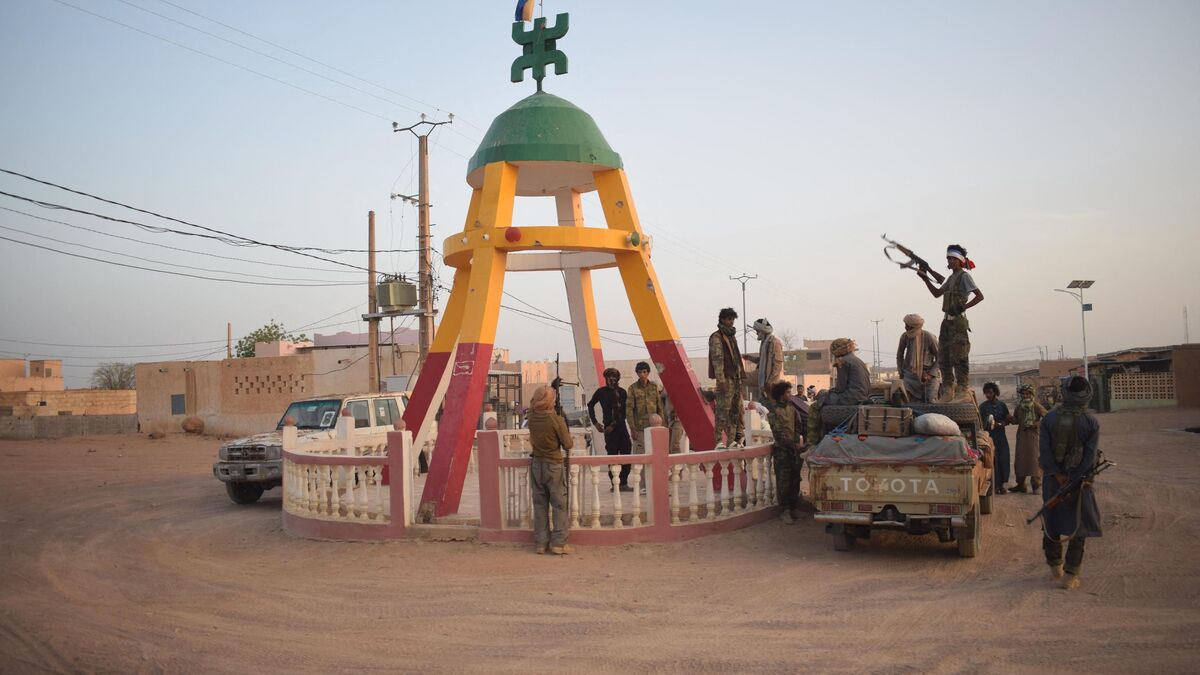
This past weekend marked a significant turning point in Mali’s ongoing conflict, as Tuareg rebels, joined by jihadist factions, launched coordinated attacks on multiple positions held by the ruling junta. Among the targets was the residence of Defense Minister Sadio Camara near Bamako, where he was killed during the assault.
In the eastern part of the country, rebels reclaimed control of Kidal, a key stronghold previously held by the Africa Corps—a shadowy Russian paramilitary force that had maintained a firm grip on the region for years. After intense clashes and protracted negotiations, the Africa Corps withdrew from the city, though its influence across the Sahel remains intact.
Russia’s evolving military footprint in Africa
The Africa Corps emerged in late 2023, first surfacing in a Telegram post by military blogger Deux Majors, who cited comments from Igor Korotchenko, a former colonel and Kremlin-aligned journalist. Korotchenko revealed that the group operates under the oversight of Yunous-bek Evkourov, Russia’s Deputy Defense Minister. This development coincided with the decline of the Wagner Group, Russia’s once-dominant paramilitary force in Africa, which had been active since 2014.
Wagner’s founders, oligarch Evgueni Prigojine and ex-intelligence officer Dmitri Outkine, died in a mysterious plane crash in August 2023, shortly after Prigojine’s brief but dramatic rebellion against Moscow. The Africa Corps was positioned to absorb Wagner’s operations, personnel, and influence across the continent.
A new name with historical echoes
Much like Wagner, which drew its name from the composer favored by Adolf Hitler, the Africa Corps pays homage to the Afrikakorps—the Nazi-era military unit that operated in North Africa during World War II. This naming choice underscores the group’s strategic intent: to project Russian power across Africa while distancing itself from the controversial legacy of Wagner.
Clear objectives in a shifting geopolitical landscape
From its inception, the Africa Corps has outlined ambitious goals. According to Korotchenko, the group aims to conduct large-scale military operations on the continent to help African nations break free from neocolonial dependencies, expel Western influence, and secure full sovereignty. Unlike Wagner, which was frequently accused of war crimes and brutal repression, the Africa Corps presents itself as a more disciplined and centralized force.
Its strategy focuses on strengthening ties with allied governments by providing military training, equipment, and logistical support. The group has expanded its presence from Mali to Burkina Faso, Libya, Sudan, the Central African Republic, and Niger, gradually weaving a network of influence.
Mali: A critical battleground for Russian influence
Since 2024, the Africa Corps has supplanted Wagner’s role in Mali, deploying hundreds—if not thousands—of fighters to prop up the junta in Bamako. The move comes as Western powers, including France, have scaled back their military and political engagement in the region. By securing Mali, Russia seeks to expand its regional clout, control migration routes, and secure access to valuable mineral resources.
The Africa Corps has faced international scrutiny, with the United Kingdom sanctioning the group in 2024 for alleged widespread human rights violations and the exploitation of natural resources for financial gain. Despite these controversies, the organization continues to play a pivotal role in Moscow’s broader ambitions across Africa.