Mariama Hamani
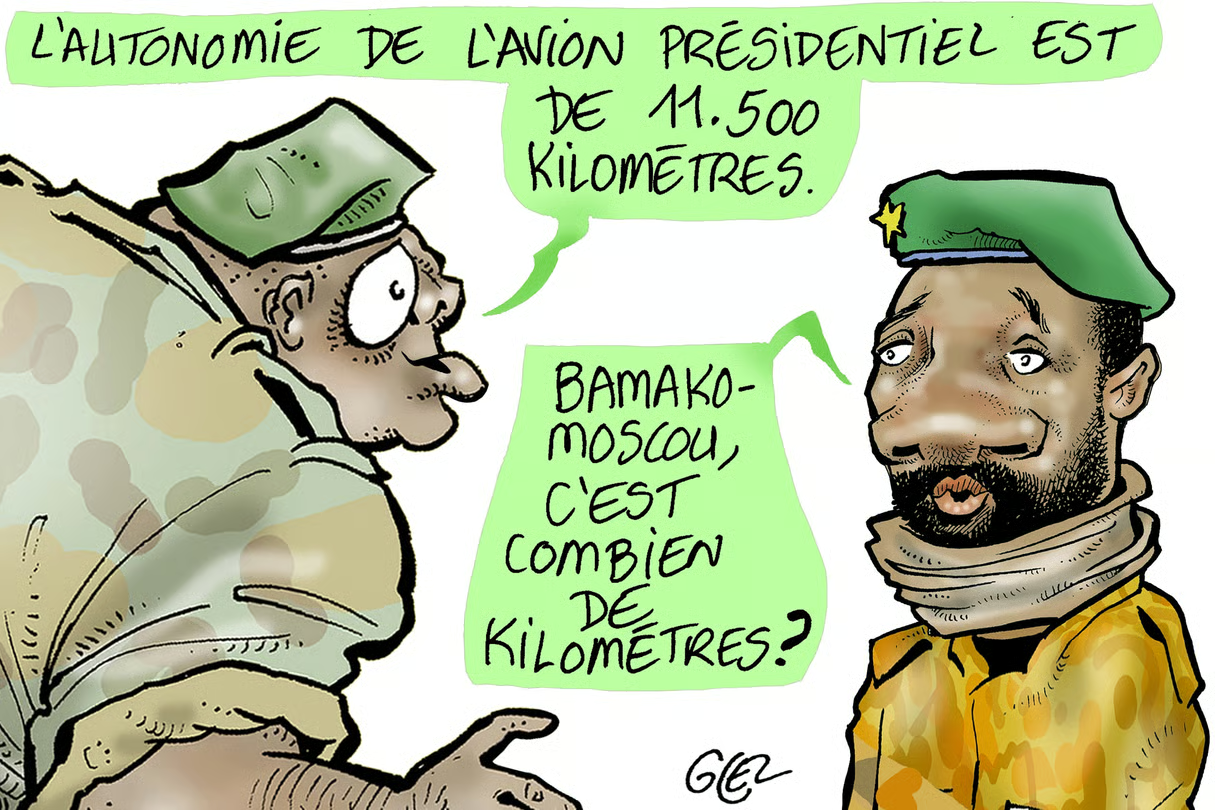
Bamako’s political landscape is once again under the spotlight as Assimi Goïta, Mali’s transitional head of state, finalizes the acquisition of a brand-new presidential aircraft. The move comes at a time when public scrutiny over government expenditures remains intense, sparking debates about fiscal responsibility in a nation navigating complex regional challenges.
Why a new presidential jet for Mali?
Since taking office, Goïta has emphasized the need for enhanced mobility to support Mali’s diplomatic and security engagements across the Sahel. The acquisition reflects a broader strategy to strengthen the country’s operational capabilities, especially in light of ongoing security threats and regional instability. Critics, however, question the timing and necessity of such a high-profile purchase amid pressing socio-economic concerns.
Public reaction and political implications
The announcement has reignited discussions about transparency in governance. Opponents argue that the funds could have been allocated to critical sectors like healthcare, education, or infrastructure development. Meanwhile, supporters highlight the jet’s role in facilitating high-level international engagements, positioning Mali as a key player in regional diplomacy.
Economic considerations
While the exact cost of the aircraft remains undisclosed, estimates suggest a multi-million-dollar investment. This raises questions about Mali’s financial priorities, particularly as the nation continues to grapple with economic recovery post-crisis. The decision underscores the delicate balance between national security imperatives and public fiscal management.
Historical context
Presidential aircraft acquisitions are not unprecedented in Mali. Previous leaders, including former president Ibrahim Boubacar Keïta, also utilized state jets for official duties. However, the current administration faces heightened scrutiny, with citizens and analysts closely monitoring how resources are deployed in service of national goals.
The new jet’s arrival signals a commitment to operational efficiency, but it also places increased pressure on the government to justify its spending in a climate of economic uncertainty and public demand for accountability.


 Boureima Amadou