Boureima Amadou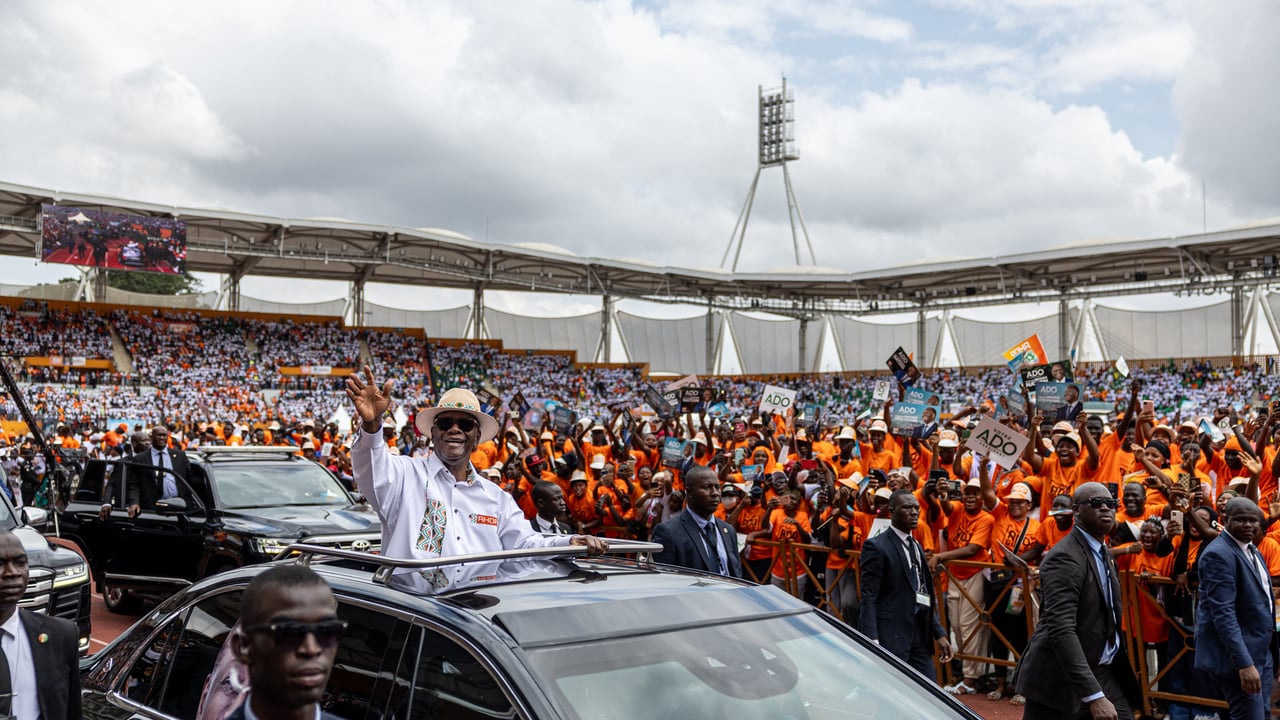
From grassroots movement to political powerhouse
The Rally of Houphouëtists for Democracy and Peace (RHDP) stands today as Côte d’Ivoire’s most influential political entity. Its journey from a modest coalition to the driving force behind national governance reflects a masterclass in political strategy and resilience. This evolution wasn’t merely about winning elections—it represented the transformation of a political vision into a lasting institutional framework.
The founding pillars of the RHDP
The RHDP emerged as a convergence point for several political movements united under shared values. Its foundation rested on three critical pillars: the legacy of Félix Houphouët-Boigny, Côte d’Ivoire’s first president; the democratic principles championed by Alassane Ouattara; and the reconciliation efforts spearheaded by Henri Konan Bédié. These components created a robust ideological foundation that would weather numerous political storms.
A coalition built on unity and vision
While many political alliances fracture under pressure, the RHDP’s structure was designed to endure. Unlike temporary electoral coalitions, this alliance deliberately incorporated diverse factions—from the Democratic Party of Côte d’Ivoire to the Union for Democracy and Peace in Côte d’Ivoire. This deliberate inclusivity prevented the fragmentation that often plagues other political movements in the region.
The road to political dominance
The RHDP’s ascent to power wasn’t instantaneous but rather a gradual consolidation of influence. Through strategic alliances, adept negotiation tactics, and an unwavering commitment to its core principles, the coalition steadily expanded its base. Each electoral victory reinforced its position, while opposition movements found themselves increasingly marginalized in the political landscape.
Enduring challenges and strategic responses
No political force operates without obstacles, and the RHDP faced its share of challenges. From internal power struggles to external pressures, the coalition consistently demonstrated an ability to adapt. When confronted with dissent, it responded not with suppression but through calculated compromises that maintained coalition cohesion. This adaptive strategy became one of its defining characteristics.
The RHDP’s lasting impact on Côte d’Ivoire
More than two decades after its formation, the RHDP’s influence permeates every level of Ivorian society. Its policies have shaped economic development, social programs, and international relations. The coalition’s ability to maintain relevance through changing political climates attests to its institutional strength—a testament to the vision of its founders and the dedication of its members.
Key figures in the RHDP’s journey
- Félix Houphouët-Boigny: The architect of modern Côte d’Ivoire whose leadership principles continue to guide the RHDP
- Henri Konan Bédié: A unifying figure who championed reconciliation and inclusivity within the coalition
- Alassane Ouattara: The strategist who transformed the RHDP from a movement into a governing institution
What sets the RHDP apart
The coalition’s success stems from several unique attributes:
- A clear ideological foundation blending tradition with modernity
- Institutional mechanisms that prevent fragmentation
- An adaptive approach to governance challenges
- A commitment to national unity over partisan interests