theafricantribune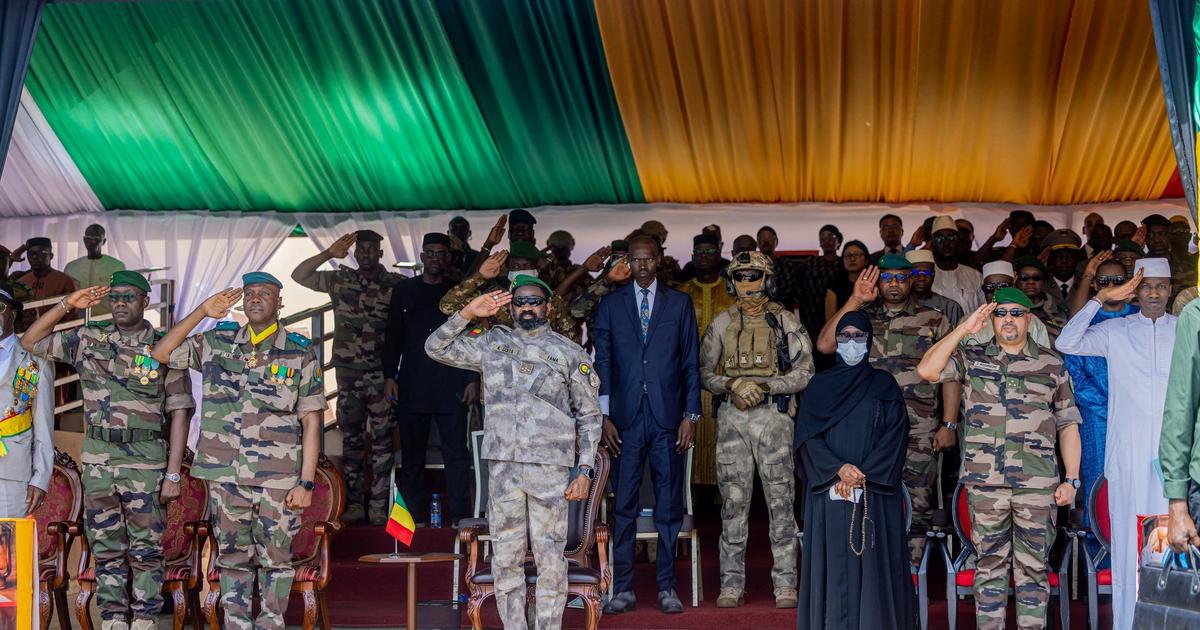
The Malian government’s stance on Algeria shifted dramatically between February and July 2026. In early February, Bamako dismissed as “fabricated” rumors that its ambassador would return to Algiers, going so far as to label the claims “completely baseless and misleading.” The response was swift, with accusations of “deliberate disinformation” aimed at undermining Mali’s sovereignty. Yet by July 10, the same government announced the ambassador’s official return—a move that underscored a rapid about-face in regional diplomacy.
The trigger for this change was the escalating insurgency in northern Mali. By mid-2026, the situation had reached a breaking point, with coordinated attacks by the Tuareg-led Front de Libération de l’Azawad (FLA) and the al-Qaeda-affiliated Group for Support of Islam and Muslims (JNIM) targeting government forces. The loss of key cities like Kidal and the assassination of Mali’s Defense Minister, Sadio Camara, forced Bamako to confront a harsh reality: military solutions alone could not stabilize the region.
Pressure mounts on Bamako
On July 4, a new wave of coordinated assaults struck cities across central and northern Mali, including Gao, Anéfis, and Aguelhok. The prison in Kéniéroba, just 60 kilometers from Bamako, became a battleground. The strategic town of Anéfis, a critical crossroads between government-held Gao and rebel-controlled Kidal, emerged as the focal point of the conflict. Losing Anéfis would have severed the government’s access to the northeast—a scenario Mali’s transitional authorities could ill afford.
In response, Malian forces, backed by the Russian Wagner Group—now operating under the banner of the Africa Corps—launched a counteroffensive. Reinforcements, including 200 Russian mercenaries, 100 Malian troops, and loyalist Tuareg fighters from the Gatia unit, were deployed in a 60-vehicle convoy. Nigerien air support further demonstrated the operational coordination among the Alliance of Sahel States (AES), comprising Mali, Burkina Faso, and Niger. While the FLA claimed a tactical retreat, the fighting exposed Bamako’s vulnerability and the urgent need for external support.
Mali’s diplomatic pivot
The resumption of ties with Algeria was not an isolated decision. Earlier in the year, both Niger and Burkina Faso had mended fences with Algiers, leveraging its regional influence. For Bamako, isolation from its neighbors—especially Algeria—had become unsustainable. The two countries share a 1,400-kilometer border, much of which cuts through the unstable Sahara, where armed groups operate with impunity. Algeria’s deep involvement in Malian conflicts, including its role in the 2015 Algiers Peace Accord—which the Malian junta had since rejected—made it an indispensable partner.
The breakdown in relations had reached its nadir in April 2025, when a Malian drone was shot down near Tin Zaouatine, prompting the reciprocal recall of ambassadors and the closure of both nations’ airspaces. Yet Algeria maintained an open channel, reaffirming its commitment to Mali’s unity and rejecting terrorism during a May visit by Foreign Minister Ahmed Attaf. By July 10, Bamako and Algiers had officially restored diplomatic relations, signaling a recognition that Mali could no longer afford to isolate itself.
Strategic necessity overcomes pride
The February denial of reconciliation was a display of defiance, but the July rapprochement revealed the limits of that approach. Algeria’s influence extends beyond its borders; as a key player in the Sahel’s security and energy sectors, it holds leverage that Mali’s transitional government could no longer ignore. For the AES, the need for regional solidarity—amid persistent insecurity and dependence on external partners—had become paramount. Bamako’s alignment with Niamey and Ouagadougou was not just a matter of principle but of survival.
Algeria, meanwhile, had pursued a patient strategy. Rather than forcing Mali’s hand, it prioritized engagement with Niger and Burkina Faso, consolidating its regional footprint. President Abdelmadjid Tebboune had repeatedly signaled Algeria’s willingness to assist, provided Bamako took the first step. The return of ambassadors provided that framework, transforming a year of frozen relations into a cautiously optimistic chapter.
Yet challenges remain. The crisis in northern Mali persists, and Bamako’s reliance on external forces—both regional allies and the Africa Corps—highlights the fragility of its position. The July 10 agreement may have reopened diplomatic channels, but the road to lasting stability is far from clear.

 Boureima Amadou
 Mariama Hamani