
 Boureima Amadou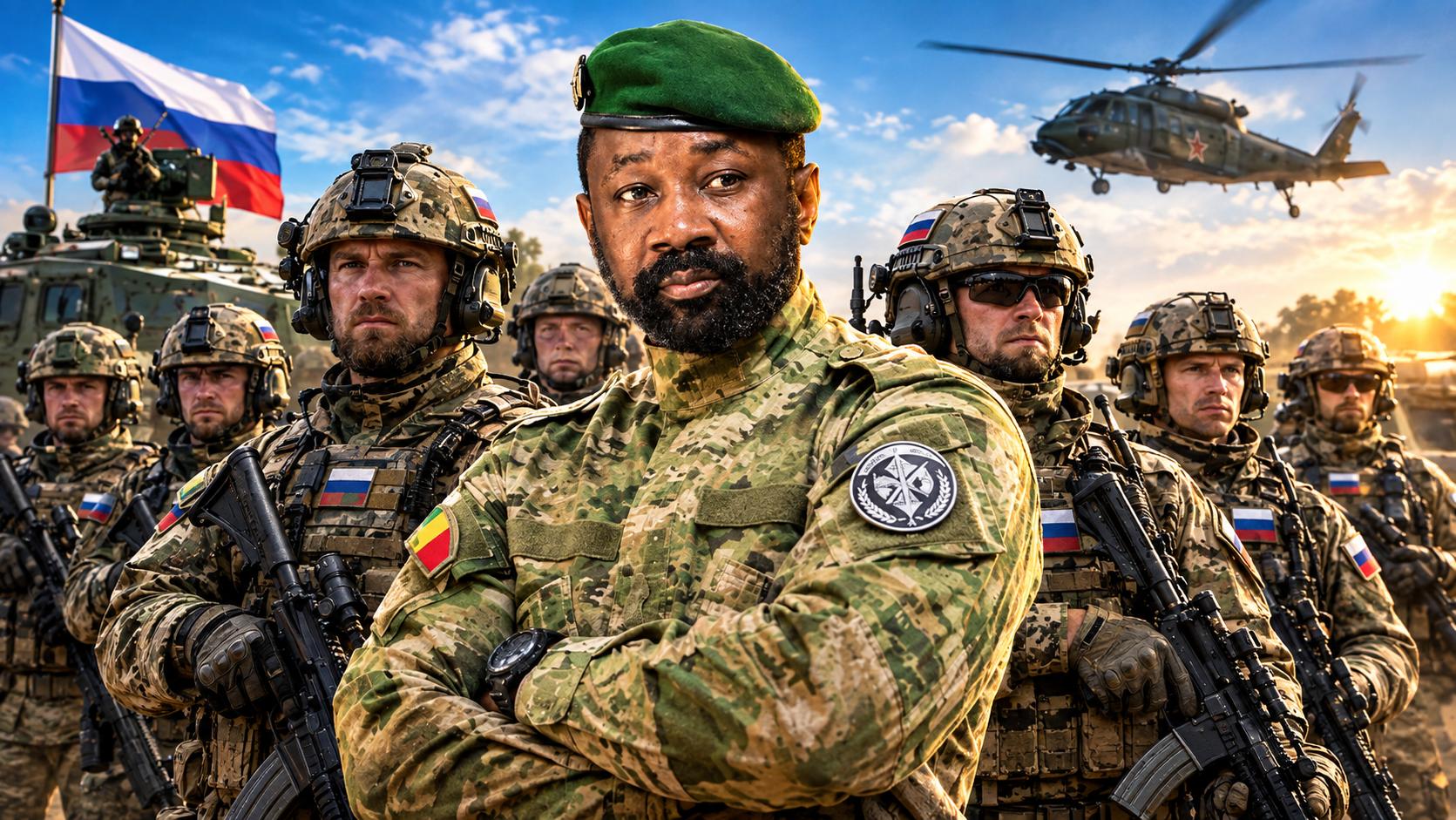
The mounting death toll among Russian paramilitary forces in Mali is no longer just a battlefield statistic—it is a reality that is reshaping daily life for millions of Malians and straining the country’s fragile economy. At least 358 Russian fighters deployed under the Africa Corps banner, formerly known as Wagner, have been killed since late 2021, according to independent observers, conflict-monitoring groups, and leaked security data. That figure—more than double the 59 French soldiers killed over nearly a decade of regional operations—signals a deepening quagmire with far-reaching consequences for the junta, Moscow, and ordinary citizens.
How the human cost translates into economic pain
Every Russian casualty represents not only a lost life but also a financial drain. The junta’s contract with Africa Corps is estimated to cost hundreds of billions of CFA francs, money that could have been invested in schools, healthcare, or infrastructure. Instead, it is being consumed by a war of attrition that shows no sign of ending. For a country already battling poverty and food insecurity, this diversion of resources is keenly felt.
The repeated attacks on military positions—particularly the coordinated assaults on Sévaré and Dioura—have also disrupted local economies. Markets close early, transport routes become risky, and farmers abandon fields near conflict zones. In the center and north, entire communities live under the constant threat of violence, unable to pursue their livelihoods.
A pattern of losses that outpaces France’s decade-long campaign
The numbers tell a stark story. French forces lost approximately 59 soldiers during Serval and Barkhane operations from 2013 to 2022. Africa Corps has already lost 358 fighters in just three years in Mali alone. This extraordinary attrition rate stems from fundamentally different operational doctrines. Western forces relied heavily on air power, advanced intelligence, and avoiding close combat. Russian mercenaries, by contrast, are often thrust into front-line sweeps in heavily mined areas riddled with IEDs and ambushes.
The July 2024 ambush at Tinzawatène, which killed over 80 Russian fighters alongside Malian troops, was a turning point. Since then, the toll has only mounted, with recent attacks on strategic installations in Sévaré and Dioura delivering further blows to the joint FAMA/Africa Corps effort.
What it means for the junta and for Moscow
The human and financial costs are forcing a reckoning. Inside military barracks and among the public, questions are growing about the sustainability of this security model. The military transition promised rapid pacification, but the opposite has occurred: an escalating war of attrition with no clear exit. For Moscow, the losses raise uncomfortable questions about the effectiveness of its Africa Corps strategy, especially as it seeks to expand its influence across the Sahel.
For ordinary Malians, the consequences are immediate and personal. Displacement, lost livelihoods, and a sense of insecurity are the daily reality. The war may be fought far from the capital, but its impact reaches every corner of the country.
The road ahead: no easy answers
With no sign of a military solution, the junta faces a dilemma. Continuing the current strategy means more casualties, more spending, and deeper suffering for civilians. Changing course, however, could be seen as a defeat. Meanwhile, the Russian presence shows no sign of winding down, and the war of attrition grinds on.
What is clear is that the 358 deaths are not just numbers. They represent a strategy that is exacting a heavy price—on the battlefield, on the economy, and on the lives of millions of Malians who long for peace.



 Mariama Hamani




