Boureima Amadou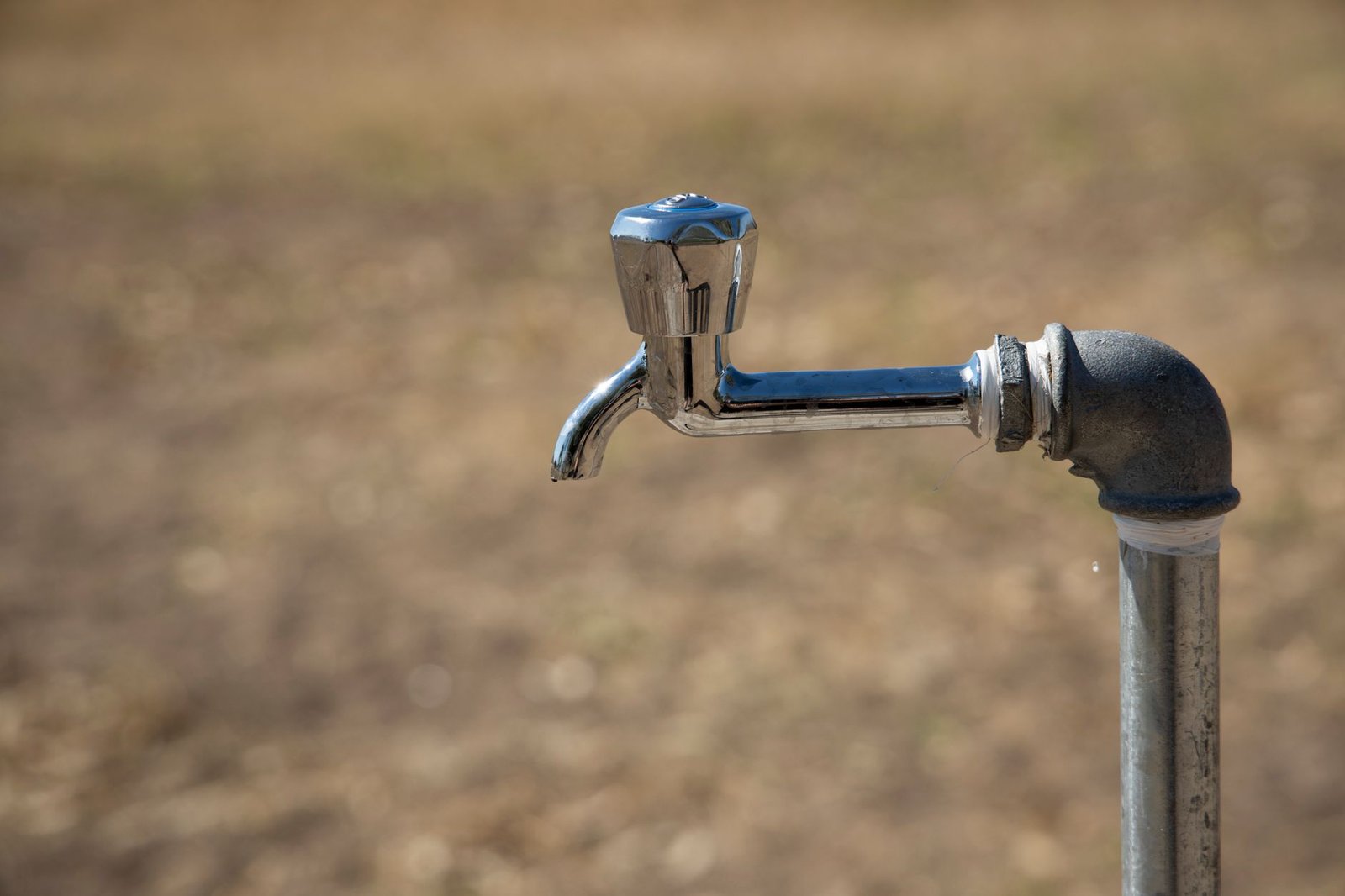
Libreville, Gabon’s vibrant capital and its surrounding areas, has been plunged into a critical water shortage, prompting Gabonese authorities to declare a state of hydric emergency. For days on end, taps have run dry, long queues form around the few operational distribution points, and the price of water containers has skyrocketed in working-class neighborhoods. The widespread frustration is palpable, with residents comparing the scarcity of water to that of a rare 10,000 CFA franc banknote – a stark illustration of a crisis that has become an everyday reality for the population.
Two primary factors contribute to the severity of this unprecedented challenge. Firstly, an unusually weak rainy season has led to a significant drop in water levels at the dams and collection points supplying the urban agglomeration. Secondly, the existing water network, a legacy of previous decades, remains severely degraded. This aging infrastructure suffers from high loss rates in its pipelines and treatment plants operating far below their designed capacity. The cumulative effect is a system pushed to its limits, unable to withstand even minor climatic fluctuations.
Aging infrastructure challenges Gabon’s essential services
The ongoing water crisis in Libreville starkly highlights the limitations of Gabon’s approach to managing vital public services. For an extended period, the distribution of water was entrusted to the Société d’énergie et d’eau du Gabon (SEEG). However, this arrangement has been marked by contractual breakdowns and repeated state interventions, without establishing a clear and consistent investment strategy. The burgeoning needs of the capital, whose population, including its periphery, now exceeds 700,000 inhabitants, have outpaced the existing production capabilities. Consequently, every severe dry spell now results in systematic water rationing in areas furthest from the city center.
The current political transition in Gabon, initiated after the change of regime in August 2023, has placed this critical issue at the forefront of the social agenda. The new administration faces a narrow window to demonstrate its ability to deliver tangible results. The declaration of a hydric emergency in Libreville underscores this pressure, authorizing the accelerated mobilization of public resources, the requisition of essential equipment, and enhanced inter-ministerial coordination. Nevertheless, these immediate measures will only yield lasting effects if they are integrated into a credible, multi-year investment program.
Social tensions rise in Libreville, testing the transition government
On the ground, residents are improvising to secure water. A patchwork of solutions has emerged, including water tankers chartered by authorities, sporadic distributions at district town halls, private boreholes, and the resale of water by the container. Businesses, hotels, and hospitals are also grappling with the operational consequences of these prolonged outages, incurring diffuse but significant economic costs. In healthcare facilities, the lack of water complicates hygiene management and heightens fears of waterborne disease outbreaks.
Authorities are communicating about short-term interventions: accelerating work on treatment plants, importing crucial pumping equipment, and tapping into underground water sources. However, a substantial financial challenge awaits the transitional government. Multilateral donors, notably the African Development Bank and the World Bank, have previously supported water supply projects in Greater Libreville. Their large-scale re-engagement will necessitate renewed transparency regarding sector governance and a clear definition of the role assigned to the historical operator.
A climate warning beyond Gabon’s borders
Gabon’s experience is part of a broader trend of hydric alerts affecting several capitals across Central and West Africa. Cities such as Kinshasa, Brazzaville, Douala, and Abidjan frequently experience strains on their access to potable water. This common challenge stems from a combination of rapid urban demographic growth, insufficient investment in infrastructure, and increasing climatic variability. For a nation like Gabon, long perceived as abundantly endowed with freshwater due to its extensive forest cover, this episode serves as a powerful refutation of that assumption.
Resolving this crisis will require action on three fronts: comprehensive rehabilitation of existing infrastructure, diversification of water capture sources, and a fundamental overhaul of the institutional framework governing public water services. The political timeline of the transition demands swift execution; otherwise, escalating social exasperation risks impacting upcoming electoral cycles. The combination of low rainfall and dilapidated facilities lies at the heart of this unprecedented crisis for the Gabonese capital.