Mariama Hamani
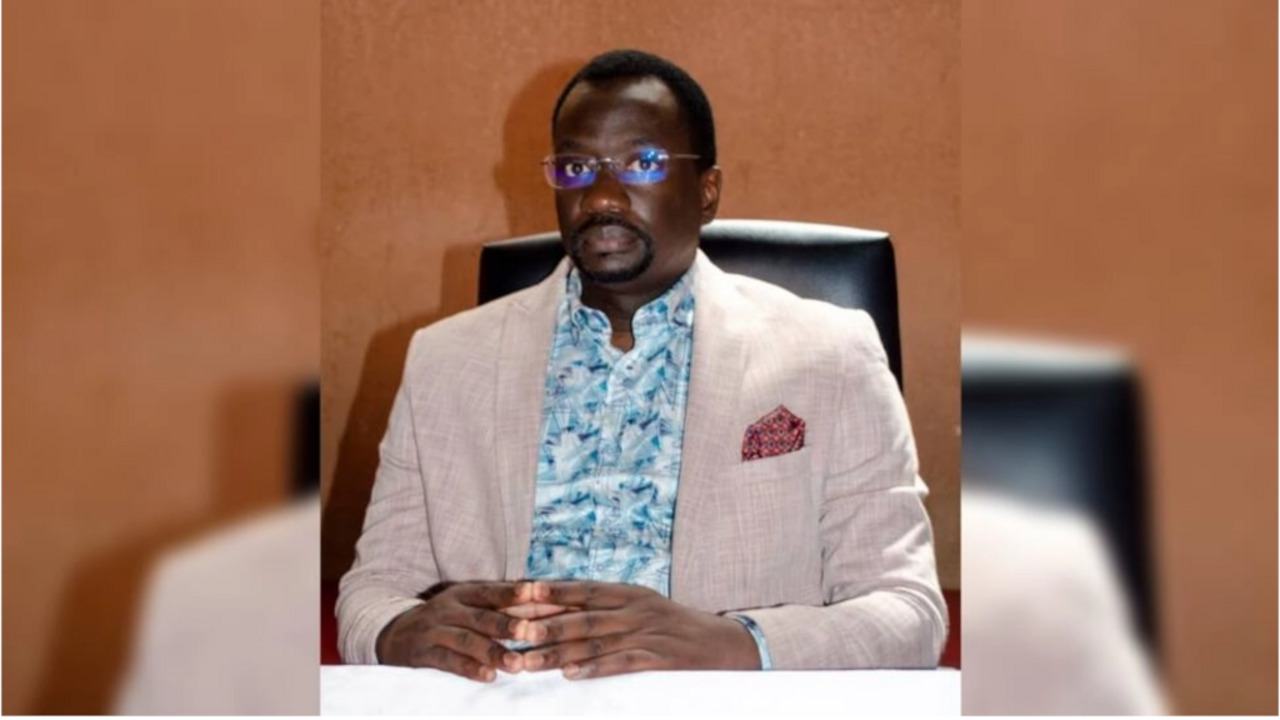
In a recent television appearance, Lansana Gagny Sakho, Chairman of the Board of Directors of the Agency for the Promotion of Investment and Major Works (APIX), addressed the reasons behind his growing divergence from Ousmane Sonko, a prominent political figure. Sakho emphasized his unwavering commitment to republican institutions, clarifying that he had never wavered in his choice to support the state’s constitutional framework.
From political ally to staunch defender of institutions
Sakho, who once aligned with Sonko’s political project under Pastef, cited personal convictions as his guiding principle. He revealed that he had rejected a high-profile ministerial position in the water and sanitation sector to uphold his principles. « I prioritized my values over political office, » he stated. « That decision allowed me to step away without hesitation. From the very beginning, I chose the Republic over partisan loyalty. »
Criticism of Sonko’s approach to governance
Sakho did not mince words when discussing Sonko’s relationship with state institutions. He accused the opposition leader of consistently undermining the authority of the presidency through public statements, particularly during President Faye’s official visits abroad. A notable example cited was Sonko’s remarks while the president was in the United States and China, where he criticized the government’s perceived lack of control. According to Sakho, such comments not only embarrassed the head of state but also deepened political fractures at the highest level of government.
For Sakho, the essence of political responsibility lies in strengthening institutions, not destabilizing them. While acknowledging that challenges have emerged on both sides of the political spectrum, he pointed to significant progress, especially within the justice system, as a testament to the administration’s reform efforts.
The justice ministry reshuffle: a test of institutional resilience
Sakho also reflected on recent changes at the Ministry of Justice, where the former Minister, Ousmane Diagne, had publicly declared his autonomy from external influence. Sakho suggested that Diagne’s removal was an attempt to install a more compliant figure who could sway judicial decisions. « That assumption overlooked a fundamental truth: judges are not puppets, » he remarked. « The realities of power are far more complex than opposition narratives suggest. »
His remarks underscore a broader critique of opposition tactics, which he argues often underestimate the resilience and independence of state institutions. Sakho’s stance aligns with his repeated endorsements of President Diomaye Faye’s policies, emphasizing the importance of institutional continuity and stability amid shifting political dynamics.
The timing of his comments coincides with a wave of resignations within Pastef, as several party officials have recently joined the presidential camp ahead of the launch of the new political movement, Kiiraay. Sakho’s statements reflect a broader trend of former allies re-evaluating their positions in favor of institutional loyalty.


 Boureima Amadou