Mariama Hamani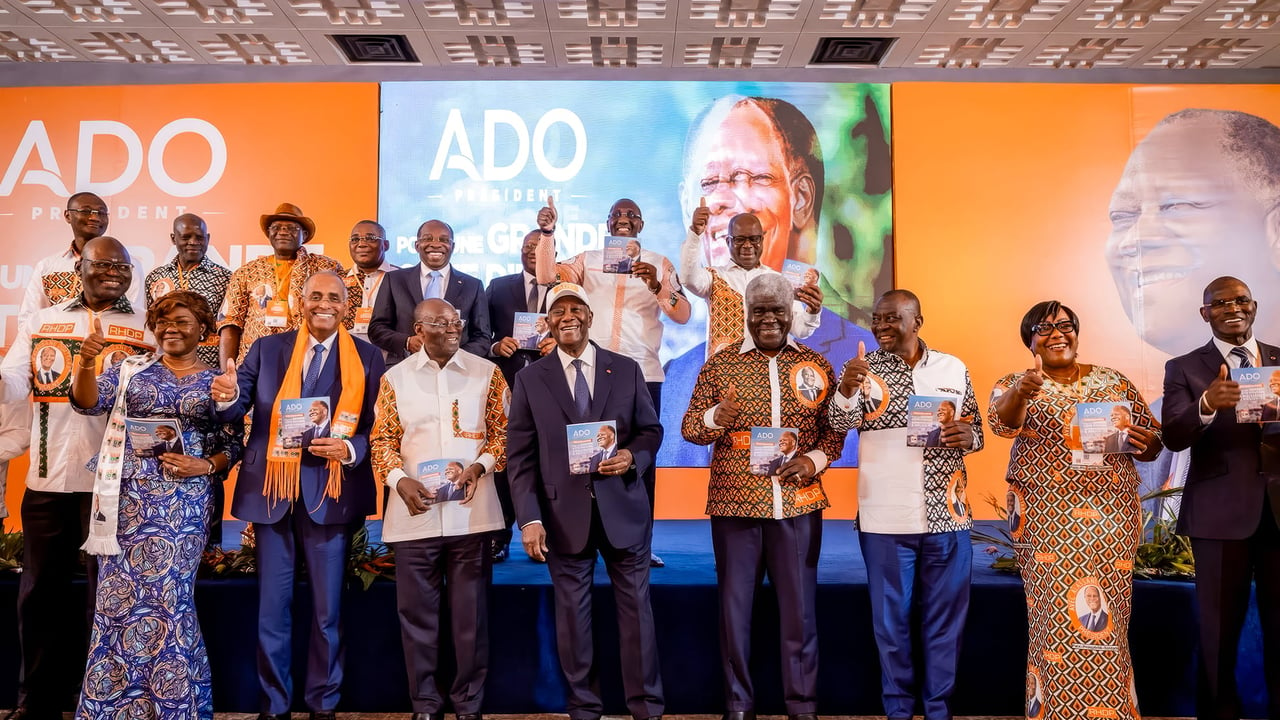
In just two decades, the Rally of Houphouëtists for Democracy and Peace (RHDP) has transformed from a fragile political alliance into the dominant force shaping Côte d’Ivoire’s governance landscape. Its journey—from a coalition forged amid rivalry to a unified movement wielding unrivaled influence—reflects a remarkable shift in the nation’s political dynamics.
From rivalry to unity: the birth of a transformative alliance
Founded as a strategic convergence between two prominent figures—President Alassane Ouattara and former President Henri Konan Bédié—the RHDP emerged as a bold attempt to bridge deep-seated divides. Both leaders, once fierce political adversaries, set aside their differences to counter a shared opponent: former President Laurent Gbagbo. United by a common goal, they laid the foundation for what would become a political powerhouse in West Africa.
This union was not merely tactical; it was rooted in a shared vision to honor the legacy of Félix Houphouët-Boigny, Côte d’Ivoire’s founding father. The RHDP positioned itself as the natural heir to his ideals, advocating for stability, economic growth, and national unity in a post-crisis era.
Rise to power: from opposition to governance
The RHDP’s early years were marked by relentless opposition activity, with its leaders mobilizing support across the country. Through strategic alliances and grassroots campaigns, the movement gradually consolidated its influence, gaining momentum in urban centers and rural communities alike.
By the time Alassane Ouattara assumed the presidency in 2011, the RHDP had already cemented its role as a unifying political force. Its ability to transcend ethnic and regional divides allowed it to secure widespread backing, culminating in electoral victories that solidified its dominance. Today, the party stands as the cornerstone of Ivorian politics, steering the nation through periods of economic recovery and institutional strengthening.
The anatomy of dominance: how the RHDP maintains control
The RHDP’s sustained political supremacy stems from several key factors:
- Strategic leadership: A unified executive team, led by President Ouattara, ensures cohesive decision-making and long-term vision.
- Networked governance: The party’s deep-rooted presence in local administrations enhances service delivery and policy implementation.
- Electoral resilience: A combination of voter mobilization, coalition-building, and policy appeal has secured consistent electoral success.
- Institutional integration: Control over key state institutions, including electoral bodies, reinforces its ability to shape political outcomes.
Challenges and critiques: navigating a dominant party system
Despite its dominance, the RHDP has faced scrutiny over its consolidation of power. Critics argue that the party’s dominance limits political pluralism and stifles opposition voices. Concerns have also been raised about the concentration of authority within a single movement, raising questions about democratic balance and accountability.
However, supporters counter that the RHDP’s governance model has delivered stability and economic progress, positioning Côte d’Ivoire as a regional leader in West Africa. They point to infrastructure development, foreign investment, and social programs as evidence of its effectiveness.
The future of Ivorian politics under the RHDP
As Côte d’Ivoire continues to evolve, the RHDP remains at the heart of its political landscape. With President Ouattara’s continued leadership and a new generation of party cadres emerging, the movement is poised to shape the country’s trajectory for years to come. Its ability to adapt to changing social and economic realities will determine whether its dominance endures or evolves into a more inclusive governance model.
The RHDP’s story is not just one of political transformation—it is a reflection of Côte d’Ivoire’s own journey toward unity, resilience, and progress.


 Boureima Amadou