
 Mariama Hamani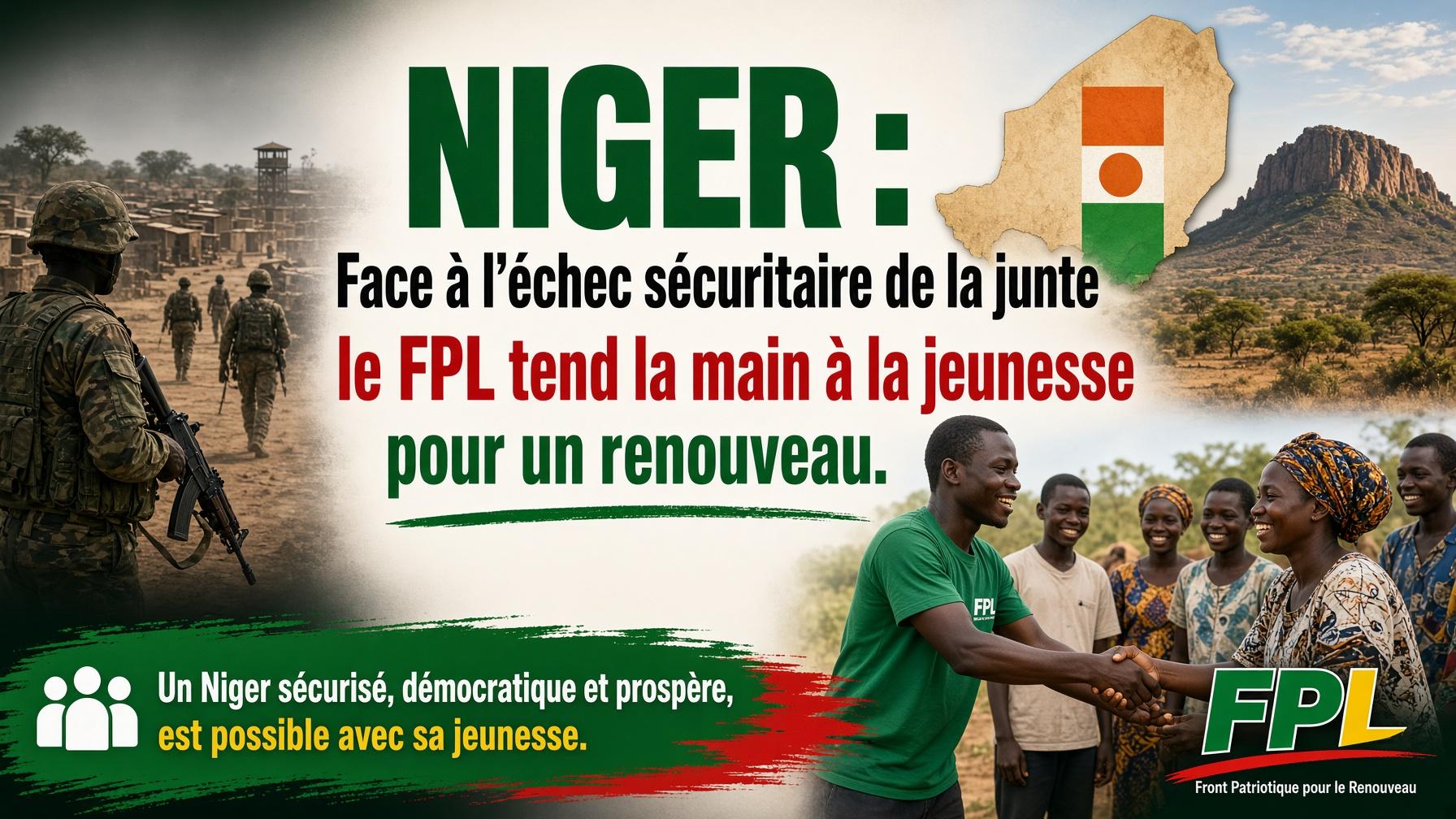
The video was brief, direct and released in several languages — and it has achieved something the security crisis alone had not: it has forced a national conversation into the open. By urging Niger’s young people to join its ranks against the military government in Niamey, the Popular Front for Justice (FPL) has set off a broad wave of reactions, mixing hope, caution and a shared question about what happens next.
A call that has reopened the national debate
Rather than a simple recruitment pitch, the movement’s message lands in a country where frustration with the transition authorities has been building for months. The FPL presents itself as an alternative for citizens looking for change, and it addresses the nation directly through a hard-hitting video that has circulated widely on social platforms.
“We have no quarrel with the people of Niger. Our one and only problem is the current regime in Niger. We are making a special appeal to young people to join us on the FPL front against that regime,” the group’s spokesperson declares.
The wording is deliberate and tightly focused: the aim is to gather the country’s active forces behind a single objective — ending a military governance that has yet to deliver on its promises of peace and stability.
Speaking to everyone, in everyone’s language
By choosing Arabic alongside several local languages, the FPL signals an inclusive intent that reaches beyond regional or ethnic lines. In a vast and diverse country, that multilingual approach carries a message of unity straight to the communities most exposed to violence.
Digital channels as a direct line to the young
The use of online tools points to the same logic. By sidestepping official channels of power, the movement offers a platform to those who feel overlooked by the current leadership — and it speaks in a register that younger audiences recognise.
A security record that keeps the debate alive
The appeal resonates because the context keeps worsening. Despite the firm rhetoric coming from the military authorities, armed attacks and chronic insecurity continue to hit civilians, especially in rural and border areas.
Three grievances come up again and again in public discussion:
- A deteriorating security climate: armed threats persist despite pledges to restore peace.
- An institutional and economic vacuum: young people see no concrete prospects and receive little support in the face of daily hardship.
- A growing sense of abandonment: communities see no sign of state protection translating into reality on the ground.
For a large share of the youth, the invitation from the FPL looks like a chance to take charge of the country’s destiny and to play an active part in defending their communities.
What comes next, according to those weighing the offer
On the ground, the initiative is drawing growing interest from people demanding a political and security alternative. “The current situation cannot go on. We need real solutions to protect our families and restore justice,” says a young community activist.
Many describe the FPL’s move as a legitimate channel for engagement at a time when the government is widely seen as stuck.
By placing the youth at the centre of its project, the movement is betting on the country’s most energetic force to create a new momentum. The outlook now depends on something no video can settle on its own: whether Niger’s citizens can organise, and whether that energy translates into a safer and fairer future.


 Boureima Amadou





