
 Boureima Amadou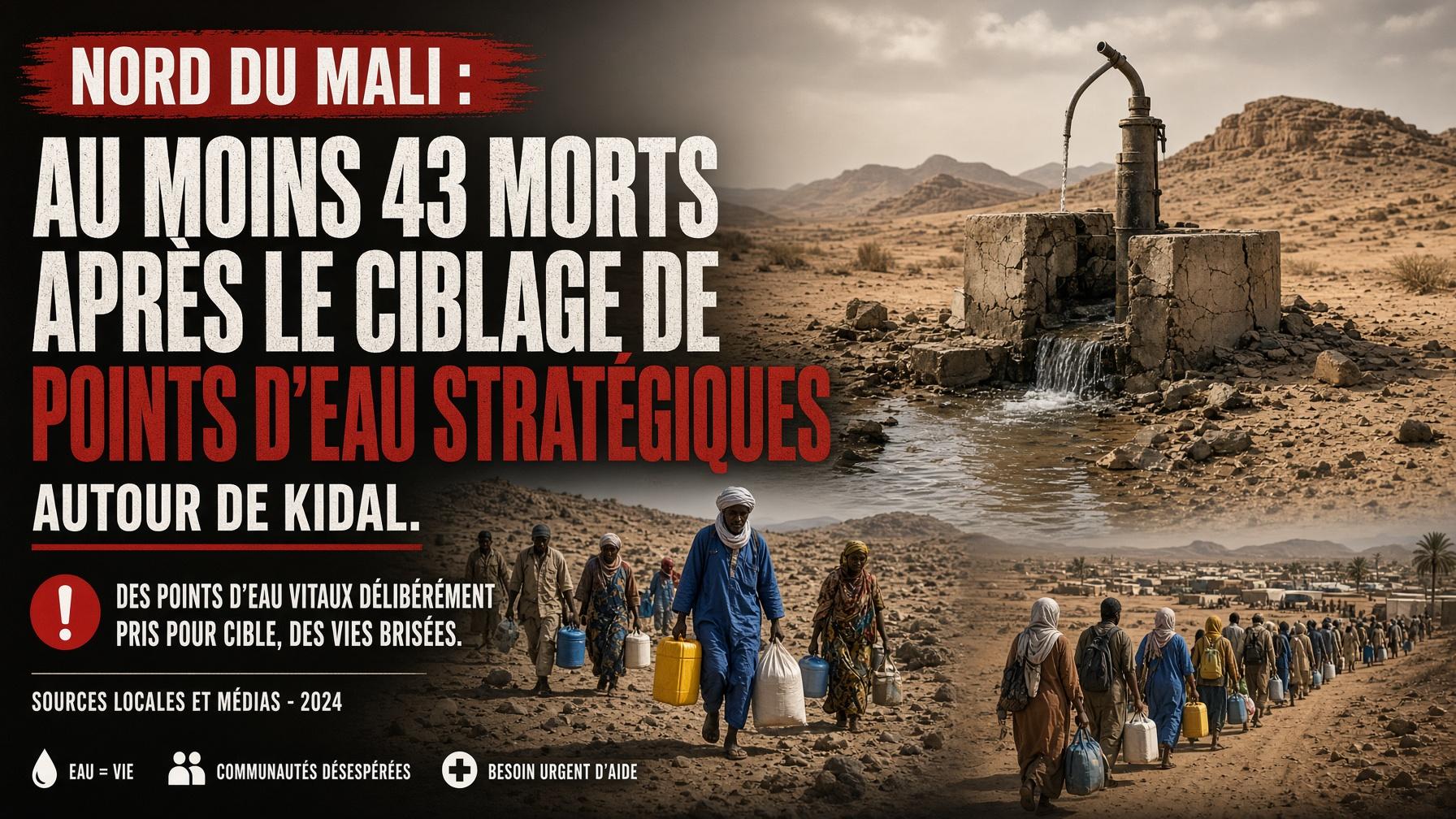
Two days of strikes on water points around Kidal have left at least 43 people dead, an unknown number wounded and a region arguing openly about how it is supposed to survive. In a landscape where a single well decides whether a community makes it through the season, the attacks on hydraulic infrastructure of 15 and 16 September 2026 have turned a military operation into a far wider debate about survival, accountability and what northern Mali can still rebuild. Here is where the fallout stands, and where it could lead.
Two days of strikes, one target: the water that keeps people alive
Across the desert stretches of northern Mali, water is not a public service. It is the condition of life itself, and when it disappears, everything else disappears with it.
Amassine: the only well in the area, hit from the air
On Tuesday 15 September 2026, a Su-24 bomber struck the locality of Amassine in the Kidal region. The structure it hit was the village well, the sole watering point for the herds of the nomadic communities living around it.
Tassik: the pressure returns the next morning
On 16 September, the military effort intensified at Tassik. Malian armed forces, supported by Russian paramilitary units, again targeted water infrastructure, hitting civilians as they stood beside the supply points they depend on. Taken together, the two days left at least 43 people dead and many more injured.
Why the wells, of all things, were the target
These strikes at Amassine and Tassik are no isolated incidents. They fit a pattern observed over recent months: hitting water points to cut nomadic populations off from safe drinking water across the entire periphery of Kidal, until pastoral life becomes almost impossible to sustain.
The same logic has already played out inside the town of Kidal itself. Public water and electricity networks there have been damaged repeatedly, and several places of worship, mosques among them, have been hit during military security operations.
Reactions: a debate that no longer stops at the battlefield
The destruction of basic civilian infrastructure has sharpened a broader argument about international humanitarian law, which strictly protects the goods indispensable to the survival of civilian populations. In a zone with no alternative water source, the question of what remains protected is no longer theoretical.
Military tensions remain high across northern Mali, and access for international organisations and relief teams on the ground is still extremely restricted. That makes both the emergency response and any wider assessment of the damage harder by the day.
What the loss of water does to a pastoral economy
For the herding communities of Mali’s far north, water is more than something to drink. It is the backbone of their livelihoods and of their entire economic model. Deliberately destroying wells severs access to pasture and condemns the livestock that represents a family’s main wealth.
- Drinking water: immediate shortage for several thousand people, with a rising health risk.
- Pastoral economy: irreversible loss of livestock to dehydration and the collapse of local markets.
- Population movement: forced displacement of nomadic families towards urban areas that are already saturated.
What comes next for Kidal
Without access to water points, animals die within days under extreme temperatures, wiping out work built up over generations. Left without income or food, many households are being pushed to give up their traditional way of life and look for precarious shelter in strained towns and cities.
If the destruction of wells and water networks continues, the Kidal region could be facing mass displacement and the risk of a pastoral famine in the weeks ahead. That is the outlook now hanging over northern Mali, and the reason the debate triggered by these two days is unlikely to fade.








