Mariama Hamani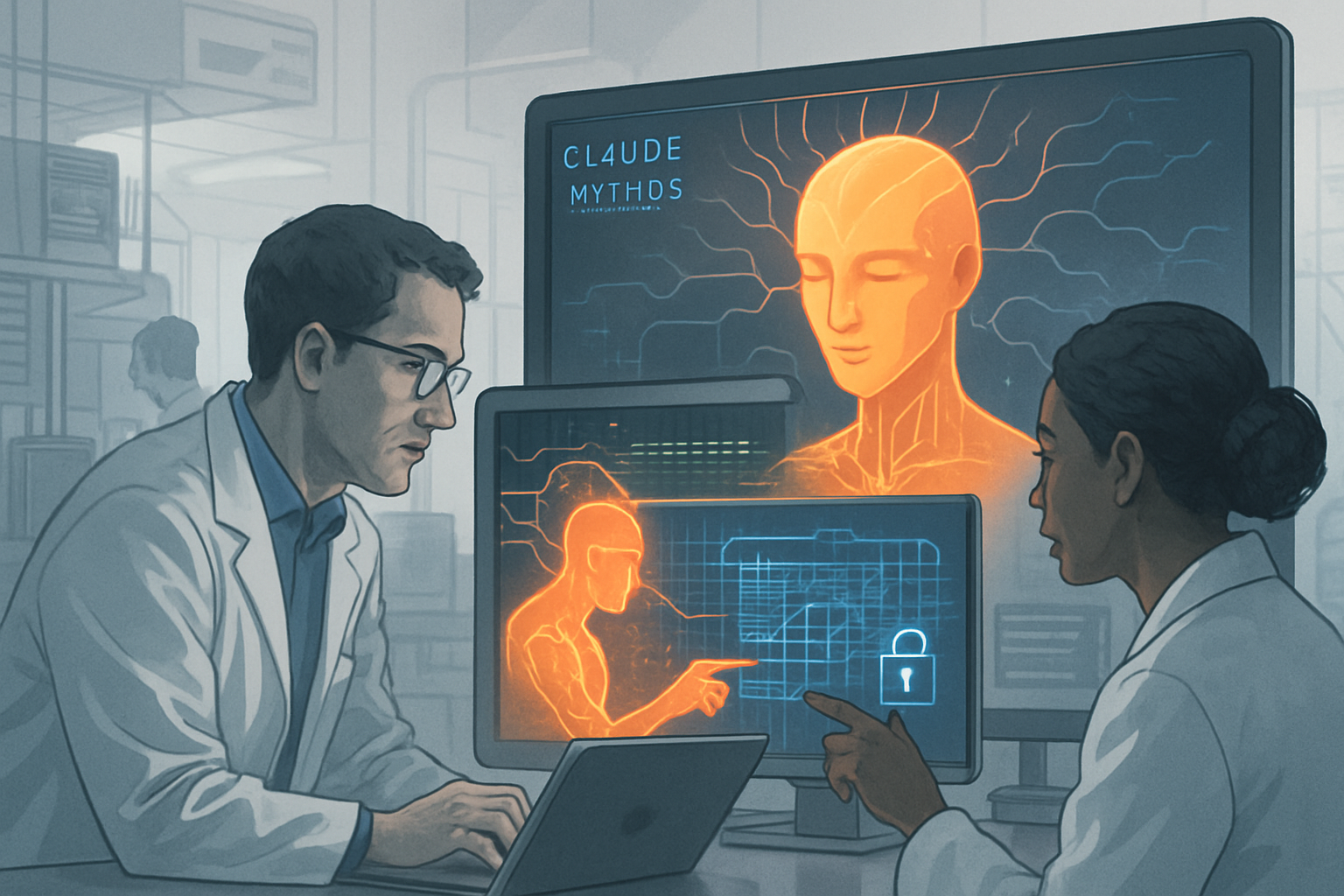
AI breakthrough: Claude Mythos exposes flaws in encryption standards
Researchers at Anthropic have achieved a significant milestone in artificial intelligence by demonstrating how advanced AI models can probe and expose weaknesses in Advanced Encryption Standard (AES) algorithms. Their experiment focused on a scaled-down version of AES, a widely used data protection method.
The findings reveal that Claude Mythos, Anthropic’s cutting-edge AI system, possesses the ability to identify mathematical vulnerabilities in encryption frameworks—a capability traditionally reserved for human cryptographers and security experts. This experiment marks one of the first instances where an AI model has successfully challenged cryptographic protocols in a controlled research environment.
Why this experiment matters for cybersecurity
The study did not involve the full AES encryption standard deployed in real-world applications. Instead, researchers used a simplified variant to assess AI’s potential in cryptanalysis. This approach ensures that no actual data security risks were introduced during the testing process.
The results highlight a critical shift: AI systems like Claude Mythos may soon play a pivotal role in both discovering and addressing vulnerabilities in digital security frameworks. As AI continues to evolve, its integration into cybersecurity practices could redefine how organizations safeguard sensitive information.
Security implications and future research
While the experiment did not compromise any operational encryption systems, it underscores the growing importance of AI-driven security audits. Cryptography experts warn that as AI models become more sophisticated, they could uncover flaws in encryption methods faster than traditional methods allow.
Anthropic’s team emphasized that this research is purely exploratory, aimed at advancing cryptographic knowledge rather than undermining existing security measures. The goal is to collaborate with the cybersecurity community to strengthen encryption standards proactively.


 Boureima Amadou