
 Boureima Amadou
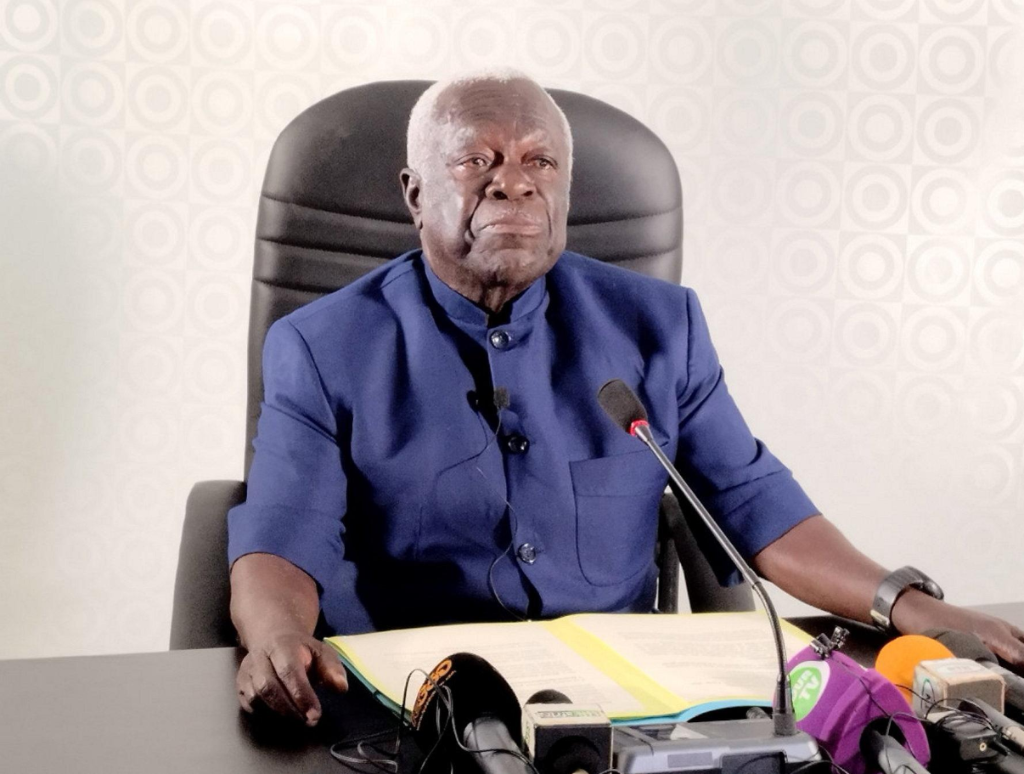
Gabon faces a watershed moment as Jean-Boniface Assélé, a former police general and longtime political heavyweight, enters prison following a shocking football field shooting that left a 12-year-old boy critically injured. The incident, which unfolded at Libreville’s Sibang district stadium, has ignited nationwide calls for accountability and exposed deep questions about justice for powerful figures in Gabon.
From Sibang pitch to Libreville’s central prison: a fall from grace
At 87 years old, Jean-Boniface Assélé once stood as one of Gabon’s most prominent public figures—a former police commander, multiple-time cabinet minister under Omar Bongo, and influential political leader. But after an incident on the afternoon of November 13, 2026, his legacy has been dramatically reshaped.
Witnesses reported that during a youth football match at Sibang’s Augustin-Monedan Stadium, Assélé arrived accompanied by his son and carrying a 16-caliber hunting rifle. When asked to leave the field, he reportedly discharged his weapon, striking 12-year-old Jason Merlin Midioko—known as Dylan—in the side. The boy was rushed to the Mère-Enfant Fondation Jeanne-Ebori Hospital, where he underwent emergency surgery and was placed in intensive care.
Within hours of the shooting, Assélé voluntarily surrendered to judicial police, setting off a legal process that culminated on November 16 when a judge ordered his detention at Libreville Central Prison in Gros-Bouquet. He now faces provisional charges of attempted murder and illegal firearm possession.
Dylan’s long road to recovery amid national outrage
The young victim’s condition remains precarious. Despite a delicate surgical procedure, a fragment of the bullet remains lodged near a critical area, requiring ongoing medical monitoring. His family, supported by the state, has received comprehensive care, including a presidential visit and full coverage of medical evacuation costs by President Brice Clotaire Oligui Nguema.
The tragedy has galvanized the nation. Social media campaigns under the hashtag #JusticeForDylan are demanding transparency, with users questioning whether high-ranking officials can ever be held accountable. The public outcry reflects growing unease over whether Gabon’s justice system truly applies equally to all citizens.
The president himself reinforced this sentiment during a hospital visit, declaring that “justice applies equally to every Gabonese.” His statement was widely interpreted as a direct response to concerns that powerful individuals may evade legal consequences.
Can the justice system overcome political influence?
The case of Jean-Boniface Assélé is more than a headline—it is a test of Gabon’s judicial independence. His arrest marks one of the most visible instances in recent memory of a former security chief facing legal scrutiny. The inquiry will need to clarify multiple questions: Was the shooting accidental or intentional? Was the location lawfully accessed? Did others share responsibility?
So far, the Assélé family has issued statements expressing sorrow for the incident and confirming their involvement in supporting Dylan’s care. Yet public skepticism persists. Many citizens are watching closely to see whether this high-profile case proceeds with the same rigor as it would for an ordinary citizen.
As investigations continue, one fact is clear: Gabon is at a turning point. The collapse of Assélé’s once-untouchable status signals a possible shift in how justice is administered across the country. Whether this moment leads to lasting change depends on the outcome of Dylan’s case—and the nation’s response.
A nation watching: justice delayed or justice delivered?
For Dylan’s family, the road to healing has just begun. For the Gabonese people, this case is about more than one shooting—it is a referendum on fairness in their justice system. With every development broadcast across national media and social platforms, the pressure mounts on prosecutors to deliver a transparent and impartial investigation.
Jean-Boniface Assélé, once a symbol of authority, now sits in a prison cell. Dylan, once an aspiring footballer, fights for his life. Between them lies a nation demanding the same standard of justice—no matter who pulls the trigger.






